Sign in. It’s quick, free and it’s up to you.
An account is an optional way to support the work we do. Find out more.
Sign in. It’s quick, free and it’s up to you.
An account is an optional way to support the work we do. Find out more.
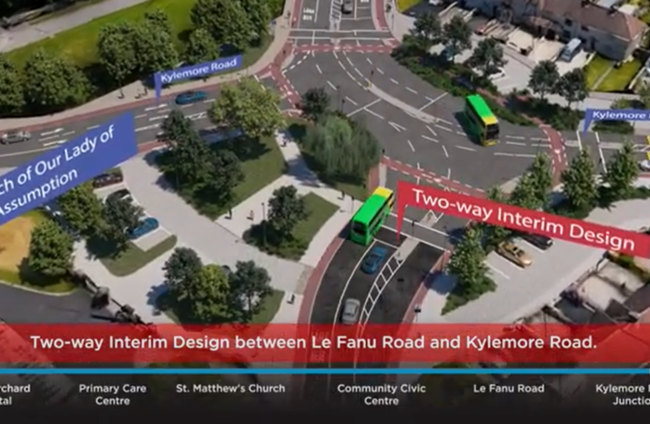
CONSTRUCTION FOR THE first of 12 new BusConnects bus corridors in Dublin will begin in September and should take three years, costing over €270 million.
The wider bus corridors programme aims to deliver 230 km of dedicated bus lanes and 200 km of cycling infrastructure in the twelve different corridor areas.
The contract for the first bus corridor, the 9.2 km route from Liffey Valley to the city centre, has been given to Irish company GMC Group Ltd.
The estimated total scheme cost of the route will range up to €274 million. The total budget for the overall BusConnects plan has been estimated at up to €4 billion.
Speaking outside the National Transport Authority (NTA) today, Minister for Transport Darragh O’Brien said the corridor will be “transformational” for Ireland’s public transport system, which last year transported a record of 30 million passenger journeys.
He said: “This is a significant investment on behalf of our citizens. It will be transformational”.
“It’s good in relation to quality of life for people that we have reliable and affordable and punctual public transport,” he added.
The Liffey Valley to city centre corridor will start at Fonthill Road and connect with the new Liffey Valley Shopping Centre bus interchange, before continuing on to the city centre through Ballyfermot Village.
The bus corridor is expected to improve the reliability and speed of bus services along the route.
The corridor will also include 13.3 km of improved cycling and pedestrian infrastructure in both directions.
The NTA says it will set up local area engagement groups and is finalising detailed communication arrangements to ensure that communities impacted by the BusConnects corridors are fully informed throughout the construction period.
A dedicated website, phone line and email address will be made available for each scheme, along with regular updates and local outreach events.
“Public transport is critical for all of our cities, and it’s particularly critical for our capital city. A lot of good work has been done over the years in relation to quality bus corridors, but the BusConnects corridors will be transformations,” O’Brien said.
Hugh Creegan, interim CEO of the NTA said: “We have reached a landmark moment for the BusConnects programme.”
He said the programme offers a good opportunity for the NTA to invest in sustainable transport infrastructure across Dublin.
The NTA have created a new framework agreement for construction, which includes six construction companies the organisation can procure contracts from for other schemes.
Minister O’Brien said that a clear time frame for completion of the overall project is not yet available, as although all 12 routes have been granted planning permission, some of the decisions are currently subject to judicial review.
“In a short space of time, we’ll be able to see the benefits of it. And while we’re doing that, we’re continuing to invest in our fleet,” he said.
He said in the coming months the Department of Transport plan to sign the contract for the second bus corridor.
O’Brien also confirmed that tap on services will not be available in Ireland until at least 2027.

To embed this post, copy the code below on your site













have your say