We need your help now

Support from readers like you keeps The Journal open.

You are visiting us because we have something you value. Independent, unbiased news that tells the truth. Advertising revenue goes some way to support our mission, but this year it has not been enough.

If you've seen value in our reporting, please contribute what you can, so we can continue to produce accurate and meaningful journalism. For everyone who needs it.

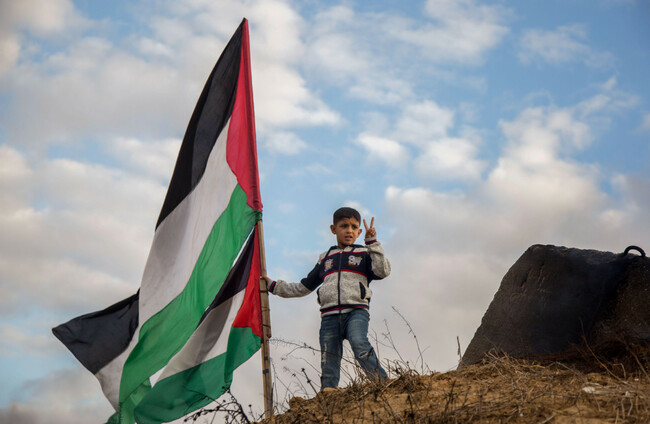
A Palestinian child demonstrator seen holding a flag during a protest. Alamy Stock Photo

Mapped: UK, Canada and Australia the latest to join growing global recognition of Palestine

France is expected to recognise Palestine at the UN General Assembly in New York today.

LAST UPDATE | 22 Sep 2025

THE NUMBER OF countries that recognise the State of Palestine has risen to 150 now that the United Kingdom, Canada and Australia have joined them. 

In coordinated statements, the prime ministers of the three countries announced the formal recognition of Palestine as a sovereign state. 

All three said they had done so with the aim of securing a two-state solution to the Israeli-Palestinian conflict, although the Israeli government is completely opposed to the establishment of a Palestinian state. 

The recognition of Palestinian statehood will not lead to any immediate or tangible effects for Palestinians, but it has been met with angry reactions from Israeli officials.

Israeli cabinet ministers Itamar Ben-Gvir and Bezalel Smotrich responded to the three counties’ recognition by renewing their calls for Israel to fully annex the West Bank, while Prime Minister Benjamin Netanyahu said “there will be no Palestinian state west of the Jordan”, meaning in the land between the Jordan River and the Mediterranean Sea.

While recognition of Palestine is not new among nations in Africa, Asia, and Latin America, these latest developments mark a significant shift within the West, particularly among G7 and NATO countries that have historically aligned with Israel.

France is expected to recognise Palestine at the UN General Assembly in New York today. 

Growing recognition mapped

Recognition by these major Western powers marks the first such move by any member of the G7, and would increase pressure on others, including Germany, Italy and the United States, to reconsider their stance.

Israel and the United States have strongly opposed the announcements, arguing they “reward Hamas” and undermine ceasefire efforts. US President Donald Trump warned Canada that its decision could threaten a future trade deal.

Palestinian statehood has long been recognised by much of the Global South, as well as by key G20 members including China, India, Brazil and South Africa.

In Europe, support has grown steadily over the past year.

Ireland, Spain and Norway formally recognised Palestine in May 2024 in a joint move, and Slovenia, Malta and others are signalling similar intentions.

Ireland is among 15 nations that have called for the world to recognise a Palestinian state and reiterated commitment for a two-state solution at the High-level International Conference which took place in New York this week.

The joint foreign ministers statement expressed the call for a ceasefire, concern over the high number of civilian casualties and humanitarian situation in Gaza, and calls on countries across the world to recognise the state of Palestine.

France’s minister for foreign affairs, Jean-Noel Barrot, posted the letter to his X account alongside the message: “In New York, along with 14 other countries, France is launching a collective appeal: we express our desire to recognise the State of Palestine and invite those who have not yet done so to join us.”

The statement is backed by Ireland, Andorra, Australia, Canada, Finland, France, Iceland, Luxembourg, Malta, New Zealand, Norway, Portugal, San Marino, Slovenia, and Spain.

Palestine state recognition

Palestine currently holds non-member observer status at the United Nations.

In 2024, a US veto at the Security Council blocked an attempt to grant full UN membership, despite 12 countries voting in favour.

Proponents of recognition argue that statehood is essential for advancing a credible two-state solution.

As one senior Egyptian official told the New York Times, “The Israelis used to claim they had no partner for peace. The problem now is that there is no partner for peace in Israel.”

What does recognition mean?

Palestine exists, and does not. It has embassies, Olympic teams, and wide international support, but lacks the basic features of a fully functioning state: borders, sovereignty and control of its territory.

The Palestinian Authority has limited authority in parts of the West Bank under Israeli occupation.

In Gaza, also considered occupied, Israel is waging devastating attacks.

Palestinians continue to demand East Jerusalem as their capital, while Israel maintains control across the region.

In practical terms, recognising a Palestinian state changes little on the ground.

But symbolically, it matters. 

After decades of stalled diplomacy, expanding Israeli settlements and cycles of violence, many now see recognition as a long-overdue statement, not a solution in itself, but a step towards one.

If the UK and France recognise a Palestinian state, it also means that four out of the five permanent members of the UN Security Council (France, the UK, Russia and China) will speak with a single voice on the issue. 

This would effectively isolate the US and their support for Israel, in theory.

Lastly, there could be implications for the International Criminal Court (ICC), which issued warrants for the arrest of Netanyahu and former Israeli Defence Minister Yoav Gallant in November for “crimes against humanity and war crimes” in Gaza.

Netanyahu has called the charges “outrageous” and the international court an “enemy of humanity.”

Experts say the recognition of Palestine could have legal consequences in the context of the ICC jurisdiction.

However, France has said it would not arrest Netanyahu and Gallant because it would be incompatible with international legal obligations concerning immunities granted to states not party to the ICC, such as Israel.

Readers like you are keeping these stories free for everyone...
A mix of advertising and supporting contributions helps keep paywalls away from valuable information like this article. Over 5,000 readers like you have already stepped up and support us with a monthly payment or a once-off donation.

Close
JournalTv
News in 60 seconds