Sign in. It’s quick, free and it’s up to you.
An account is an optional way to support the work we do. Find out more.
Sign in. It’s quick, free and it’s up to you.
An account is an optional way to support the work we do. Find out more.
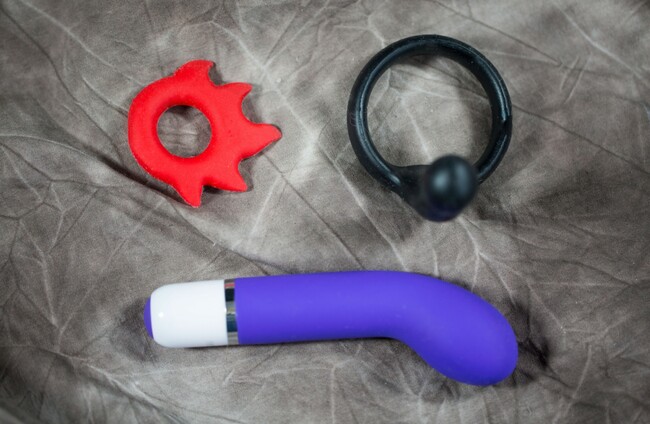
A DUBLIN FIRE Brigade crew were called in to use an electric handheld angle grinder to remove a metal ring from a man’s penis.
The Dublin Fire Brigade unit were called to the emergency department at the Mater University Hospital after medics tried unsuccessfully to remove the ring.
The ring was stuck at the base of the man’s sore and swelled scrotum.
The medics had failed to remove the device, which measured 5cm x 4cm x 1.5cm, with the use of orthopaedic instruments.
These included an orthopaedic saw, bolt and bone cutters which failed to grasp or even indent the device due to the durability and size of the ring.
The man had presented with what the medics in the March edition of the Irish Medical Journal (IMJ) describe as a rare case of ‘penis strangulation’.
The condition requires urgent intervention to avoid potential organ threatening complications and to resolve blood flow issues.
The man had sex seven hours prior to presenting at the A&E and before sex had applied a titanium penoscrotal constriction device.
The medics state that such devices are either used for autoerotic stimulus or to increase sexual performance by maintaining an erection for a longer period.
The medics record that the man presented to the A&E with pain and swelling of his penis and scrotum. Medical staff applied ice-packs to the penis and scrotum but failed to reduce the swelling.
Photo
Time was found to take a colour photo of the man’s penis complete with the ring still on and a tongue depressor to protect the man’s skin and the photo features in the paper that appears in the IMJ.
The IMJ paper on the incident reports that after the man was sedated with a mix of a 100mg of Ketamine, 50 mcg of Fentanyl and 150mg of Propofol, Fire Brigade personnel cut the device in two with the handheld angle grinder.
The medics continued to run water over the penis and scrotum throughout the procedure to prevent overheating or thermal damage to the skin.
The procedure to remove the ring took 20 minutes and the IMJ paper reports:
That protective fire protection sheets were used to protect the patient and staff from sparks.
As part of the procedure, the medics state that a metal forceps was placed under the ring to prevent past pointing of the angle grinder.
There was instant relief for the man and the medics report that sensation and capillary refill returned after the procedure.
On review one month on, the man reported no issues sexually in relation to his penis
The medics concluded that the man had suffered a Grade 2 injury with Grade 5 being the worst that involves gangrene and complete amputation of penis.
The medics state that Grade 2 involves injury to the skin with decreased penile sensation but no evidence of urethral injury.
The medics state that there is no standard technique or recommendations to remove such rings and that each case requires an individualised approach based upon the presentation, the size and type of object and the time from injury to presentation.
To embed this post, copy the code below on your site











have your say