Sign in. It’s quick, free and it’s up to you.
An account is an optional way to support the work we do. Find out more.
Sign in. It’s quick, free and it’s up to you.
An account is an optional way to support the work we do. Find out more.
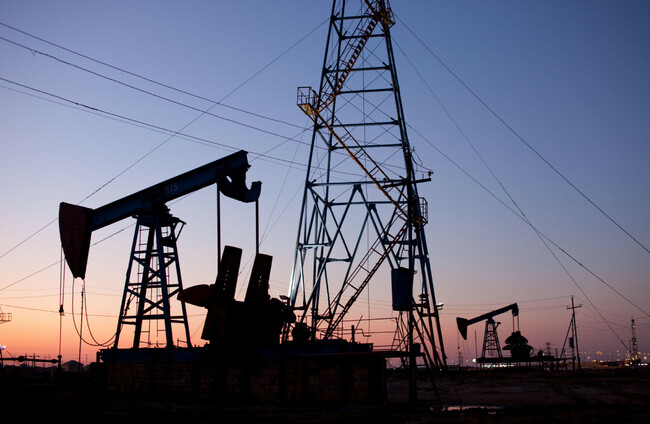
MOST BUSINESSES THAT fail don’t go out with a bang.
With some massive implosion, like Lehman Brothers in 2008, which ripples into the wider economy.
Most that fail do so with a whimper. Quietly fading away, leaving only memories and investors with lighter pockets.
Such is the case for PetroNeft, a little-known Irish company which last week went into liquidation.
Most people would probably be surprised to hear the firm existed in the first place. There are several Irish-based so-called ‘exploration’ companies. These are businesses which search for natural resources like oil, gas and gold.
Most in Ireland are focused on exploring Irish territory, such as Barryroe Offshore Energy (formerly Providence Resources), which is trying to develop an oil field off the coast of Cork.
PetroNeft was unusual because it was a Dublin-based company which was searching for oil, not around the Irish midlands, but in Russia.
Which perhaps makes it unsurprising that it suffered massive losses following Russia’s invasion of Ukraine in 2022.
In 2021, PetroNeft lost €4.5 million. In 2022, it lost a staggering €44 million. For a company of its size, there was no way to hang on, and it has now reached the end.
But what really happened? Let’s take a look.
PetroNeft was formed in the early 2000s by Dennis Francis and David Sanders. Francis, the company’s CEO until 2018, is a geologist by training from Texas with a background in oil exploration in Russia. PetroNeft was set up to search for fossil fuels in Western Siberia. The area was known to be research rich, but at the time was not developed.
Ok – so how did the business end up in Ireland?
The Irish Independent previously reported the key link - “Francis married an Irish woman and raised much of the initial $5 million from friends and relatives in Castlebar”.
Many of the company’s early shareholders were from Mayo.
In 2005, PetroNeft bought the licence to explore a large area of western Siberia in 2005.
At the time, there was a lot of investor enthusiasm for exploration companies, such as the aforementioned Providence Resources.
In 2006, PetroNeft listed its shares on stock exchanges in both Dublin and London. This helped it raise $15.5 million from investors, and gave the green light to go explore.
PetroNeft spent much of its early years drilling wells in Siberia.
Its most promising project was called Lineynoye, an area which showed signs of oil all the way back in the 1970s.
The development was found to have about 30 million barrels of oil.
This is relatively small – the proposed Barryroe well off the Cork coast is thought to have over 300 million barrels.
But 30 million is still commercially viable, so PetroNeft ploughed on with extraction.
By 2010, the firm had built a pipeline and was producing oil. In an industry where the chances of failure are extremely high, this was a notable success.
PetroNeft then actually repeated the feat. In 2010, the company had a find at another site called Sibkrayevskoye. This ended up having 50 million barrels of recoverable oil. PetroNeft, holding a 50% share of the exploration licence, effectively controlled another 25 million barrels.
Sibkrayevskaya started commercial production in 2012. Plenty of Irish exploration companies go their whole lives without ever having a commercial find. PetroNeft was producing oil from two within six years of listing on the stock exchanges in Dublin and London.
PetroNeft’s share price history is difficult to find online, and the company’s own website no longer holds the information.
However, the Irish Independent reported in September 2010 that PetroNeft was “the best-performing share on the Dublin stock exchange” at the time, with its stock rising by almost 150% over the previous 12 months.
This was based on hopes that PetroNeft would be able to cash in on its finds once oil production ramped up. But it never quite worked out that way.
For example, by 2014, the company was producing about 700,000 barrels of oil per year. However, it recorded a loss of just under $9 million, and $8.5 million in 2015.
An issue seems to have been the low prices it sold its product for. Its 2015 results note that it sold its oil for an average price of “US$27.00 per barrel”.
That was despite the average oil price for the year being around $50 per barrel.
“All oil was sold on the domestic market in Russia,” its accounts noted.
There was a similar story in most subsequent years, with production around 700,000 – 800,000 barrels. PetroNeft recorded a loss of $5.4 million in 2016, $3.3 million in 2017, $7.6 million in 2018 and $6 million in 2019.
The firm posted losses of $4.5million in both 2020 and 2021. However, the firm’s annual report in the latter year was relatively upbeat.
The company’s oil production was relatively stable, but it had made progress on some more promising exploration licences. It had raised $3 million from a group of backers. Despite the loss, the firm actually made a gross profit from its operations of $1.4 million.
Its 2021 loss was in large part due to a joint venture it co-owned losing $5 million.
Energy prices also started rising. PetroNeft said in its 2021 annual report: “As we exited 2021, we were looking forward to 2022 with a great degree of optimism.”
However, Russia’s invasion of Ukraine in early 2022 was a game-changer.
The company was hit with western sanctions. Because PetroNeft’s business was in Russia, it was unable to find an auditor willing to publish its 2022 annual results.
This is in breach of stock exchange rules. As a result, PetroNeft’s shares in Dublin and London were suspended.
The firm tried to sell its Russian assets to Pavel Tetyakov, its then-CEO. As discussed, its Russian assets were essentially all of its assets – the deal would have left PetroNeft as a ‘cash shell’. Basically, a corporate entity with some money in it. The hope would have been it could then have invested in something else, to get investors some of their money back.
However, the deal needed final approval from Russian government officials. This didn’t come through quick enough, and the company’s shares were withdrawn from both the Dublin and London markets.
Its share price plunged. A share in the firm was reported to be worth £0.08 in early 2024, down from 30p the year before. When it did report results for 2022, losses had skyrocketed to a massive $44 million.
In late 2023, shareholders approved the deal to sell Tetyakov all of its Russian assets. It said payment for some of these assets was received in June 2024, without saying how much it got.
Whatever it was, clearly wasn’t enough to save the firm. Earlier this month, PetroNeft shareholders approved putting the business into liquidation.
‘Liquidation’ is when a business is wound up and its remaining assets are sold to try to recover as much money as possible.
Unfortunately for PetroNeft investors, that doesn’t seem like it will be a lot. The Irish Times reported that the company’s remaining assets are valued “in the low five figures” – ie, well under €100,000.
The liquidation process, doling out the firm’s remaining meagre assets, is expected to be completed before the end of 2025.
And that will be that – the end for an Irish business which was once a leading light of the country’s stock exchange.

To embed this post, copy the code below on your site














have your say