Sign in. It’s quick, free and it’s up to you.
An account is an optional way to support the work we do. Find out more.
Sign in. It’s quick, free and it’s up to you.
An account is an optional way to support the work we do. Find out more.
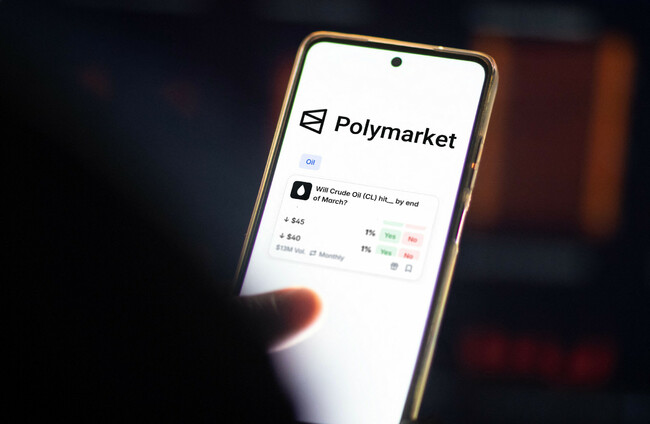
HUNDREDS OF THOUSANDS of euro has been bet on the outcome of Irish elections, as experts warn that a new wave of betting websites are ‘the wild west’.
Polymarket, the biggest of the new prediction markets, where users can bet on the outcome of future events, allows users to bet money on almost anything, often in a Yes/No format.
At the time of writing, two of the platform’s top markets asks when (not if) US forces will enter Iran, and if traffic on the Strait of Hormuz will return to normal by the end of April (which the site says has just a 13% chance of happening).
Another asks if any of the 12 tons of KitKat bars which were stolen while in transit across the EU last week will be found by 5 April.
But behind the slick interface and endless options, experts are warning the platform raises serious questions about regulation, influence and how far gambling has drifted into real-world events.
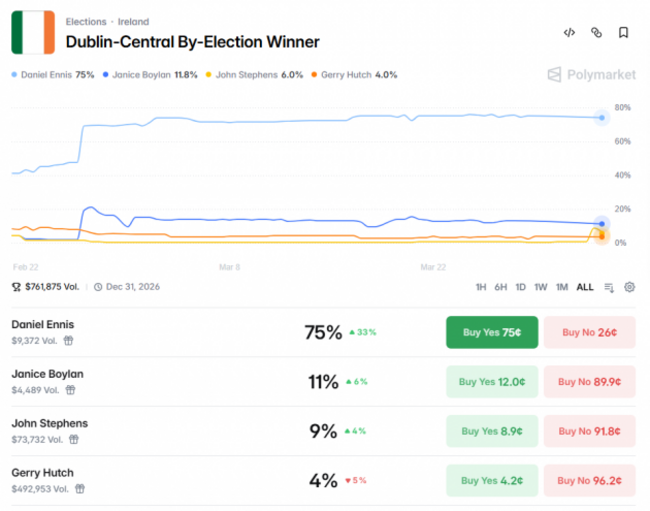
For example, around $760,000 (€660,000) has already been traded on the Dublin Central by-election on Polymarket, despite no official polling having taken place.
Users buy and sell ‘shares’ in candidates, with odds shifting in real time.
Social Democrats councillor Daniel Ennis is currently far ahead of the other constituency candidates on the platform (he’s trading at 75% probability of winning the election at the time of writing).
The party is apparently aware of Polymarket, but stressed that their only focus is “on securing the best possible result in both by-elections for our two candidates”.
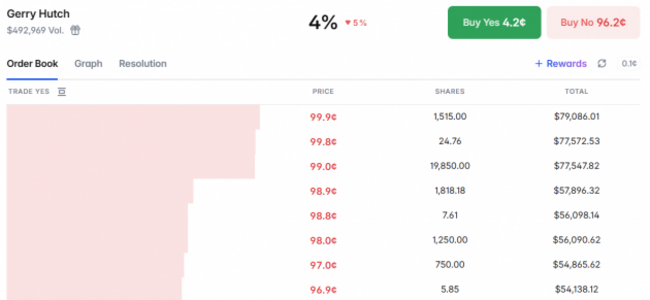
Ennis is followed in Polymarket’s polling by Sinn Féin’s Janice Boylan (on 11%), while nearly $500,000 (€430,000) has been staked on Gerry ‘The Monk’ Hutch, despite him sitting on a 4% probability of being elected.
Last year, there was about $1.5 million (€1.29 million) traded on the Irish presidential election in October.
None of this is particularly surprising, according to UCD Emiratus professor Dr Crystal Fulton.
As one participant in her research put it, gamblers “will bet on flies walking up a wall”.
Polymarket, she suggests, simply streamlines that instinct.
Spend a few minutes on prediction sites like Polymarket, Kalshi or PredictIt and a pattern emerges. There are big green ‘buy’ buttons and red ‘sell’ buttons, and clean graphs showing your potential winnings ticking up or down in real time.
Everything is designed to feel fast, simple and, crucially, low effort. Despite it being somewhat structured like a market trading site, you don’t need to completely understand odds in the traditional sense.
Dr Frank Houghton, a TUS professor and public health expert specialising in gambling, says that ease is exactly the point.
“It’s all about user experience and making it easy,” Houghton said.
The easier it is, the more enticing it becomes.
“That’s what the best apps do, isn’t it? I mean, that’s how Apple rose to such prominence so quickly against Windows.”
Unlike traditional betting sites, users can also sell their position before an event finishes, effectively trading their bets like stocks.
“You can put money on something and then sell that bet on to someone else before the outcome,” Houghton explained.
“It’s hugely dynamic.”
That speed and simplicity, combined with the constant movement of odds, gives the platforms more in common with trading apps than a bookmaker.
They also market themselves differently to bookies.
BREAKING: Crude Oil surges above $113 a barrel, & is now expected to hit $120 this month.
— Polymarket (@Polymarket) April 2, 2026
73% chance. https://t.co/fxIpcZ1ZJt
Polymarket effectively acts as a breaking news platform on X, while Kalshi is now CNN’s ‘official prediction markets partner’, and their trading figures are now referenced regularly in CNN’s reporting.
“Kalshi’s data will serve as a powerful complement to CNN’s reporting,” the platform said in a statement in December.
That same structure also raises more serious concerns, however.
As users are effectively betting against each other, rather than a bookmaker, there is potential for people with better or earlier information to profit. In other words, it’s not just about luck.
One example of this emerged in January, when a gambler on Polymarket made nearly half a million dollars on the capture of Venezuela’s president Nicolás Maduro just before it was officially announced, raising questions about whether someone profited from inside knowledge of the US operation.
“If you can bet on the outcome of a political election or a real-world event, what might people do to influence that?” Houghton said.
He points out that even publishing polling data on election day is restricted in Ireland because of the risk it could sway voters.
“If this kind of information is out there, it absolutely can influence behaviour,” Houghton said.
The scale of money involved only adds to that concern.
With hundreds of thousands (and in some cases millions of euros) riding on outcomes, the incentive to act on inside knowledge, or even shape events, becomes much more real, Houghton added.
On the Dublin Central by-election trading, for example, some accounts have traded thousands of shares, according to Polymarket’s figures.
The impact of these prediction markets globally can’t be understated – according to energy traders, the site is even directly driving the global oil market.
For now, the sites operate in what experts describe as a legal grey area in Ireland.
Polymarket, which was founded in 2020, has been blocked and barred across dozens of territories, including six EU countries, the UK and the US.
Here, it’s not licensed or regulated as of yet, and uses cryptocurrency rather than traditional payment systems.
Ireland’s gambling regulation body, aptly titled the Gambling Regulatory Authority of Ireland (GRAI), was established last year, and only opened for licensing in early 2026.
It’s in the process of taking over the licensing of gambling operators on a phased basis, but the first remote betting licences aren’t expected to be issued by the GRAI until July.
This means as of today, there are no operators licensed under the new regime, including Polymarket and Kalshi.
And despite the huge amounts of money being traded, the sites have been flying under the radar: neither Polymarket nor Kalshi have been mentioned even once in the Dáil.
Houghton believes that once Polymarket comes under the remit of GRAI, the platform will face major challenges.
“There’s a whole lot of things that they’re going to have to implement, basic things, from stopping the use of credit cards to being able to make sure it’s not used for money laundering and tax implications because it uses cryptocurrency,” Houghton said.
“If the platform were to go down, it’s not coming back,” he added.
There’s no real consumer protection there at the moment.
He describes it as “the wild west of gambling”, where rules are unclear and safeguards are limited, and a “grey area” that isn’t regulated enough.
As Fulton’s research suggests, people have always been willing to gamble on almost anything.
What’s changed is how easy it now is to do it, how much money is involved, and how closely those bets are tied to real-world events.
For Houghton, that’s where the concern lies.
“This isn’t just harmless entertainment,” Houghton said.
“It’s something much bigger, and at the moment, it’s largely unregulated.”
Polymarket has been contacted for comment

To embed this post, copy the code below on your site












have your say