Sign in. It’s quick, free and it’s up to you.
An account is an optional way to support the work we do. Find out more.
Sign in. It’s quick, free and it’s up to you.
An account is an optional way to support the work we do. Find out more.
THE PSNI CHIEF constable has described as “naked racism” some comments which have been left under online appeals about missing children from ethnic minority backgrounds.
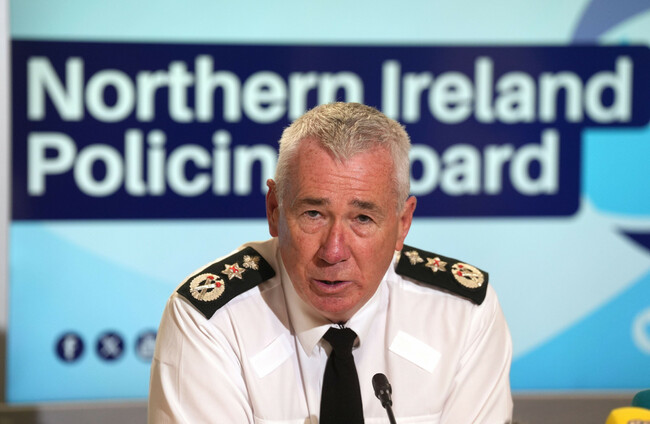
Jon Boutcher made the remarks at a public meeting of the Policing Board today in Belfast.
He said that in a “continuation of the disgraceful rioting” in Ballymena in June, there is further “racist violence, thuggery and intimidation on our streets”.
“Ethnic minority families have had their homes attacked, and thugs in Belfast have been stopping and intimidating people on the street for no reason other than the colour of their skin,” said Boutcher.
Footage has circulated in recent weeks of groups of men intimidating people from ethnic minority backgrounds in Belfast.
The PSNI has said that these groups have “neither the legal nor the moral authority to do this” and that they are “not protecting the community from anything”.
“Our officers will continue to challenge those small, self-styled vigilante groups who claim to be protecting communities when in reality they are seeking to control them,” said Boutcher today.
Boutcher went on to remark that on “several occasions” dozens of “shameful comments” have been left on the PSNI’s social media channels in response to appeals for information about missing children from ethnic minority backgrounds.
“What is going on? Such naked racism has become all too common and blatant in the online space.”
Boutcher added that “against this background, it was no surprise that racially motivated hate crime and incidents have increased dramatically in the past year”.
He said that racially motivated hate crimes and incidents are at their highest level since the PSNI began records in 2004.
Boutcher said he wanted to “personally assure our ethnic minority communities that addressing race hate is a priority of this organisation”.
Meanwhile, he said 62 people have been arrested and 57 charged in connection with the racist rioting in Ballymena in June, while 14 people have been convicted for racist rioting in Belfast last August.
“I welcome the strong message this sends that such racially motivated violence and attacks on police will not be tolerated,” said Boutcher.
Elsewhere, Boutcher noted incidents with bonfires and that one in Belfast put power supplies to nearby hospitals at risk.
He also noted that one bonfire in Co Tyrone was topped with an effigy of refugees in a boat.
“This was rightly recorded and investigated as a hate motivated incident,” said Boutcher.
He also called out the “repeated failure of others to take meaningful responsibility for addressing issues associated with bonfires”.
“This has again left police to step in at the last minute, often becoming the focus of criticism.
“I want to be clear that bonfires that display items intended to threaten, intimidate or cause offense are unacceptable, and it’s not right that policing alone is left to confront the consequences.”
Meanwhile, Boutcher said there have been “grim realities” of policing recently in Northern Ireland.
Since the end of June, nine people have been murdered in Northern Ireland.
He said PSNI caseloads are “already far too high compared with other forces across the UK” and that officers are “working flat out to support those families to get answers and justice”.
“They are doing incredible work,” said Boutcher, “but due to the high number of cases being managed, coupled with our low numbers of detectives, I considered seeking national mutual assistance for our homicide teams.”
National mutual assistance is the process by which other police forces in the UK can be enlisted to provide support and resources to the PSNI when faced with significant policing demands.
“I think that would be unprecedented,” said Boutcher.
“Eventually, people are going to listen to the resourcing challenges of this organisation.”

To embed this post, copy the code below on your site












have your say