Sign in. It’s quick, free and it’s up to you.
An account is an optional way to support the work we do. Find out more.
Sign in. It’s quick, free and it’s up to you.
An account is an optional way to support the work we do. Find out more.
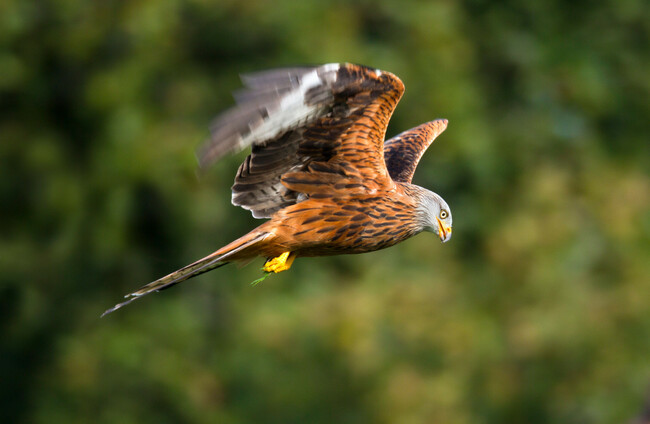
THE PSNI has launched an investigation after tests confirmed that a red kite which was found dead in Co Down had been fatally poisoned.
All birds of prey are legally protected in Northern Ireland but a red kite was found dead at the end of December in the Tullymore Road area near Loughbrickland.
It’s understood that the red kite died by a targeted poisoning using the rodenticide Chloralose and the insecticide Bendiocarb.
PSNI Superintendent Johnston McDowell is the force’s lead for Wildlife Crime and Animal Welfare.
He noted that red kites were reintroduced in the North in 2008 after being extinct in the region for centuries.
“Tragically this is not the first time we have had reports of this nature in this same area,” said McDowell.
Two ravens were also recently found dead having been poisoned using similar chemicals.
McDowell said that anyone who finds a dead bird of prey, such as a red kite, which they suspect to have been poisoned, shot or illegally trapped should contact police and report their concerns.
He issued the same appeal to anyone with information about the illegal trade in these birds.
McDowell added that the poisons used are deadly not only to birds and wildlife, but also to humans.
“Anyone who comes across the body of any of these birds shouldn’t touch them, but alert the authorities instead,” said McDowell.
He added that the PSNI works closely with Northern Ireland’s Health and Safety Executive and agricultural and environmental Department to identify poisons being used.
“Where a crime is found to have been committed, we will take steps to identify and prosecute offenders,” said McDowell.
Those found guilty of persecution of protected birds of prey can face a custodial sentence and/or fines of up to £5,000 (€5,860) per offence.
A spokesperson for the Department of Agriculture, Environment and Rural Affairs remarked that the intentional poisoning of wildlife and birds is “abhorrent”.
McDowell meanwhile said that the PSNI is using drones to monitor and protect the nesting sites of birds of prey and that this is being done because of instances of birds being targeted with very “serious and dangerous substances in a number of areas”.
“We will continue to investigate wildlife crime and seek to prevent further instances, whilst bringing offenders to justice,” he added.

To embed this post, copy the code below on your site











have your say