Sign in. It’s quick, free and it’s up to you.
An account is an optional way to support the work we do. Find out more.
Sign in. It’s quick, free and it’s up to you.
An account is an optional way to support the work we do. Find out more.
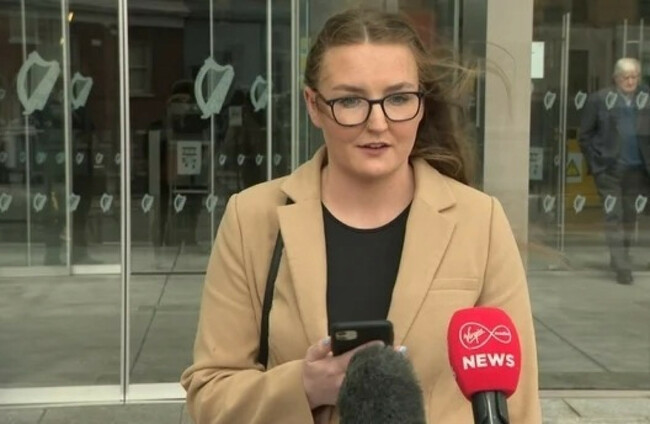
THE HIGH COURT has awarded a 27-year-old who was raped by her foster father hundreds of times between the ages of 11 and 18 €328,000 in damages.
Stephen Murray was found liable for the damages due to the personal injury and psychological damage he inflicted on Kelly Kemmy, who was in his care at the time of his “horrific” abuse, and the subsequent loss of earnings she has suffered in her life as a result.
In 2023, Kemmy settled her legal action against Tusla for a sum of roughly €250,000.
Justice Emily Egan of the High Court has found that Murray and Tusla were concurrent defendants in this case, and so the sum paid by Tusla was deducted from an initial award of €578,000.
The judge also did not award damages on the grounds of a submission by Kemmy’s representatives that Murray would have received €300 in aftercare payments that were meant for her, but that she believes he kept after the Murrays made her homeless after she reported his abuse to the Gardaí in July 2019.
Kemmy sought damages for personal injuries and rape, sexual assault, battery, false imprisonment, and trespass to the person against Murray.
The High Court heard in the oral evidence that the 27-year-old gave that she was placed into the care of the Murrays in 2001 alongside two younger siblings.
Murray began repeatedly sexually assaulting her at the age of 11, often with her younger siblings in the living room, and then proceeded to rape her in her bedroom at night, multiple times a week, for a period of seven years.
There was a period of 3-4 months following hip replacements where the abuse ceased, but Murray later began perpetrating the abuse again.
He is currently serving a 12-year sentence in Mountjoy with one year suspended.
Justice Egan said that Kemmy described a “horrific cycle of abuse” in court.
Egan’s judgement said that it was concern for her two younger siblings that stopped Kemmy from reporting the abuse sooner.
The judge said that Kemmy frequently cried herself to sleep and experienced suicidal thoughts.
Murray sent texts to Kemmy in 2019 asking her: “Stupid question, could we ever again? Just wondering”, and “Do you hate me for asking?”
His abuse had stopped as Kemmy then had a boyfriend who was her own age.
Egan noted that Kemmy found the criminal trial process that ensued “extremely daunting”.
In the High Court, she reported that the Murrays sent her a few of her personal possessions after she reported the rapes, and proceeded to burn her bed and her bedside locker.
A Tusla representative told her and her siblings that the younger children would not be able to return to the care of the Murrays.
Kemmy pursued a degree in social care but began suffering flashbacks that ultimately led to her being unable to sit her exams.
Following her settlement from Tusla, she purchased a two-bedroom apartment for her and her daughter.
She now survives on child benefit and wages from two part-time entry-level jobs.
Justice Egan, in her judgement, noted that the damages awarded must compensate Kemmy for not only the consequences of the abuse she suffered, but also for the “immediate physical agony, psychological trauma and humiliation of each rape”.
“Through her strength, bravery and determination, the plaintiff has somehow kept her life, if not on track, at least near to the tracks,” she said.
Justice Egan noted that “paradoxically”, it was the plaintiff’s own “resilience” that meant that the court could not award “general damages at the upper limit”.

To embed this post, copy the code below on your site














have your say