We need your help now

Support from readers like you keeps The Journal open.

You are visiting us because we have something you value. Independent, unbiased news that tells the truth. Advertising revenue goes some way to support our mission, but this year it has not been enough.

If you've seen value in our reporting, please contribute what you can, so we can continue to produce accurate and meaningful journalism. For everyone who needs it.

Alamy Stock Photo

Tech dubbed 'creepy' AI smart glasses are here, but our privacy laws have not caught up

As the use of AI smart glasses becomes more common, concerns about covert filming, consent and child-safety implications are growing and the laws we have in place are inadequate.

ACROSS IRELAND AND most recently in Cork, concerns have been raised about people being filmed using AI-powered smart glasses without their consent. While wearable technology is developing rapidly and offers exciting possibilities, these incidents highlight why Ireland needs a more serious conversation about privacy, consent and regulation before this technology becomes more widespread.

Meta’s smart glasses, developed in partnership with Ray Ban, are designed to look almost identical to ordinary glasses. That is part of their appeal. But it also creates challenges when it comes to informing people that a recording may be taking place. Unlike holding up a phone camera, wearable devices can record discreetly and hands-free, making it far more difficult for people to know when they are being filmed.

The only built-in signal currently intended to alert people to recording is a small LED light. However, concerns have already been raised about whether this is enough. Ireland’s Data Protection Commission previously questioned whether proper field-testing was carried out to establish if the indicator works effectively in real-life situations. Reports from Cork have also suggested that, in some cases, the light may have been covered or disabled.

close-up-of-businessman-hand-using-creative-business-chart-innovation-finance-trade-future-ai-and-technology-concept-double-exposure Alamy Stock Photo Alamy Stock Photo

That creates understandable worry, particularly for women and workers in customer-facing roles who may feel they are being recorded without their knowledge in cafés, shops, workplaces or other everyday settings. I also have concerns about child safety and public safety when it comes to these AI glasses.

Invasion of privacy and safety concerns

This week, the Oireachtas Committee on Artificial Intelligence heard from the Irish Council for Civil Liberties (ICCL) and the Children’s Rights Alliance on the broader issue of AI-generated images, deepfakes and consent.

These discussions followed reports earlier this year that harmful AI “nudification” tools became more widely available online. When I asked in the Oireachtas Committee this week whether AI Smart Glasses should be allowed in Ireland, the ICCL was clear in its reply that these glasses are ‘creepy’ and need regulation.

The pace at which this technology is developing has created clear gaps in regulation, both in Ireland and across the European Union. EU institutions have provisionally agreed on new rules to prohibit AI systems that generate child sexual abuse material or non-consensual intimate imagery, but implementation may still take time.

In the meantime, lawmakers are left trying to respond to technologies that are evolving much faster than the systems designed to regulate them. Smart glasses are one example of where we need to be more proactive.

information-leak-recording-to-a-hidden-camera-on-mobile-private-detective-with-camera-looks-at-a-cleft-espionage-background-the-concept-of-eavesdropping-espionage-gossip-and-the-yellow-press Alamy Stock Photo Alamy Stock Photo

Of course, this technology is not inherently negative. Smart glasses have important uses, particularly in accessibility for people with vision loss and other disabilities. Wearable AI could also bring benefits in education, navigation and communication. Innovation should not be discouraged simply because there are risks attached.

Catching up with tech

But innovation and accountability must go hand in hand. As these devices become more mainstream, it is reasonable for the public to expect clear safeguards around consent and privacy. People deserve to know when they are being recorded, particularly in sensitive settings such as schools, workplaces or healthcare environments.

This issue is likely to become even more relevant in the coming years. Snap Inc, the parent company of Snapchat, has announced plans for a consumer debut of its Specs smart glasses in 2026, potentially bringing this technology to an even younger audience. That raises important questions around child privacy and online safety that we cannot ignore.

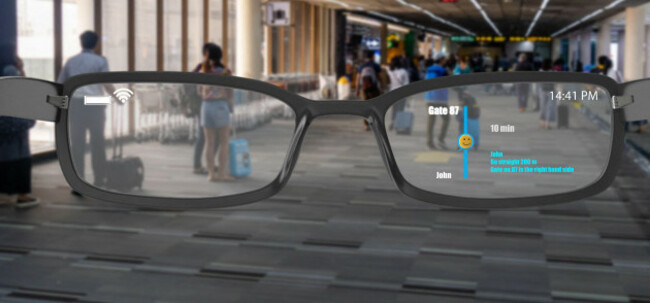
futuristic-technology-trend-concept-in-smart-glasses-user-use-smart-glasses-with-augmented-mixed-virtual-reality-while-go-to-airport-to-get-data-check Alamy Stock Photo Alamy Stock Photo

There also needs to be greater transparency from companies such as Meta, Ray Ban and Snap around how recorded data is stored, processed and potentially used in the future. As AI develops, there are growing concerns internationally around facial recognition, biometric data and the creation of manipulated or synthetic images using real people’s likenesses.

Existing legislation around CCTV, surveillance and data protection was not written with wearable AI technology in mind. That means governments now need to examine whether current laws are sufficient for devices that can discreetly record audio, video and images in public spaces.

man-in-glasses-with-white-illumination-over-black Alamy Stock Photo Alamy Stock Photo

Ireland has an opportunity to lead on this issue rather than waiting for more serious problems to emerge before taking action.

There are practical steps we can begin considering now: clearer recording indicators, stronger protections against covert filming, guidance around the use of smart glasses in sensitive settings and updated data protection rules that reflect how wearable AI technology actually operates.

Technology will continue to evolve, and in many ways that is a positive thing. But public trust in new technology depends on people feeling their privacy and rights are being respected.

That is why now is the right time to put sensible guardrails in place around AI-powered smart glasses before their use becomes far more widespread in everyday life.

Senator Laura Harmon of the Labour Party is a member of the Oireachtas Committee on Artificial Intelligence.

Readers like you are keeping these stories free for everyone...
A mix of advertising and supporting contributions helps keep paywalls away from valuable information like this article. Over 5,000 readers like you have already stepped up and support us with a monthly payment or a once-off donation.

View 3 comments
Close
3 Comments
This is YOUR comments community. Stay civil, stay constructive, stay on topic. Please familiarise yourself with our comments policy here before taking part.
Leave a Comment
    Submit a report
    Please help us understand how this comment violates our community guidelines.
    Thank you for the feedback
    Your feedback has been sent to our team for review.

    Leave a commentcancel

     
    JournalTv
    News in 60 seconds