Sign in. It’s quick, free and it’s up to you.
An account is an optional way to support the work we do. Find out more.
Sign in. It’s quick, free and it’s up to you.
An account is an optional way to support the work we do. Find out more.

EVERY NEW YEAR, we talk about fresh starts. We resolve to be kinder, more inclusive, to do better by one another. We tell ourselves this will be the year things change.
But for some children, nothing changes at all.
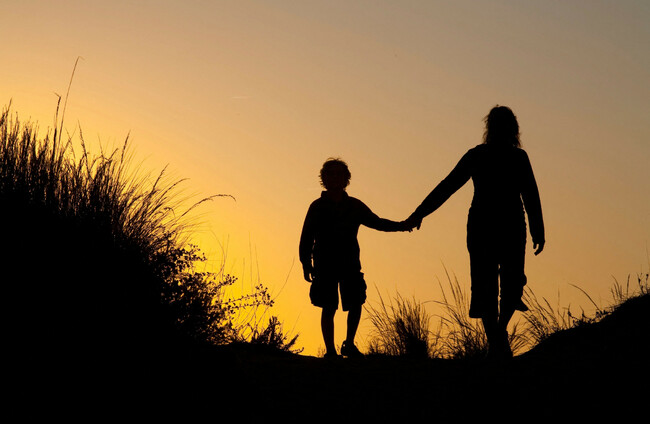
My son is seven years old. He has an intellectual disability, and he is non-speaking. In his seven years, there has never been a knock at the door asking him to come out to play. No play dates. No birthday party invitations. No casual message from another parent suggesting a meet-up in the park.
This is not the fault of children. It is the failure of the systems we have built — systems that separate children early, and then wonder, years later, why inclusion feels so difficult.
At home, my son’s version of friendship is gentle and still. His dad sits beside him on the couch, and they connect. My son stays. He leans in. He wraps an arm around him. His calm presence is his communication. I experience it. His sister does too.
With him, friendship looks like peace. Like being entirely at ease with another person. There is no performance required. No words. Just the decision to be together. But outside our home, that kind of friendship has nowhere to land.
Every weekday morning, my son waits at the door with his bag, calm and patient, ready for a day in a school that is separate from his community. Six hundred children walk past. School bags bouncing, coats half-zipped, chatter spilling out ahead of them. Full of curiosity, imagination and kindness. They may have noticed him getting on or off the bus. That brief glance is the sum total of his place in their world.
He cannot initiate the friendship. Other children could, but they don’t know how. They don’t know how because he is not in their school. He is not in their weekend clubs. He isn’t lining up for karate on a Tuesday evening. There is no shared space where connection might naturally grow.
The burden of inclusion continues to rest with my son to fit in, to catch up, to communicate differently. And he cannot do that. So he remains excluded, not through cruelty, but through design.
This exclusion costs him friendship. But it also deprives other children of something, too. They don’t get to know him. They don’t get to learn how to be his friend. They don’t get to grow up understanding that friendship doesn’t always look like talking or games or shared interests — that sometimes it looks like sitting quietly beside someone and choosing to stay.
We have built systems that deprive children of this learning. We assess what a child is capable of, measure where they fit, and decide which spaces they are allowed to occupy. In doing so, we have shifted responsibility away from our environments onto the child, instead of redesigning schools, clubs and communities so they are accessible to everyone, including those with an intellectual disability.
Meanwhile, children never receive the chance to grow into adults who are comfortable with difference. Adults who don’t look away, who don’t wait for someone else to make the first move. Instead, difference feels unfamiliar. Adaptation feels awkward. Inclusion feels like something specialist, rather than something human. The scarcity of voices naming this is telling. It reveals how deeply othering has been normalised, and how casually we have treated belonging as something conditional.
Conversations about who belongs and who does not are not abstract. They play out in the most ordinary ways: in who is invited, who is included and who is left without friendship. They teach all our children, from an early age, who is valued, who is seen and who is allowed to belong — not just in theory, but in the quiet, everyday moments where friendship either forms, or never gets the chance.
The Education Convention 2026 offers a once-in-a-generation opportunity and a major national moment to change all this. If we are serious about building a future where children are not othered, we must be honest that an education system built on separation cannot deliver a society rooted in belonging.
We must be willing to step out of our current, fragmented design and ask harder questions about values, mindset, rights and about the kind of society we are choosing to build.
Central to this conversation is children — all children. Children with an intellectual disability. Non-speaking children. Children who might be spoken about, but rarely listened to. Inclusion Ireland strongly encourages children and young people with an intellectual disability, and their families, to apply to become participants (closing date Friday 16 January).
Government and policymakers struggle to imagine a future education system very different to the one we have now. Parents and schools struggle with it.
But children don’t. They know what matters. They want to make friends, to go to school with their siblings, to learn, to be invited to their neighbour’s birthday party, to try after-school karate and to be supported to reach their potential in their own community. The “how” lives in their voices.
One day, we will look back, with deep unease and regret, at what we accepted as normal.
At the fact that a little boy never experienced a knock at the front door from his neighbour asking him to play.
Inclusion is not a resolution we make in January and forget by February. It is lived experience. It is shared spaces where children learn, naturally and gently, how to adjust for one another.
The question, as another year begins, is whether we are ready to create an Ireland where friendship can finally reach my son.
Lucinda Murrihy is the proud Mum of two autistic children, and Head of Strategy & Innovation at Inclusion Ireland.
To embed this post, copy the code below on your site













have your say