Sign in. It’s quick, free and it’s up to you.
An account is an optional way to support the work we do. Find out more.
Sign in. It’s quick, free and it’s up to you.
An account is an optional way to support the work we do. Find out more.

LAST UPDATE | 23 hrs ago
In Politics by Numbers, broadcaster, author and spreadsheet stan Gavan Reilly takes a data deep dive into a political point of the week.
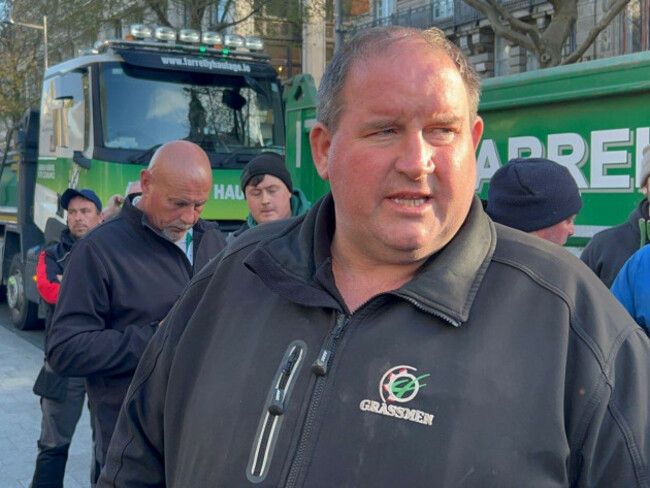
THE VERDICT OF those in the Well Hotel in Moate was fairly clear. People had driven from the four corners of the country – from Kerry to Connemara to the tip of Malin – and couldn’t even get into the main function room, instead standing in front of a big screen in the car park.
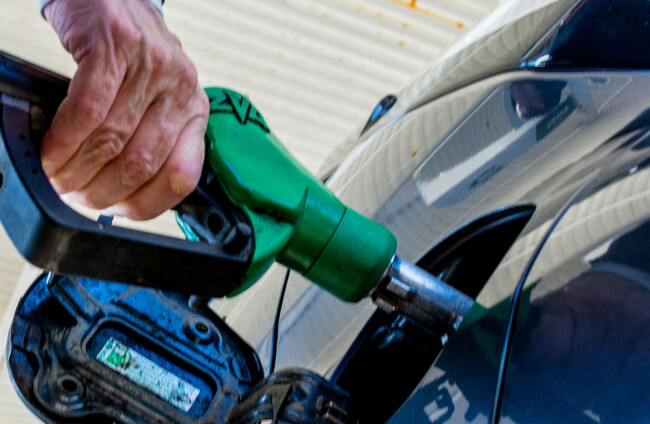
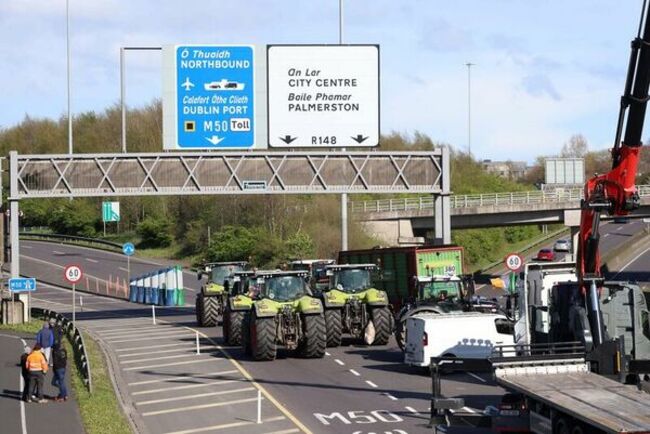
When motor fuels are as dear as they are, trekking that far is a gesture – just as it was in April as the same movement spawned a nationwide protest that substantively shut down the country. “There’s no way we’ll be bullied like we were the last time,” said Christopher Duffy, promising to dig in for winter if the ad hoc campaign’s wishes are not met, and if it takes to the streets again.
Whether the campaign was actually ‘bullied’ last time is debatable to say the least. The blockades across the country largely ended peacefully. For the first time since the dark and dismal bailout winter of 2010, cabinet met on a Sunday to approve an emergency budget. The costs of motor fuels were slashed. More or less, those on the barricades got what they wanted. Hardly any wonder that they’d consider a re-run.
Establishing the campaign’s exact wish-list is difficult – as is identifying it by name – but, its undoubted main purpose is to cut the cost of fossil fuels. What exactly can the government do on that?
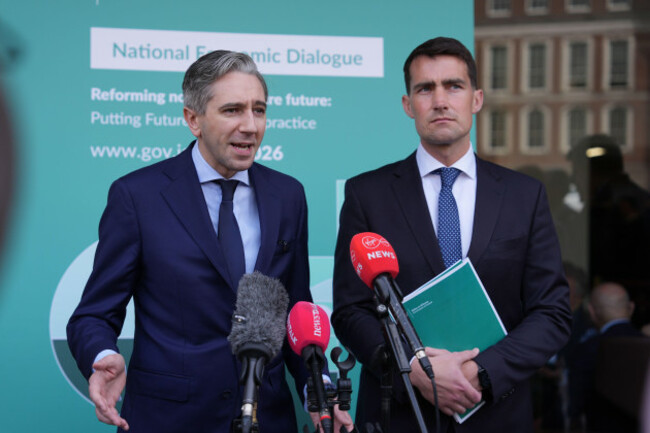
A solution offered in Moate – and put to Simon Harris by reporters outside this week’s Cabinet meeting – was simply cutting VAT on fuels. Is this a runner? The short answer is… no.
The hindrance is the EU’s VAT directive, which is one of the key ways the EU tries to implement a single market for goods and services. Its key principle is that if consumers are to have a reasonable chance of buying competitively from anywhere in Europe, then countries cannot have a race to the bottom by creating all sorts of unique VAT rates for unique products.
In short, it says countries may only have three different rates of VAT – the ‘standard’ rate (15% at an absolute minimum; 23% in Ireland) and no more than two lower rates (5% at a minimum, 13.5% and 9% in practice). There’s also one ‘super-reduced’ rate (4.6%), a sort of Schrödinger’s rate that exists only in theory as it can apply only to the likes of medicines and livestock.
This is a lesson that bit Fine Gael in Election 2024, when it promised to cut VAT for some hospitality services to a new rate of 11%. Media and opposition quickly pointed out that an 11% rate could only exist if the lower 9% was increased to meet it – meaning an inadvertent tax increase for many other sectors. Delivering the promise ultimately meant bringing hospitality under the 9% rate – which cost so much in the last budget that the government couldn’t afford to cut personal taxes too. The political pressure on Harris and Jack Chambers now is all the more magnified by this electoral misstep two years ago.
A larger, under-appreciated aspect of the VAT Directive is that it also stipulates the rates at which many products should be taxed. For fossil fuels, that’s the kicker: motor fuels must be taxed at the standard rate (as in, 23% in Ireland). It’s also the reason why the VAT on sunscreen, a perennial complaint, cannot be lowered either.
Home heating oil should be taxed at this rate too, but isn’t. Its 13.5% rate predates the Directive, so gets the benefit of inertia – but this grandfather clause survives only as long as nobody touches it: the only permissible change would be to bring it up to 23%.
The only way Ireland could cut those taxes is to lower the rates themselves – as in, cut 23% to 22% or lower – which is simply a non-starter. VAT brought in €23 billion last year, over a fifth of the country’s tax take, and when there’s only €1.5 billion to spend on tax measures (most of which is now going on personal taxes) an actual cut on VAT is off the table.
That leaves one other bogeyman: carbon tax, which those in Moate openly want scrapped. The heavy haulage that fills our supermarkets is almost exclusively dependent on diesel. It’s reasonable to see carbon taxes as a stick without a corresponding carrot.
In legal terms, carbon tax is a form of excise duty. The EU doesn’t distinguish between one form of excise or the other, but again, it does require legal minimums. Its Energy Taxation Directive – which exists to incentivise using renewable energies instead – forces a minimum excise of 33c per litre of diesel, and 35.9c on unleaded.
Ireland is, technically, already in breach of this. The first round of excise cuts in March brought diesel’s excise to 45c, which becomes 33c when industrial users availed of a longstanding 12c rebate. The second cuts in April brought this down to 23c. That might be up for review, but would grant little respite if it still leaves diesel close to €2 per litre.
Carbon tax is the only form of excise that applies to home heating oil, which is the reason that the cuts in March and April did not make it any cheaper to fill a tank. And while that EU directive does not force the Government’s hand, another one does: the ‘Emissions Trading Standards Directive’ (ETS2), which tries to ensure carbon emissions standards, places a minimum carbon charge of around €140 (after VAT) on a fill of 1,000 litres on most suppliers, who will then pass it on to the public.
In fact, ETS2 puts handcuffs on what the government can do about motor fuels too: when it takes effect about a year from now, it might add another 15c, after VAT, to a litre of diesel.
It is plainly visible that these three EU directives – on VAT, energy taxes and emissions trading – were never designed for a world in which the everyday cost of filling a car, or heating a home, was as high as it is now. Only six months ago nobody could have foreseen the world’s most dramatic and impactful energy shock. But it’s here, and we live with it.
The unfortunate consequence in the short term is that within the EU, stepping out of kilter with directives tends to mean pretty hefty fines. So far, we seem to have evaded any punishment for cutting excise on motor fuels below the mandatory minimums. That may last, or it may not: we might get away with it only so long as those breaches have a deadline.
It may also mean that the State can flex its muscle, and look to cut carbon taxes on kerosene below what the ETS2 directive requires. It might even decide that on an emergency short-term basis, some kind of intermediate VAT rate is warranted to give some relief on keeping the house warm. But any such move is fraught with danger: we’re pushing the envelope as it is, and budgetary relief now may cost billions more in future fines.
None of which, of course, is any comfort to those who gathered on Sunday and who say they’re prepared to protest all winter to get rid of carbon taxes and make their fuels more affordable. The solutions the Government used the first time are probably not a real option now. That’s bad news for ministers, motorists and Moate.
Gavan Reilly is the political correspondent for Virgin Media News and the host of Monday with Gavan Reilly, which airs every Monday at 10pm on Virgin Media Play and Virgin Media One.
To embed this post, copy the code below on your site












have your say