Sign in. It’s quick, free and it’s up to you.
An account is an optional way to support the work we do. Find out more.
Sign in. It’s quick, free and it’s up to you.
An account is an optional way to support the work we do. Find out more.

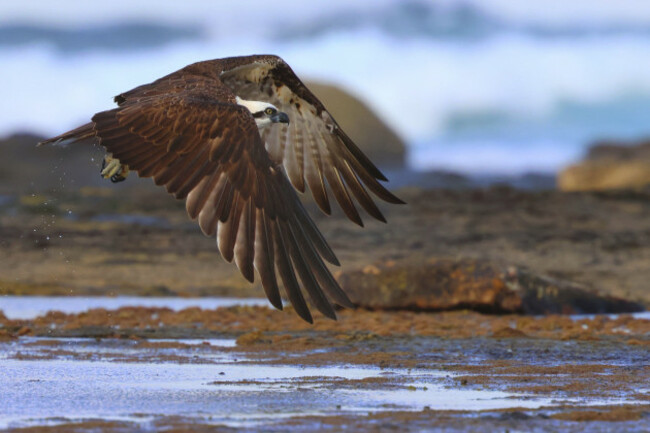
SIDE BY SIDE, we move at what feels like close to 100 miles an hour, yet time slows down, the Land Rover jolting beneath us as we gain and lose sight of an African Hawk Eagle flying low and parallel to the earth.
It holds steady in its flight, about 30 feet above the ground. Beneath it, a smaller bird flies, 15 feet lower, unaware, or perhaps aware and resigned. I wonder if it knows it is being hunted. I wonder if the Hawk Eagle knows we are watching.
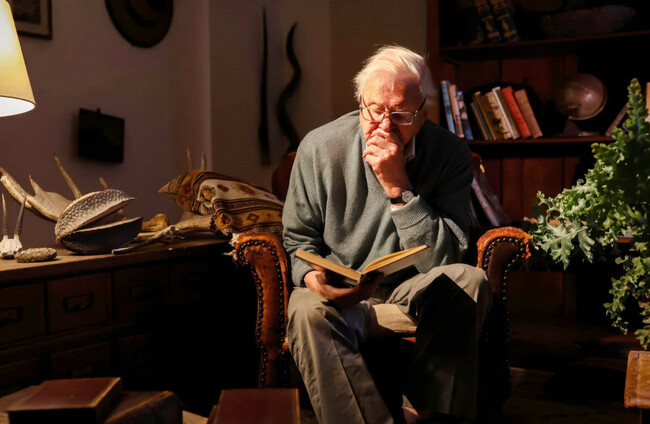
And somewhere in the back of my mind, I hear the quiet, familiar cadence of David Attenborough, the voice that first taught me how to see moments like this.
Years ago, I wrote about how it was not the time to stop listening to him. Standing here now, I realise I never did. Listen not just to learn, but to protect.
Greg, our tracker, tells us not to look away.
Then, in a blink, it happens.
The Hawk Eagle drops, not like a fall, not like a dive, but like something compelled by gravity with intent.
In an instant, it strikes. The smaller bird is knocked from the air, its body limp before it even begins to fall. The Hawk Eagle catches it mid-descent, its sharp, sleek talons closing with precision, and then they are gone, and I can hear my heart beat with aliveness.
And then I cry.
Not for the bird, not for the violence, but for the perfection and sacredness of it. For the fact that I am there to see it, not through a screen, not through that same steady voice echoing through a childhood sitting room in Killinarden, but with my own eyes.
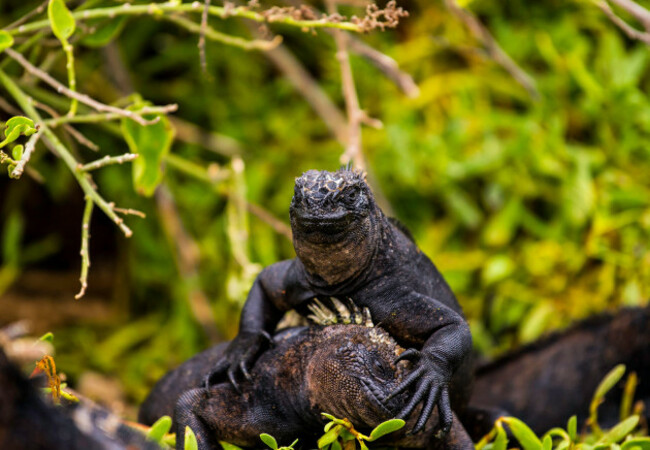
Years later, in the Galápagos, that same feeling finds me again. I am standing on the black, sunburnt lava of Fernandina Island, the heat rising through the soles of my shoes, the air thick with salt. The ground is alive.
Hundreds of Marine Iguanas lie piled together, their bodies overlapping like cooled lava. They are still, prehistoric, almost impossible, until one exhales sharply and turns to take in the penguin sitting in front of them like a conductor of sorts. Another lifts its head. Another drags itself toward the sea. They are everywhere.
Some of them slipped into the water.
Moments later, I follow, but not before a fleet of Golden Rays moves like sunshine beneath the surface.
The cold hits, and then everything softens. Beneath the surface, the world slows, but life bursts. The iguanas, once land reptiles, move with a grace that feels borrowed from another sea creature, their long tails guiding them through the water as they stop to graze. Then there is movement beside me.
A sea lion.
It circles once, twice, and then comes closer, close enough that I think it is going to headbutt me, the curiosity, the playfulness. It darts forward and pulls away, doing rapid circles around me as though I am part of a game I haven’t agreed to play.
I laugh into my snorkel, the sound lost to the sea but felt in my chest. “Hammerhead, Hammerhead”, shouts across the surface. I dive quickly to follow the pointing figure as the Hammerhead below pays no heed and disappears as quickly as it arrived.
On Santa Cruz Island, I walk through the highlands where the air is cooler, and the earth is green. I think of David Attenborough’s last encounter with the Tortoise Lonesome George, the much-loved last of his species.
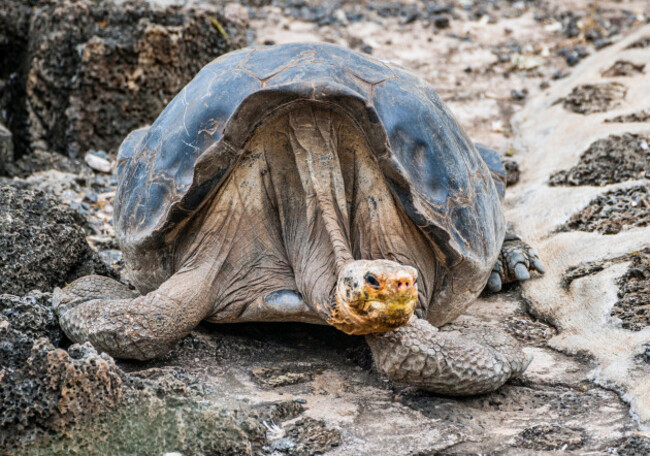
David speaks to George’s creakiness at 80, likening him to himself. I, too, draw many comparisons between Attenborough and Lonesome George: rare, much-loved, with a lifetime of knowledge and wisdom.
A giant Galápagos tortoise stands ahead of me, unmoving at first, then slowly, almost imperceptibly, lifting its head. It looks ancient, not just in age but in presence, as though it has been here long before me and will remain long after. I think of Attenborough and George in that moment.
I realise, standing there, that none of this feels new. I have seen it before, not in person, but somewhere deeper. Every movement, every creature, every strange and beautiful detail feels like recognition. As if the child who sat cross-legged in front of the television, listening to David Attenborough, had been quietly memorising the world.
And now, as if compelled, I step into it.
I remember learning about Charles Darwin, about how these islands shaped his thinking, how life here adapted and transformed in isolation. Back then, it felt like a story. Standing there myself, it feels like the truth, visible, tangible, alive in every direction: no natural predators, just an abundance of life.
And still, somewhere beneath the joy, beneath that same sea surface, there is grief too, because I have spent a lifetime listening to David Attenborough explain how fragile abundance really is.
He reminds us that our humanity and its survival rely on the ocean, and the human-driven destruction he has witnessed over his century in observation is “unspeakably awful”. Our wonder, my fascination, is not enough.
And just like in Africa, I cry.
Not because I am overwhelmed, but because something in me settles. The noise drops away. The distance between who I was and where I am disappears. I also feel deep sadness in how we treat the Earth.
I belong here.
Back in Ireland, I find myself scanning the skies again, the tall motorway lampposts, the tree lines along the Dublin and Wicklow Mountains, quick to point and say, “bird of prey,” to the surprise of whoever is beside me. That instinct, that searching, that awareness, it never left.
It was only waiting.
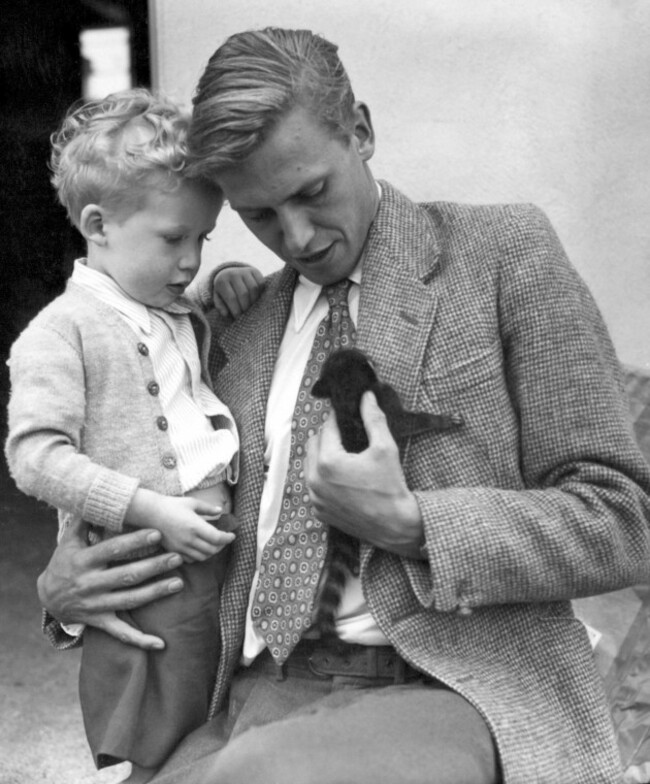
Today, David Attenborough turns one hundred. An age shared by some of the very creatures he once introduced me to. Imprinted in my mind is Attenborough with the apes, and as a child, I wondered about our likeness.
Attenborough stated that “No species has ever had such wholesale control over everything on earth, living or dead, as we now have. That lays upon us, whether we like it or not, an awesome responsibility. In our hands now lies not only our own future, but that of all other living creatures with whom we share the earth.”
In Attenborough’s one hundred years of bringing the natural world to us, we have seen that responsibility disregarded. I have observed Attenborough himself move from his fascination with animals to developing “witness statements”, described in A Life on Our Planet, with a sense of urgency that is now required to address the “catastrophic decline of earths biodiversity and ecosystems”.
It feels impossible to measure what he gave me, not just knowledge, but direction. A quiet permission to dream beyond the edges of my small sitting room, and the belief that one day, I might go, better still, contribute positively to the sustainability of the earth that I am lucky enough to share with such beauty.
From the plains of Africa to the volcanic shores of the Galápagos, I followed those promises I made as a child.
And each time, I cried, not for what I witnessed ending, but for the overwhelming, undeniable feeling that I had arrived exactly where I was meant to be.
Through following David Attenborough everywhere he was, I found another part of who I am. I am forever linked to his hundred years, and today, on his 100th birthday, as old as a Galápagos Tortoise, I will celebrate him.
Lynn Ruane is an independent senator.
To embed this post, copy the code below on your site










have your say