Sign in. It’s quick, free and it’s up to you.
An account is an optional way to support the work we do. Find out more.
Sign in. It’s quick, free and it’s up to you.
An account is an optional way to support the work we do. Find out more.
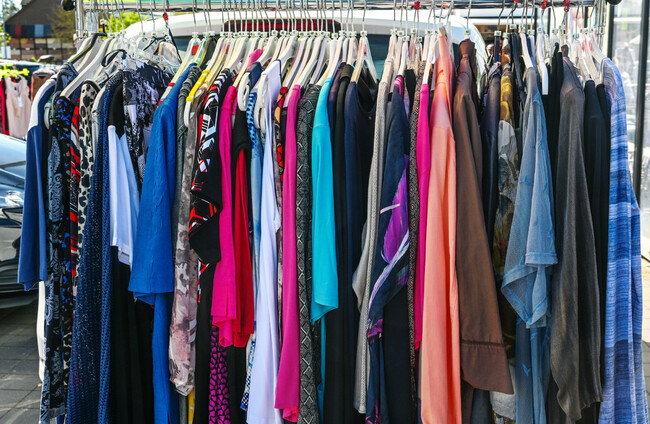

THE RIGHT TO clothing is a recognised human right. In other words, to have access to clothing is a necessity for our survival as well as our identity. But that necessity has been exploited and turned into something for consumers to grapple with.
The fast-fashion industry has changed the textile market by completely disconnecting consumers from their clothing. Its practice is simple: produce outrageous amounts of low-quality clothing pieces to sell at very low cost to consumers, all while exploiting people and resources, no matter the cost, for the ultimate goal of profit.
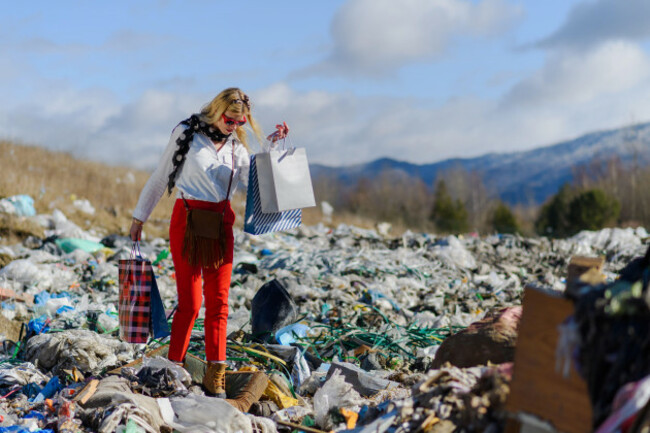
Simultaneously, the industry has distracted a vast majority of people from the stark reality of its practices, which are wreaking countless impacts on people and the environment.
So, for me, this question emerges: when is Ireland going to ban fast-fashion brands from the textile market?
There are several brands that could be considered as fast-fashion champions — we all know them as they constantly show in our online searches, offering money off for this, the cheapest price for that, along with bright, colourful pictures. These companies are known for their commitment to encouraging mass consumption, along with an endless sea of textile waste and a quest for wealth.
It is perhaps purposefully intangible for many people to comprehend the chain of events unfolding as a result of the fast-fashion industry, with just under one-third of Irish people understanding how excessive textile waste damages the environment.
Though near and far, the impacts are very much present.
The Journal recently reported that exported clothes from Europe, with brands Zara, H&M and Penneys, were found at a number of textile dumps in Ghana, Africa, including a nearby habitat of “international importance”. This was revealed from a Greenpeace investigation. Overproduction is quite simply ecologically damaging and a threat to human health.
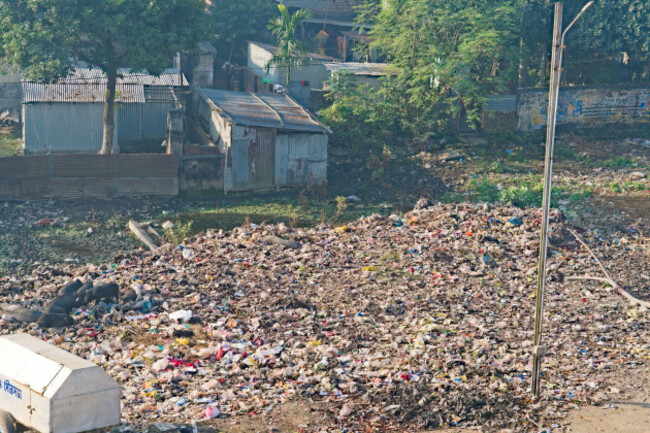
Synthetic fabrics, primarily polyester, are most commonly used in fast-fashion clothing. These are cheap, but also non-biodegradable. When these fabrics enter the natural world, toxic particles are released, such as microplastics and other chemicals, particularly through waterways.
In Ireland, the textile industry has the fourth highest impact on the environment, and Irish people consume twice the amount of textiles as the average European. And, in 2017, the Environmental Protection Agency reported that over one billion microplastic particles are spread annually on agricultural land.
Comparatively, on a global scale, the United Nations reported the overall fashion market was solely responsible for 10 per cent of annual carbon emissions, ranking the industry as the third-largest industrial polluter, just behind the agriculture industry and with the fossil fuel industry leading. Further, despite the fast-fashion industry yielding absurd amounts of wealth, it refuses to support its workers in an obvious demonstration of disregard for human decency.
In the Global South, across countries Bangladesh, India, China, Vietnam and Indonesia, garment workers, mainly women, are illegally victimised by the fast-fashion industry. In addition to working under inhumane conditions for low wages, women face physical and verbal abuse, sexual harassment and workplace violence. But international labour standards are not usually enforced by most governments in countries where fast-fashion factories operate.
It is just one way in which the industry exploits people and evades any potential legitimacy.
“Big Fast-Fashion”, like Big Oil, remains largely unregulated. In February, the European Parliament and Council agreed to allow EU member countries to establish producer responsibility schemes, following the “producer pays” principle. For the textile industry, this means it would pay all costs of collection, sorting and recycling.
But this won’t go into effect for two years, similar to other climate initiatives in which delay action and allow for companies to thrive while others suffer. At a rate of 92 million tonnes per year, it’s possible that up to 200 million tonnes of textiles will be added to already-existing landfill space.
In June, France passed a bill that will tax fast-fashion companies, and even influencers who flaunt their shopping hauls on social media. However, the bill largely focuses on advertising and will most directly impact two Chinese, mega fast-fashion brands: Shein and Temu. Other fast-fashion brands based in Europe, but which outsource to Asian countries, aren’t being held to the same standard under the new regulations.
In terms of protecting consumers, this bill is meaningless. Rather, business is as usual, with the overall fast-fashion industry merely getting a slap on the wrist while consumers are to remain with any increased prices from eco-taxes on companies.
Fast-fashion brands have also caught onto the sustainability movement and introduced a new trick to try on consumers. Now, people are subject to ‘greenwashing’, or false promises of recycled or sustainable materials used to make clothing.
In other words, companies have found another way to fool consumers of their true intentions: to continue producing at alarming rates, whatever the cost. And in reality, only 3 per cent of clothes are actually made from recycled materials.

People are ultimately set up in an impossible fashion market to keep up with and forced to make unethical choices. In 2021, authors from the University of Technology, Queensland, Australia, revealed in a study on ethical concerns of fast-fashion shoppers that consumers need a system where they don’t have to choose between “what is right and what is cheap.” It also recognised consumers’ “need a system where all our clothing choices are ethical”.
The fast-fashion industry has continuously shown people its true colours; it does not value people, the environment, and morals and ethics. Transparency does not exist in its vocabulary.
Mass textile waste is successfully poisoning ecosystems and damaging communities, particularly in the Global South. As these devastating events occur, Ireland is receiving a foreshadowing of what could soon be on its doorstep. Its national challenges are shown to likely worsen over time if change isn’t implemented.
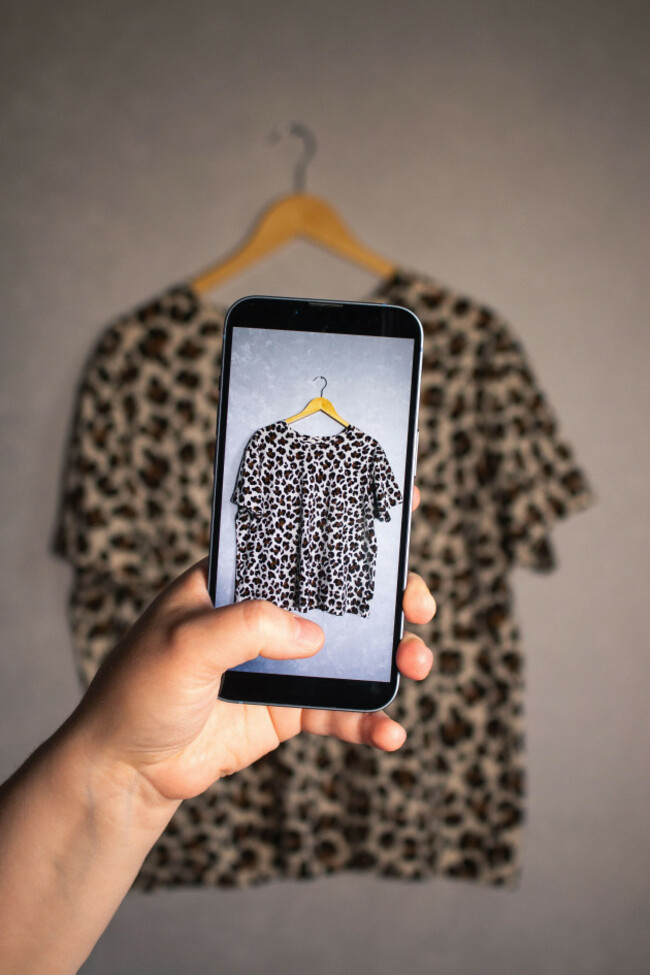
With so many Irish people unaware of these consequences, it’s hard to imagine how consumers can remain solely responsible for avoiding what’s forcibly available to them. While education is crucial, allowing consumers to make unethical choices is equally immoral.
Recently, France passed a bill that will tax fast-fashion companies and even influencers who flaunt their shopping hauls on social media. But will this have a substantial effect on the industry? With its persistently profit-driven character, I’m unconvinced.
As stated by Fianna Fáil MEP Barry Andrews, “human rights and environmental abuses should not be allowed in our shopping baskets.” The best way to protect people from this industry is to do just that, and most effectively by banning fast-fashion companies from the textile market.
This goes beyond our shopping baskets and should extend to our global community. Banning this industry includes making international commitments in protecting labourers.
And this is by no means radical. Near and far, people’s health and well-being are at risk. If world leaders genuinely want to fulfil “sustainable development” goals and pursue a circular economy, supporting people over profit and exploitation is a key first step. It requires shifting the focus from benefiting corporations and companies and putting people at the forefront.
Elizabeth Rymut is a freelance journalist. You can follow her on BlueSky.
To embed this post, copy the code below on your site













have your say