Sign in. It’s quick, free and it’s up to you.
An account is an optional way to support the work we do. Find out more.
Sign in. It’s quick, free and it’s up to you.
An account is an optional way to support the work we do. Find out more.
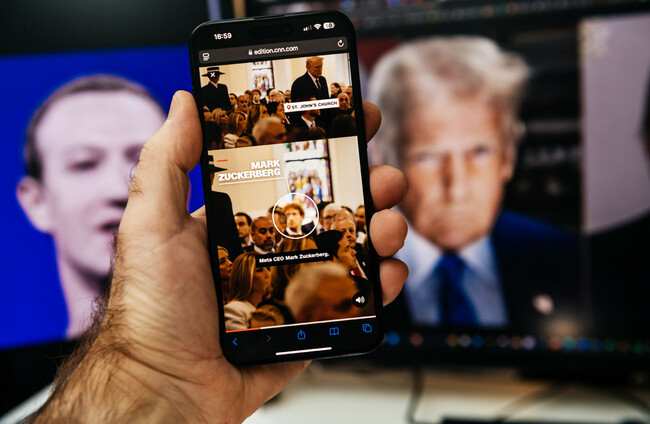

AROUND THE WORLD, it’s becoming a dire era for free speech. In the United States of America, freedom of speech is constitutionally secured in its First Amendment and traditionally considered as the nation’s founding principle.
Yet, this protection for me, an American, is now starting to feel nonexistent on social media platforms. Because of this limitation, I’m quitting all Meta platforms.
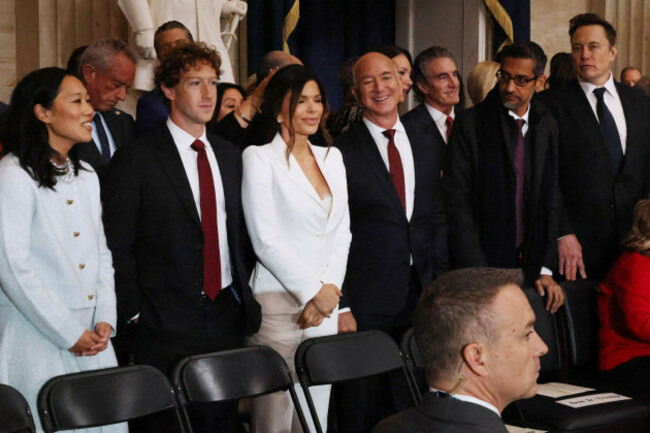
Before the newly elected US president took office, his predecessor President Joe Biden warned Americans in his farewell address a forming oligarchy of “extreme wealth, power and influence” holds dangerous consequences for democracy, basic freedoms and rights. Particularly, he emphasised the rising power of leaders in the technology industry. This has also been long predicted by American Senator Bernie Sanders to become both a national and global threat.
What is an oligarchy, let alone a tech oligarchy? It’s the opposite of a democracy, a government directed by its citizens. An oligarchy means a small group of people maintaining control over a country. Specifically, the new tech oligarchy in America consists of a tiny circle of elite, White male tech giants monopolising the global communication space with their social media platforms.
Meta Platforms, Inc. (Meta) is a technology corporation founded by American tech entrepreneur and billionaire Mark Zuckerberg (also the CEO and chairman) which includes the ownership of social media platforms Facebook, Messenger, Instagram and WhatsApp.
Within the top four globally leading social media platforms are Facebook and Instagram, accounting for over 5 billion users – for perspective, there are about 8 billion people on Earth.
In January, Meta made unprecedented, consequential industry changes for its social media platforms while claiming this move was to protect against censorship and to align with mainstream discourse.
Since then, Meta has faced widespread criticism. First revealed by WIRED, Meta’s updated policy eliminates restrictions on “topics like immigration, gender identity and gender”. This would, for example, allow users to call people mentally ill based on their gender identity and sexual orientation – doing so is considered derogatory or disrespectful language, which can be illegal.
There are many other consequential policy alterations, including giving users the nod to discuss gender-based limitations (i.e. what roles women should/n’t have), discriminate protected characteristics (age, religion, gender, race and sexual orientation) and use socially excluding language (i.e. certain spaces should not be open to groups of people based on their gender). Discrimination is typically illegal.
Meta also replaced its independent fact-checking team with a system like Community Notes, which is used on X (formerly known as Twitter) – a social media platform purchased by Elon Musk, another tech entrepreneur and billionaire. Community Notes has been criticised for its inefficiency in managing mass misinformation, polarisation and speech moderation (hate speech). Particularly, this is because the Community Notes’ algorithm is based on community voting, meaning despite factual evidence, a topic’s credibility is presided by popular votes. Misinformation, polarisation and hate speech are all threats to democracy, and basic human rights and freedoms.
The day after the US presidential inauguration, Instagram users around the world reported content searches for hashtag topics like #Democrat and #Democracy were blocked, while searching for #Republican was not. Meta claimed this was a system error. Such an established tech corporation should hold itself to greater accountability to avoid irresponsible errors.
With Meta having a history of being internationally fined for abusing users’ data, silencing content supporting Palestinian human rights and failing to minimise content invoking violence in Ethiopia, the corporation is completely transparent on whether it values basic freedoms and rights. In short, it doesn’t.
In an article on a global digital oligarchy, The Conversation concluded democratic institutions need to prepare for and address the “growing power of tech platforms”. For EU Member States, the EU Digital Services Act protects online users’ rights by empowering users to have more control over their content and mitigating risks like disinformation and hate speech. Meta, however, thinks this is censorship.
The First Amendment of the US Constitution only applies to protection against speech regulation from government agencies. So, if I’m exposed to hate speech or harmful content on social media, this amendment doesn’t cover me – instead, it would protect the social media platform. The amendment also legalises hate speech, unless there is clear incitement of fear or violence.
Eleanor Roosevelt, on freedom, said: “Freedom makes a huge requirement of every human being. With freedom comes responsibility. For the person who is unwilling to grow up, the person who does not want to carry his own weight, this is a frightening prospect.”
Indeed, with freedom comes responsibility. Freedom of speech is not absent of upholding ethics, or moral principles, online and offline. Maintaining standards and values should not be seen as restrictive.
Many news outlets, journalists and users have transferred away from Meta platforms to alternatives, such as BlueSky. An app described as similar to X but instead protecting users’ data, it allows users to customise their feed and regulates misinformation, discrimination and other toxic content. BlueSky is disassociating with platforms that violate people’s safety, trust and wellbeing.
While the American government fails to protect me, I retain autonomy by remaining highly conscious of what social media platforms I engage with and how ethical they are.
Though a consumer’s burden, I’m carrying my own weight, contrary to the tech oligarchy. In protection of my free speech, I’m quitting all Meta platforms. I do so also to stand in solidarity with people most affected by its policy changes, including women and gay and trans people.
Despite these changes being for American users (for now), Meta’s proven track record of disregarding its user’s well-being is universal. I invite you all to join the collective movement in quitting Meta.
Elizabeth Rymut is a freelance journalist. You can follow her on BlueSky.
To embed this post, copy the code below on your site














have your say