We need your help now

Support from readers like you keeps The Journal open.

You are visiting us because we have something you value. Independent, unbiased news that tells the truth. Advertising revenue goes some way to support our mission, but this year it has not been enough.

If you've seen value in our reporting, please contribute what you can, so we can continue to produce accurate and meaningful journalism. For everyone who needs it.

Rolling News

Crisis management Fuel protests leave the government caught between a rock and a hard place

Behind the blockades lie a government navigating global constraints and protesters rejecting the limits of a changing world, writes Johnny Fallon.

HUMANS ACT AND react based on the information and signals around them. The deepest divisions arise when different groups operate in entirely separate paradigms, where assumptions, concepts and values rest on fundamentally different foundations.

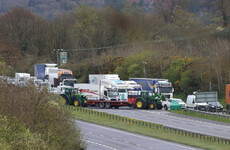
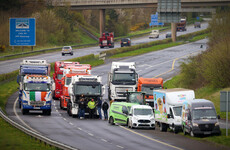
The recent fuel protests in Ireland illustrate this perfectly. The government approaches the crisis with a comprehensive worldview informed by data on multiple risks: competing industry needs, potential long-term fuel shortages and the broader health of the economy.

In contrast, many protesters see it as a straightforward issue — fuel is unaffordable, so the government should simply cut costs and allow business as usual, as if nothing fundamental has changed.

This divide deepens because protesters often frame the problem as a simple lack of political will. In their view, the government is corrupt or misallocating funds that could easily be redirected to them.

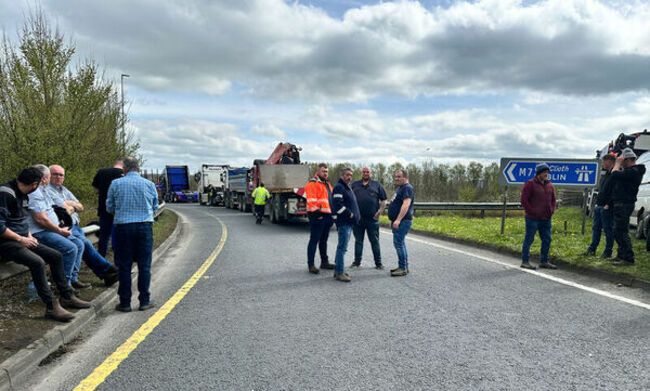
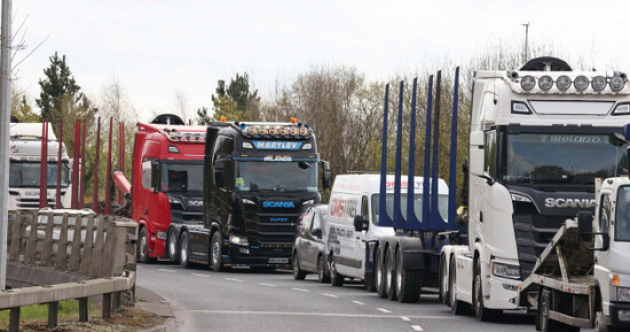
Fuel Strike Wed-8_90746278 Rolling News Rolling News

The government, however, sees itself as holding a cautious, balanced line amid difficult trade-offs. Established representative bodies for farmers and hauliers largely share this paradigm. They seek sustainable, fact-based long-term solutions rather than short-term fixes. The more ad-hoc protesters operating outside these structures show little interest in that approach.

Communicating the message

The psychology of communications and behavioural science is important here. In times of threat or fear, people often slip into “compensatory control”, seeking patterns, order, and agency even when none exists.

This helps restore a sense of mastery, however illusory. It explains the pull of conspiracy theories about governments, big business, moon landings, or 9/11. It feels more comforting to believe that someone is deliberately withholding something or harming us than to accept that governments are doing the best they can under constraints, that we ourselves may have contributed to the situation, or that outcomes often hinge on chance and complex systems.

For some, protesting provides that comforting illusion of control, even when the reality is that no one can fully control global fuel markets right now, certainly not in Ireland.

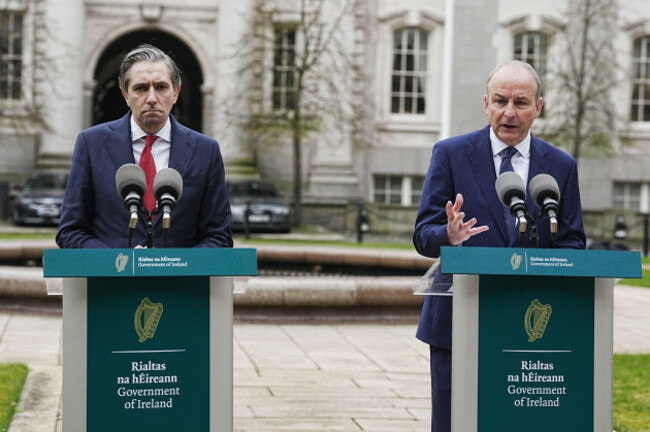
tanaiste-simon-harris-left-and-taoiseach-micheal-martin-speaking-to-the-media-in-the-courtyard-at-government-buildings-dublin-ahead-of-a-leaders-meeting-on-fuel-prices-picture-date-wednesday-apr Tanaiste Simon Harris (left) and Taoiseach Micheal Martin speaking to the media in The Courtyard at Government Buildings, yesterday. Alamy Stock Photo Alamy Stock Photo

This dynamic explains the government’s first priority: it cannot yield to demands when it knows the long-term consequences would be worse. Established representative bodies stay away from the protests for the same reason: they understand the risks. If the government were to sit down directly with these new protest groups, it would signal that “might is right.” It would undermine the established organisations it has been negotiating with, shifting the entire debate toward short-term concessions and handing influence to groups with far less coherent or realistic demands.

A rock and a hard place

A second major problem is the nature of any price reduction itself. Cutting taxes on fuel is easy; reimposing them later is politically and practically difficult. This crisis will not be resolved in weeks or months. A significant tax cut would mean permanent revenue loss for the state at a time when many are calling for the removal of carbon taxes, rejecting the underlying principle entirely — they operate in a paradigm where their actions have no environmental impact and should face no restraint. Bridging that gap is extraordinarily hard.

Even if prices fell sharply, would usage simply return to normal as if the underlying issues had vanished? For how long could the government subsidise “business as usual” before fuel shortages emerge? And if shortages did occur, the next wave of protests would likely be even more intense.

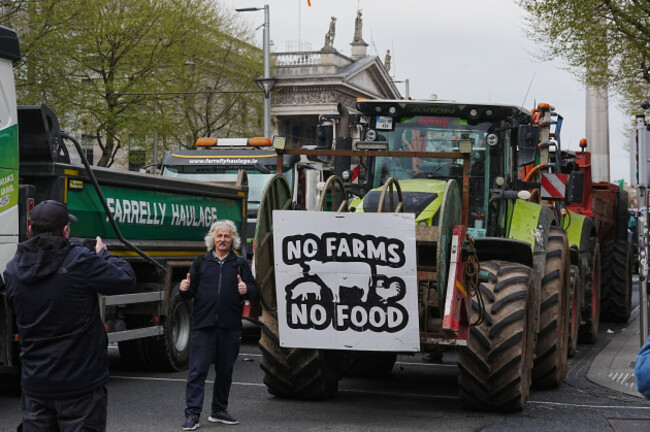
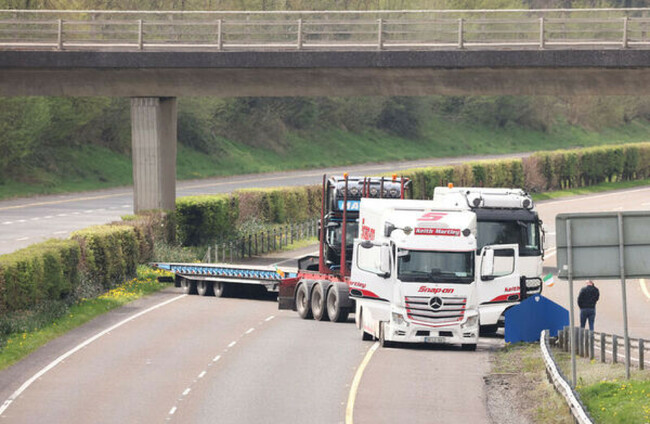
a-man-ha-a-photo-taken-next-to-vehicles-parked-on-oconnell-street-in-dublin-as-protestors-take-part-on-the-second-day-of-a-national-fuel-protest-against-rising-fuel-prices-demonstrators-driving-trac Alamy Stock Photo Alamy Stock Photo

The government took a firm line yesterday, treating the blockades as the actions of a rogue element detached from reality. This stance also aimed to empower ordinary citizens to criticise the disruption without hesitation, and to some extent, it succeeded.

The downside, however, is predictable: confrontation often causes protesters to double down. Feeling cast as the villains hardens the “us versus them” dynamic. Striking the right balance of rallying your own base while avoiding escalation on the other side is a delicate task.

The broader public mood adds further complexity. Most people feel genuine frustration over fuel prices and have some sympathy for those affected. Many farmers and hauliers are struggling but remain aligned with their representative bodies rather than joining the blockades.

The majority understand that the issue is not a simple binary of raising or lowering taxes; there are deeper structural challenges at play. Yet they also see little value in blocking fuel depots or paralysing cities.

The government’s real challenge is that it has struggled to communicate effectively with this reasonable middle ground. It now finds itself locked in a highly polarised debate with an implacably opposed group, while the wider public (though sceptical of the protests) grows impatient with the pace of meaningful government action.

Reasonable observers want something concrete to “hang their hat on,” both immediately and for the longer term.

Johnny Fallon is a political commentator, director of Carr Communications and author of ‘Party Time: Growing up in Politics’.

Readers like you are keeping these stories free for everyone...
A mix of advertising and supporting contributions helps keep paywalls away from valuable information like this article. Over 5,000 readers like you have already stepped up and support us with a monthly payment or a once-off donation.

View 37 comments
Close
37 Comments
This is YOUR comments community. Stay civil, stay constructive, stay on topic. Please familiarise yourself with our comments policy here before taking part.
Leave a Comment
    Submit a report
    Please help us understand how this comment violates our community guidelines.
    Thank you for the feedback
    Your feedback has been sent to our team for review.

    Leave a commentcancel

     
    JournalTv
    News in 60 seconds