Sign in. It’s quick, free and it’s up to you.
An account is an optional way to support the work we do. Find out more.
Sign in. It’s quick, free and it’s up to you.
An account is an optional way to support the work we do. Find out more.
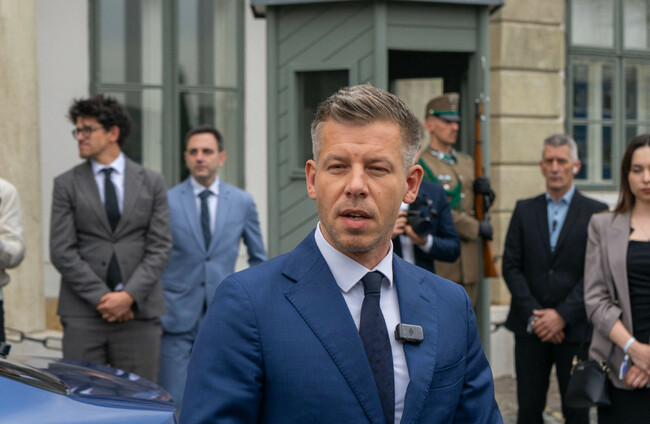

AS I WATCHED the election results roll in from Budapest on Sunday night, I breathed a sigh of relief. After years of backsliding in Hungary, voters delivered a landmark verdict.
And perhaps most tellingly, Viktor Orbán conceded quickly, and without the Trump-style theatrics many had feared. In the end, the scale of his defeat left little room for anything else.
Péter Magyar’s victory is bigger than Hungary – it has become a litmus test for European democracy. In one of the most anticipated and consequential elections in recent years, the hope and promise of the European Union prevailed.
Over the past seven years in the European Parliament, I have become all too familiar with the record of Orbán and his Fidesz party; media interference, homophobic laws, cosy friendships with Trump and Vladimir Putin – all underpinned by a disdain for Europe.
Fidesz was once a member party of the EPP, the political family in which I sit and of which Fine Gael is a founding member. From the day I was first elected in 2019, I consistently highlighted the lack of democratic values in the Fidesz leadership and amongst their MEPs, arguing they had no place within the EPP. When the party left the EPP Group in 2021, it was a joyous, albeit long overdue, moment.
But that moment pales in comparison to what is being celebrated this week, not only in Hungary but across Europe, and particularly here in Brussels. After 16 years of undermining European unity and frustrating EU Prime Ministers and Commissioners, Orbán and his oligarchs are out. For the people of Hungary, this offers the promise of a stronger economy and better living standards. For European citizens, it sends a clear message: the centre can still hold.
In recent years, a narrative has taken hold that the rise of the far right is inevitable. That voters will always drift towards more extreme and more divisive politics. That the only way for mainstream parties to compete is to mimic that rhetoric or shift in that direction. Hungary now tells us a different story – and offers us lessons for future elections.
One of the key reasons for Magyar’s victory was his focus on what people actually care about. While he and his Tisza Party ran on an anti-Orbán platform, they also prioritised everyday concerns: jobs, living standards, and ensuring that wealth flowed back into the pockets of workers rather than political cronies.
For years, civil society organisations across Hungary and Europe have reported the mismanagement of European funding by the Fidesz government. Now, Magyar and Tisza must follow through on their election promises and hold the beneficiaries of Orbán’s reign to account.
Another reason the centre prevailed is because of the smart and careful building of a broad opposition coalition. Individuals, families, civil society groups and activists showed up in record numbers to support the strongest viable alternative to Orbán. And despite political differences, they remained united.
This is another lesson for centrist and progressive forces across Europe: unity matters. I experienced that mobilisation first-hand when I travelled to Budapest last June to attend the outlawed Pride protest. Around 200,000 people defied Orbán and marched through the streets. They marched not only for LGBTI+ rights, but for their kids, their grandkids and the future of their country.
The implications of this election go far beyond Hungary’s borders. Within the EU, it removes one of the most consistent blockers of collective action – particularly on issues like sanctions, rule of law and support for Ukraine, most notably the €90 billion loan. It strengthens the EU’s ability to act with unity at a time when that unity is more important than ever.
For Ukraine, this matters deeply. Orbán’s government frequently delayed or diluted European support. While Magyar may take a cautious approach on Ukraine’s EU accession, this change in leadership offers the prospect of a clearer, more constructive position – one that strengthens Europe’s ability to hold Russia accountable and support Ukraine.
It also shifts the dynamic in EU-US relations. Donald Trump has lost his closest ally at the European table, tilting the balance back towards a more stable, cooperative transatlantic relationship. It also sends a clear signal; endorsement from Donald Trump does not guarantee political success.
However, this is only one election result, and the ideological contest between populism and democracy is far from over. Here in Ireland, we would be foolish to think we are immune. In recent months, we have seen the rise of more aggressive rhetoric, the spread of misinformation, leading to fear and division. These trends may not mirror Hungary exactly, but they follow a familiar pattern. Individuals, and politicians in particular, must be held accountable for the information they share and the tone they set.
Hungary’s election offers both a warning and a lesson. The warning is that democracy can erode gradually, often in ways that are easy to dismiss until it is too late. The lesson is that voters can and do push back.
But that pushback does not happen by accident. It requires independent media, an active civil society, compromise and political leaders willing to stand firm in their values. Relief is a natural reaction to this result. I felt it myself – but relief cannot turn into complacency.
Now is the moment to learn from what worked in Hungary: to build coalitions, focus on the issues that matter to people and carry this momentum forward so that democracy is not just defended, but strengthened.
Maria Walsh is a Fine Gael MEP for the Midlands-North West, and is a member of the European People’s Party (EPP) in the European Parliament.
To embed this post, copy the code below on your site












have your say