Sign in. It’s quick, free and it’s up to you.
An account is an optional way to support the work we do. Find out more.
Sign in. It’s quick, free and it’s up to you.
An account is an optional way to support the work we do. Find out more.
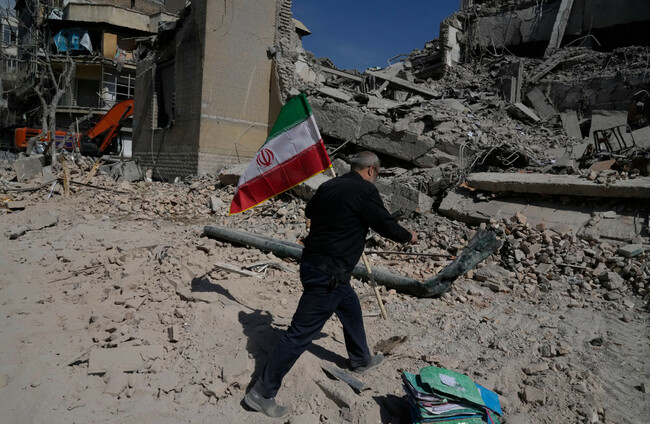

I AM WRITING this as an Iranian living in exile in Ireland, grateful for the freedom I can breathe here and burdened by what that freedom represents.
I can speak openly. Millions of people inside Iran cannot.
They know that a sentence spoken too loudly, a video shared, or a protest attended can lead to arrest, torture, psychological abuse, or death.
For nearly five decades, the Islamic Republic has governed Iran not through consent but through fear.
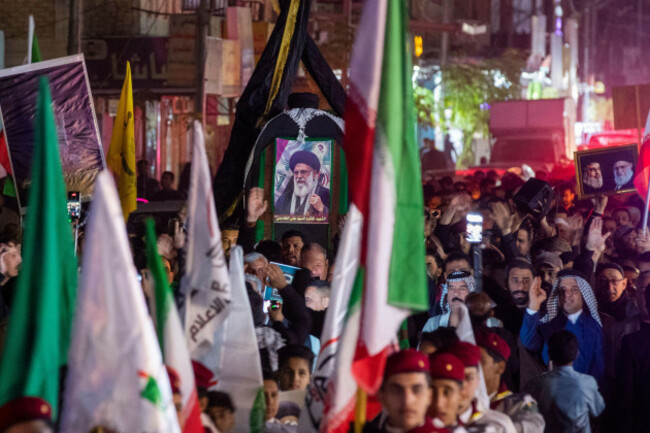
That fear is not abstract. It is enforced through arrests in the night, interrogation rooms, coerced confessions, public executions and the criminalisation of ordinary life, particularly for women, students, journalists, artists and anyone who refuses to perform loyalty.
Internationally, Iran is often discussed as a geopolitical problem: nuclear negotiations, regional alliances, diplomatic balance. For Iranians, it is a lived trauma. Nearly nine million Iranians now live outside the country, not because they wanted to abandon their homeland, but because the state made normal life impossible.
Exile is not freedom without cost. You may be physically safe, but you live with constant fear for those you love. Many exiles lost parents while abroad, unable to return safely, unable to secure visas for visits, unable even to grieve properly. You live with freedom, but your heart remains injured, tied to a country that continues to punish those you care about.
Inside Iran, repression is systematic. Journalists, filmmakers, writers, lawyers, professors and activists are targeted precisely because they document, analyse and question.
Many are sent to Evin Prison, a site repeatedly documented by Amnesty International, Human Rights Watch, and the UN Special Rapporteur as a place of torture, psychological abuse, and denial of due process.
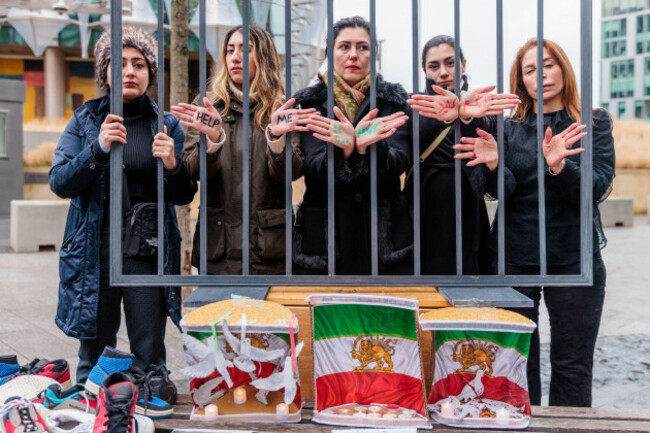
Children have paid the highest price. Some left home and never returned. Others stayed and never came home. Families have buried sons and daughters without justice, without truth, often without even the right to mourn publicly. This collective grief defines a generation.
This is the context missing when the world asks why many Iranians do not respond to US or Israeli intervention with the same fear others feel. The answer is painful but clear: Iranians are more afraid of abandonment than of intervention.
For decades, peaceful protests were met with bullets. Calls for international solidarity were met with statements of concern. While the regime executed protesters and tortured detainees behind closed doors, there were no emergency UN sessions for our dead children. No meaningful accountability. No protection.
Yet now, when the regime’s power is challenged, international law is invoked with urgency. This contradiction is impossible to ignore. How can a state that kills its own citizens, systematically tortures prisoners and silences an entire population continue to be treated as a legitimate interlocutor, while efforts to disrupt that machinery are framed as the primary legal scandal?
Sanctions are another painful chapter. Intended to weaken the regime, they devastated ordinary people. They reduced access to medicine, raised food prices, destroyed purchasing power and pushed families into poverty. Human Rights Watch and the World Health Organisation have documented shortages of life-saving drugs and medical equipment linked to sanctions.
Meanwhile, those connected to power adapted easily. The children of regime officials travelled, studied and lived comfortably abroad. Parents of exiled dissidents were denied visas because they lacked money in their bank accounts, while regime families lived untouched by the restrictions imposed on ordinary Iranians.
Electricity cuts and water shortages are not new to Iranians. We have lived in darkness for years, literal and political, while the regime invested heavily in military expansion and ideological warfare. Iranian wealth was not used to strengthen hospitals or schools but to arm militias, expand proxy conflicts and project power beyond Iran’s borders, while the population was told to endure hunger as resistance.
Repression inside Iran is enforced largely by the Islamic Revolutionary Guard Corps, repeatedly implicated in the killing of protesters, mass arrests and violent crackdowns, as documented by Amnesty International and UN investigations following nationwide protests. Despite overwhelming evidence, the IRGC has continued to operate amid international hesitation, while Iranians pleaded for clarity.
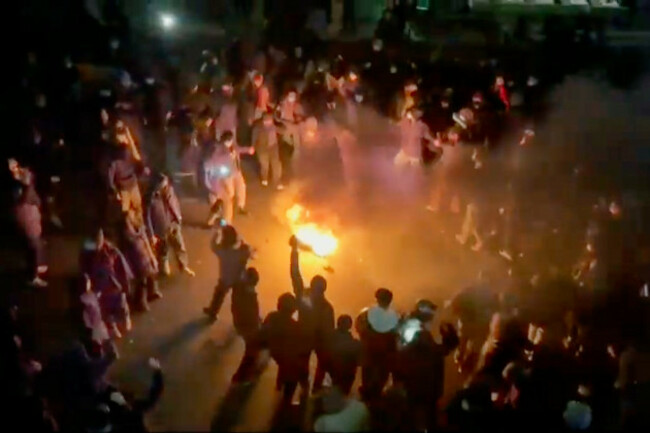
For years, Iranians asked the international community to expel regime representatives, close embassies used for intimidation and stop granting legitimacy to those who do not represent us. Those demands were largely ignored.
So the question many Iranians now ask is blunt: what option remains for an unarmed population facing a regime with guns, prisons, courts, propaganda and billions in stolen wealth?
Irish people understand something essential about power and resistance. Ireland did not regain sovereignty by waiting for an empire’s permission. Freedom required struggle and sacrifice. Iranians, too, have tried peaceful resistance repeatedly, and repeatedly it was answered with massacre.
This does not mean Iranians want another dictatorship. We are not asking to replace one tyrant with another. We are asking for Iran back.
Many Iranians remember that Iran was once on a different path, pursuing modernisation, education and engagement with the world. The late Shah, Mohammad Reza Pahlavi, remains a contested figure, but many Iranians today recognise that he was not the caricature presented during the Cold War.
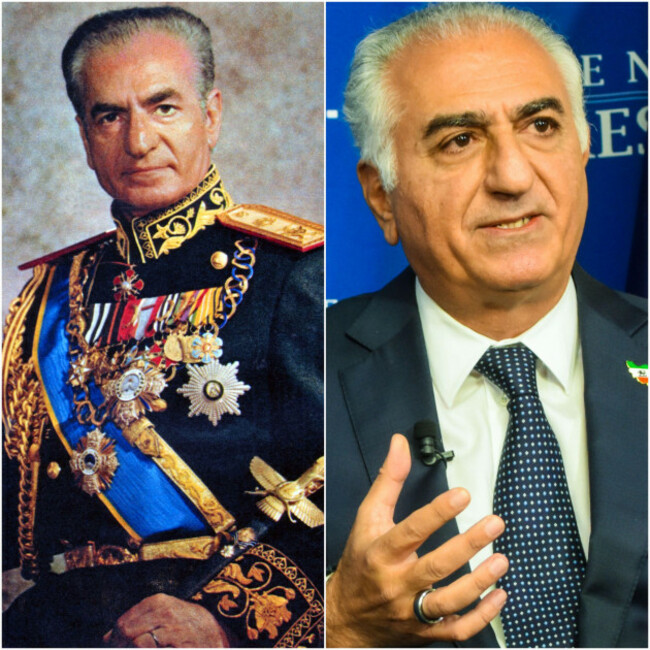
The Shah pursued ambitious reforms in a short period, and many believe his removal, widely attributed by Iranians to Western political decisions at the time, led not to freedom but to a far more brutal theocracy.
That historical wound shapes the present. Today, the name of Crown Prince Reza Pahlavi is openly chanted by Iranians inside and outside the country, not as a call for absolute monarchy, but as a symbol of national unity and transitional leadership toward a democratic, secular Iran.
No one claims to know the final shape of Iran’s future. What is clear is the demand: an end to theocracy, fear and rule by clerics who have crushed a civilisation far older and richer than their ideology.
Iranians want to live without fear, without morality patrols, without whispering their thoughts, without watching their children die for demanding dignity.
Those of us in exile will continue to speak because silence is what this regime relies on. And if this moment has shown anything, it is that Iranians are exhausted, but they are not broken.
Samieh Hezari is an Iranian-Irish citizen and the author of the book, Trapped in Iran.
To embed this post, copy the code below on your site
















have your say