Sign in. It’s quick, free and it’s up to you.
An account is an optional way to support the work we do. Find out more.
Sign in. It’s quick, free and it’s up to you.
An account is an optional way to support the work we do. Find out more.
This is an extract from the latest edition of Temperature Check, The Journal’s monthly climate newsletter, which was sent to subscribers last week. Sign up at the end of this article to receive Temperature Check to your email inbox.
With how grey it’s been the last couple of days, you’d almost be forgiven for forgetting that July was rather bright (and hot).
That carries all the usual weight of it being a sign and symptom of escalating climate change, and all the ways it impacts us – drought, wildfires, sweltering homes, increased fodder costs for farmers, and more.
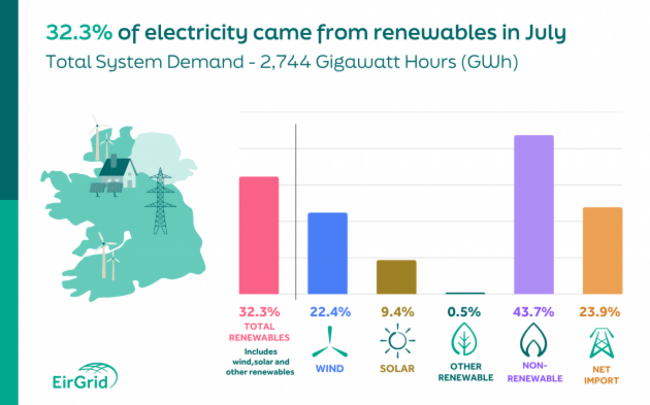
The many hours of sun also meant that it was a record month for solar energy in Ireland. Grid-scale solar made up 9.4% of the country’s fuel mix last month.
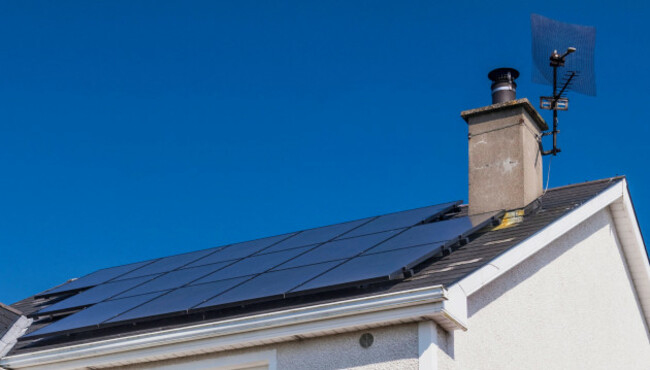
Households with solar panels will have noticed the impact of the brighter weather, especially those who are selling some of their energy back to the grid under the microgeneration scheme.
The microgeneration scheme was brought in back in 2022. The idea is that energy customers who are producing their own renewable energy can sell surplus power to their energy company – a good idea, and one that has helped to incentivise more people to consider bearing the upfront cost of solar panels for the promise of getting more bang for their buck.
A reader got in touch recently after noticing that two energy companies had reduced the payment rates they offer customers for selling excess energy back to the grid.
He was worried that other energy companies could do the same, and said it didn’t feel fair for the payment rate to drop at a time when the cost of electricity is going up. He said that solar power-adopters have put their money into becoming more self-sufficient and sustainable in their energy use and are helping the government to meet climate targets, and shouldn’t be left to feel that they’re losing out.
It caught my interest, not least because of previous reporting I had done in 2022 on delays to the start of the microgeneration scheme, as well as how much companies were going to be paying once the payments – known as the clean export guarantee – did get up and running.
Now that it’s a few years down the line, how much are energy companies paying people for solar?
I contacted some energy providers to ask them what rate they’re paying now, as well as what that rate was at the same time last year and the year before.
The two companies that recently lowered their rates were Energia and Pinergy. Energia has dropped from 24 cent per kWh in 2024, to 20 cent in 2025, to its new rate of 18.5 cent. Pinergy has gone from 25 cent in 2025 and 2025 to 18.5 cent since the start of August.
It’s a jump from where they both started when the scheme took off in 2022 – Energia offering 18 cent and Pinergy giving just 13.5 – but a fall compared with what customers were getting a matter of months ago.
In 2022, Flogas said it would pay customers 20 cent per kWh, “guaranteed until March 2023”. Now, their rate is 18.5 cent, and it’s been that since at least 2024.
Electric Ireland has been paying 19.5 cent per kWh since November 2024 (it started at 18 cent in 2022).
SSE Airtricity, which set its rate at 14 cent at the start of the scheme, has been paying 19.5 cent since 2024, with higher rates available for the first two years if customers get their solar panels installed through a partnering company.
“When the clean export guarantee came in, they decided to not just give it a standard rate, they set the market to do it,” said Ciarán Kells, chair of the Micro Renewable Energy Federation and managing director of a solar panel installation company.
He said that the payments are an incentive for people to install solar panels, but one that is “completely outside anyone’s control because it’s set by the market”.
He wants to see the government increase grants for household solar panels and for battery storage, which would allow buildings with solar panels to store excess energy that isn’t needed on a particular day and use it in the future instead.
A couple of Government TDs put out press releases this summer with ideas for helping out people who are selling energy back to the grid.
Fine Gael’s Naoise Ó Muirí, who’s the chair of the Oireachtas committee on climate, said regulations should be expanded to allow households to use “plug-in” solar panels. “Plug-in solar is already in widespread use across Europe. It allows people to generate some of their own electricity through a simple, low-cost installation, reducing both bills and emissions,” he said.
Seamus McGrath of Fianna Fáil called for the existing €400 tax-free exemption on microgeneration earnings to be raised, saying the current threshold isn’t high enough in light of the amount of money households have to invest in solar panels in the first place. “If we are to encourage more people to invest in renewable energy, then we need to ensure the tax system makes it worthwhile.”
Could these be a sign of things to come in Budget 2027, or just shouts into the wind?
You’ve been reading an extract from the latest edition of Temperature Check, The Journal’s monthly climate newsletter. Sign up to receive future editions of the newsletter in the box below.

To embed this post, copy the code below on your site














have your say