Sign in. It’s quick, free and it’s up to you.
An account is an optional way to support the work we do. Find out more.
Sign in. It’s quick, free and it’s up to you.
An account is an optional way to support the work we do. Find out more.

BILLIONAIRE JAMES DYSON, the inventor of the famed British vacuum brand, is locked in a stand-off with locals in Co Waterford over access to a graveyard and historic rights-of-way on the grounds of his estate.
Waterford City and County Council said it is “engaging with the landowner” of Ballynatray Estate amid “concerns regarding access and traditional rights-of-way” around sites that were traditionally used by the community.
Dyson owns the 850-acre estate in west Waterford, a short drive from Youghal in Cork, which he purchased for around 30 million in 2024.
The region has become home to an increasing number of high-profile business figures in recent years. Earlier this month, Meta boss Mark Zuckerberg announced he had bought nearby Strancally House, located around 13 kilometres by road from Ballynatray on the Blackwater.
Since Dyson bought the Waterford estate, the country house has been used by community groups, while he has been credited by local sources with contributing a five-figure sum to complete a new playground in the nearby village of Knockanore.
However, it’s understood that relations have soured with some people over the attempts to curtail what a county councillor has described as “long-established” access to the graveyard and pathways on the outskirts of his estate.
The dispute centres around access to Templemichael Castle and its graveyard, the nearby ruins of Molana Abbey and a car park operated by Ballynatray that allows access to the sites. While Templemichael has not received burials in some decades, it is understood that locals still use it to visit deceased relatives.
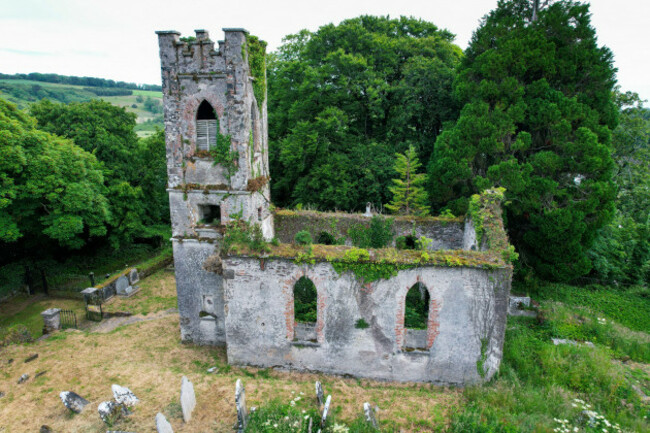
The two sites have also been popular for visits and walks with the wider community, according to community members.
However, access to Molana Abbey has been restricted, meaning it will be closed to visitors after 30 September and not be reopened until Easter Sunday. There had been previous disputes over the tears regarding access to the sites, but the recent restrictions have been met with anger by a number of people in the area.
The abbey dates back to the sixth century, and is reputed to have been the burial place of Raymond De Gros, a key lieutenant of Strongbow during the Norman invasion of Ireland.
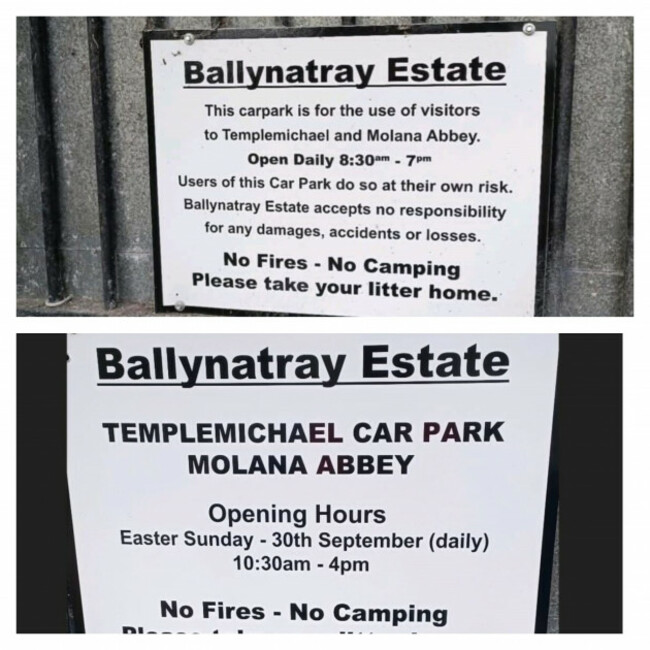
Opening hours for the car park at Templemicheal graveyard and the abbey have been allegedly changed in recent months. A barrier has been erected at Templemichael graveyard according to locals who spoke to The Journal.
Some in the community believe the barriers were introduced following anti-social behaviour, but argue it has gone too far and led to knock-on effects for locals and visitors.
Signage seen by The Journal shows that, earlier this year, anyone could access the car park from 7.30am until 8pm. However, a few weeks later, this was shortened to restrict access between 10.30am and 4pm. Other signage seen by The Journal indicates the car park has also been open from 9.30am to 5.30pm.
Sinn Féin councillor Donnchadh Mulcahy told The Journal that there has been “upset” in the area at the changes.
He said it has also seen a “knock-on effect” for people living in the area, as visitors who find they can no longer use the dedicated car park now leave their car in “unsuitable locations” outside people’s homes.
Waterford council officials are now holding discussions with Ballynatray House in a bid to resolve the dispute.
Legal advisers have been drafted in by the local authority to help.
Ballynatray and the Dyson company were contacted for comment. No response was received ahead of publication.
Dyson – who was a vocal supporter of Brexit – founded his company of the same name in 1991. It made him his fortune, and he has in recent years topped The Sunday Times Rich List.

Nick Parker, who lives about half a mile from Templemichael, told The Journal that “it’s a lovely peaceful walk” with the graveyard also “full of history”.
“I’ve been going down there for the bones of 72 years. People have ancestors buried in Templemichael but now they have to leave their car outside to go inside,” he said.
While he noted that there had been reports of antisocial behaviour at the site, he said the barrier erected outside the graveyard in recent months “prevents people who might have a car to walk down the river bank”, or stops locals like himself who have mobility issues from accessing it easily.
He added that while a welcome has been rolled out for the region’s recently arrived billionaires, he feels it can quickly become “doffing the cap”.
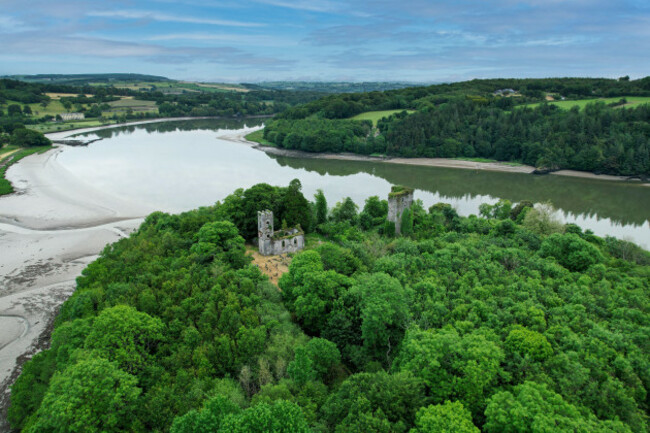
In a statement, Waterford City and County Council told The Journal that it has been working to resolve the situation.
“Waterford City and County Council is aware of concerns regarding access and traditional rights-of-way at Ballynatray House,” the council said.
“The council is engaging with the landowner with a view to seeking a resolution to the issues raised. The council is also engaging with legal advisers in relation to the matter.”
The local authority added that it will “continue to engage with the relevant parties” with a view to finding a resolution.
It declined to comment further, citing ongoing negotiations.
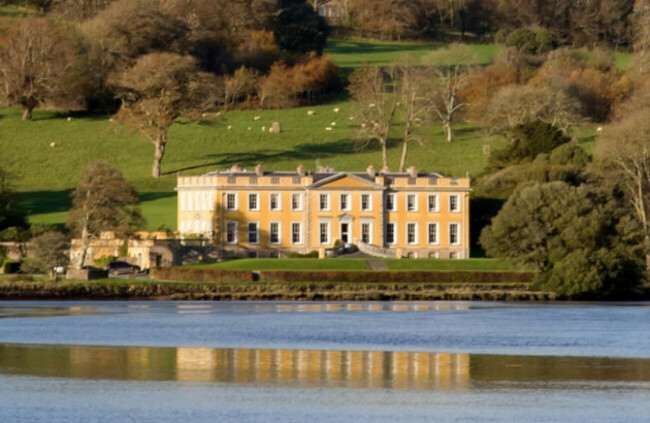
Mulcahy, the local councillor, said it was important that the council protect access to historic sites.
“This is about protecting access to important historic sites and a graveyard, ensuring people living in the area can safely access their homes and addressing the road safety implications of vehicles parking in unsuitable locations,” Mulcahy said.
“These sites are an important part of our local history and heritage. I believe we need a solution that protects reasonable public access, particularly for families visiting graves, while also respecting and addressing the genuine concerns of people living in the area.”

To embed this post, copy the code below on your site













have your say