We need your help now

Support from readers like you keeps The Journal open.

You are visiting us because we have something you value. Independent, unbiased news that tells the truth. Advertising revenue goes some way to support our mission, but this year it has not been enough.

If you've seen value in our reporting, please contribute what you can, so we can continue to produce accurate and meaningful journalism. For everyone who needs it.

Alamy Stock Photo

Ireland's dangerous roads When cars come first, everyone loses

Sadhbh O’ Neill says that the reduction of road deaths in Ireland is being strangled by a lack of political courage.

IRELAND IS CURRENTLY at a lethal crossroads. Despite a decade of glossy strategies, Vision Zero pronouncements, “thoughts and prayers” from politicians, our roads are becoming visibly more dangerous.

The data for 2025 is an indictment of current policy: 190 people lost their lives — the highest number of road fatalities in over a decade. While the government points to driver behaviour and individual responsibility, the reality is that road injury reduction is being strangled by a lack of political courage and a chronic retreat from evidence-based policy.

To understand the scale of our failure, we need only look to the Baltic states. In 2019, and again in the 12-month period ending July 2025, Helsinki, with a population of 1.6 million in its metropolitan area, recorded zero pedestrian and cyclist deaths. Oslo has achieved similar milestones. If Ireland had matched Helsinki’s safety rate per capita, we would be mourning fewer than 50 people this year, rather than 190.

Looking elsewhere for guidance

The Nordic approach accepts that humans are fallible. We will make mistakes, we will be distracted, and we will occasionally be reckless. Therefore, interventions to reduce road injuries must factor these assumptions into policies. That means redesigning roads, lowering speeds, and strictly enforcing the existing bans on using, for example, mobile phones, alcohol or drugs while driving.

Helsinki and Oslo responded to rising fatalities not by asking drivers to “do better,” but by physically narrowing streets, removing through-traffic from residential cores, and making 30 km/h the default urban speed.

Their approach is based on unimpeachable evidence: a collision at 30km/h usually results in minor injuries. At 50 km/h, a pedestrian has a 50% chance of survival, at 60 km/h, that chance drops to just 10%; at 80 km/h, 9 in 10 pedestrians will be killed. The RSA’s 2025 report found that in 2025, close to half (54%) of fatalities occurred on roads with a speed limit of 80 km/h or greater compared to 70% of fatalities in 2024.

There were 22 fatal collisions in Dublin, 21 in Co. Cork and 17 in County Galway, with none recorded for County Longford. Mayo, Donegal and Galway report consistently high numbers of fatalities per head of population, pointing to the need for measures that specifically target rural communities.

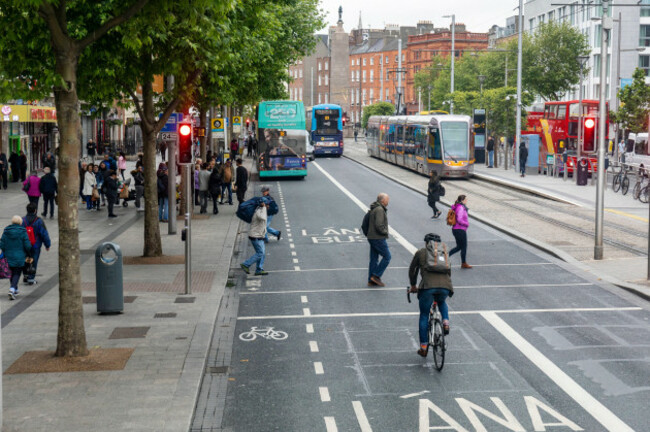
ireland-dublin-oconnell-street-public-transport-bus-tram Alamy Stock Photo Alamy Stock Photo

However, as former Minister Shane Ross recently reminded everyone in a widely shared piece for the Sunday Independent, many politicians have a Dáil record of voting against increasing drink driving and other penalties under the assumption that overly stringent enforcement would harm the social and economic life of rural areas.

Rural TDs also frequently argue that rural drivers are being unfairly targeted with speed cameras. The statistics show that rural roads are, in fact, where the majority of deaths occur: seven in 10 fatalities (roughly 70%) consistently occur on rural roads (defined as those with speed limits of 80 km/h or higher). 

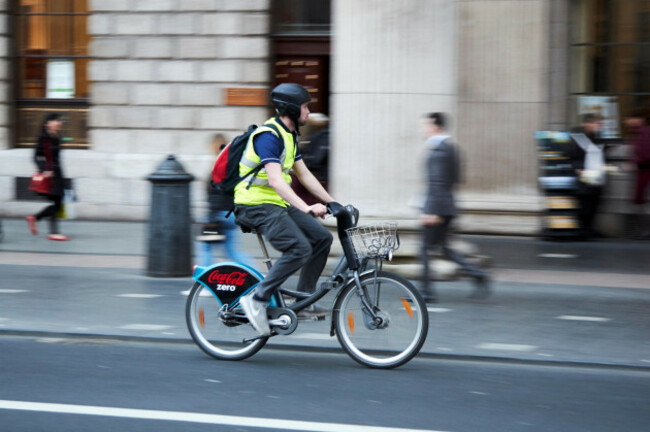
male-cyclist-cycling-along-oconnell-street-on-hired-citybike-dublin-republic-of-ireland-deliberate-motion-blur Alamy Stock Photo Alamy Stock Photo

The view that deaths and life-changing injuries are somehow the inevitable and necessary cost of car dominance is increasingly widespread, as is the phenomenon of “victim-blaming”. Many incidents do not get reported, and it is arguable that the level of offending and injuries overall is seriously underestimated. District and circuit courts issue inconsistent fines and sentences for lesser road traffic offences that arguably constitute the bulk of the risky driving behaviour on the roads.

Sentencing guidelines from the Judicial Council address the more serious offences only. The plea that a defendant needs their car or van for work, or the negative impact that a conviction would have on a young person’s record, may invite undue leniency from the courts. All of this, combined with the slow action to enforce the rules for learner drivers, signals to drivers that road traffic offences are not really that serious, or that cyclists are to blame for incidents involving them.

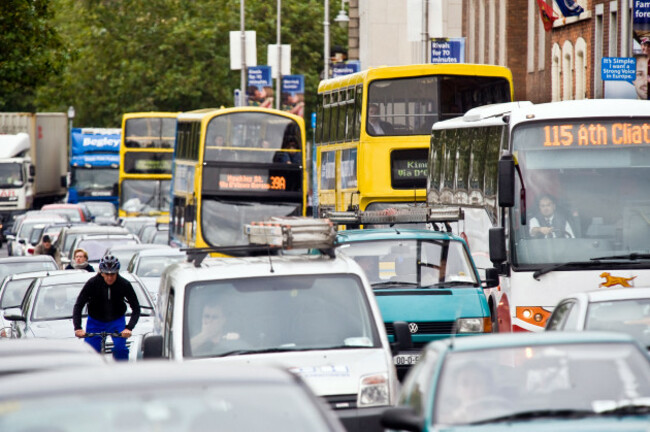
heavy-traffic-on-the-quays-in-dublin-ireland Alamy Stock Photo Alamy Stock Photo

A significant portion of road traffic cases result in Summary Disposal in the District Court. But those with the means to employ legal representation are able to deploy technical legal defences to strike out road traffic summonses. A recurring trend reported by academics is “principal offence” reporting, where multiple charges (e.g., speeding + no insurance) are brought, only the most serious is often recorded, which can lead to an under-representation of minor traffic infringements in statistics.

As long as the official statistics don’t tell the truth about driver behaviour, and the public is not able to easily report incidents, policymakers are likely relying on flawed and out-of-date information when devising road injury reduction strategies.

Good quality and timely data are critical to reducing hazards. Unbelievably, there are still GDPR issues that prevent data on fatal and serious injury traffic incidents from being shared with Local Authorities, or the general public, to help ascertain the facts behind road traffic incidents and why and where they occur. Having this information, as was previously available, would enable a clear assessment of the causes behind the incidents and help to improve road design.

Promises vs. Reality

The Government’s Road Safety Strategy 2021-2030 set a target to halve road deaths by 2030. In practice, however, we are moving in the opposite direction. Phase 1 of the strategy (2021-2024) saw fatalities rise rather than fall.

The problem is not that we don’t have good policies; the trouble is that they are not being implemented or given the urgent political support that is required. We are now in Phase 2 of the Road Safety Strategy, which nominally runs from 2025 to the end of 2027. But the Phase 2 Plan was only decided and launched in September 2025, 9 months into the period. There appears to be no sense of urgency in government or effort to make up for lost time, despite growing casualty numbers on the roads.

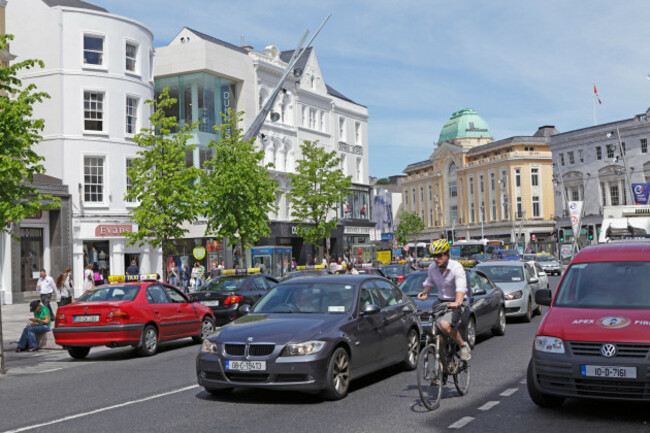
city-centre-cork-city-republic-of-ireland Alamy Stock Photo Alamy Stock Photo

The most glaring gap lies in infrastructure. The strategy committed to 1,000 km of segregated active travel routes by 2025 to protect vulnerable road users such as pedestrians and cyclists. Yet, the delivery has been glacial in pace, often stalled by local political squabbles over the removal of a handful of parking spaces. Worryingly, serious injuries among pedestrians and cyclists have been growing up to 2020, particularly in urban areas, a period during which road deaths were decreasing. According to Colm Ryder of the Irish Cycling Campaign,

“Serious injuries are a warning indicator of potential problems down the road. However, the corresponding data [after 2020] are no longer available freely due to the GDPR issue.”

While the “Slower Speeds, Safer Roads” campaign launched in 2025 to much fanfare, awareness campaigns simply do not work to reduce collisions unless they are backed by enforcement and other changes. These campaigns don’t often don’t even reach younger drivers, who are their target audience. A survey by the UCD University Observer in 2025 found that 45.5% of the respondents did not know of the new law enforcement on the roads, and 56.4%, had not heard of the campaign at all.

Enforcement is key

We have plenty of information and awareness campaigns, but very little of the physical separation and enforcement that saves lives. Anecdotal information (and my own personal experience) points to a rising hostility towards cyclists in Dublin. The city’s patchy cycling network, though improving all the time, is still not adequate to keep cyclists safe from other traffic.

Cyclists still share dedicated lanes with double decker buses and taxis, and most urban streets double up as parking lots for cars, which in turn adds to the hazards for active travel users as well as slowing down public transport. While cycling infrastructure has improved in many of our regional cities, the conditions for cycling are such that in most parts of Ireland, you would not let a young child cycle to school by themselves. Local authorities are charged with rolling out active travel and road safety measures, but many councils lack even one full-time road safety officer among their staff.

Politicians’ default position is usually to side with motorists. Congestion issues, which dominated the news prior to Christmas, are framed as reasons to spend more money on roads and car parking instead of addressing the underlying problem of car-dependency. Most politicians drive and, outside of Dublin in particular, focus more on road spending increases rather than improvements to public transport. They appear oblivious to the fact that cars take up as much as 40% of the total land area of our urban realm, or perhaps they think that all this wasted space is somehow good for business. But what businesses aside from motor showrooms, car park owners and fuel merchants could possibly benefit from such a waste of precious land?

While rising congestion and slower journey times are a real burden for many people and for the economy as a whole, Ireland’s congestion crisis could be used to shift more people towards public transport and cycling. Instead, congestion is used to justify yet more funding for roads, bypasses and measures to essentially speed up traffic under the guise of “improving flow” instead of slowing it down. And wherever the focus is on speeding up traffic, the risk of serious injury increases.

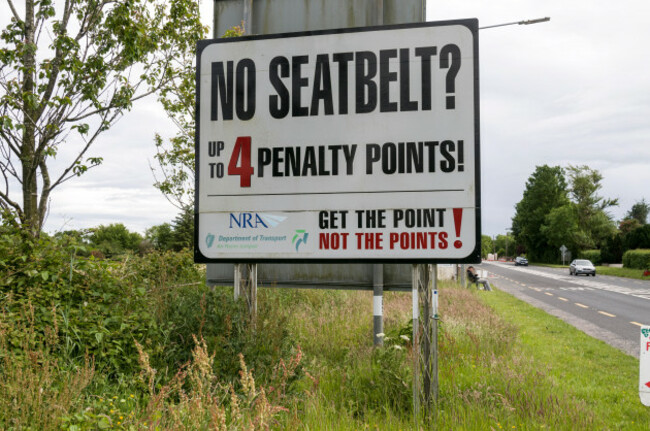
an-irish-road-sign-in-southern-ireland Alamy Stock Photo Alamy Stock Photo

Meanwhile, the budget for active travel is nowhere near the 10% that advocates recommend. Furthermore, the largely static budget for walking and cycling makes meeting targets for new cycling and walking infrastructure difficult, as it does not take inflation into account. In turn, the reversal of the 2:1 policy in favour of public transport to roads spending is a clear indication of the priorities of this government and the power of the rural independents.

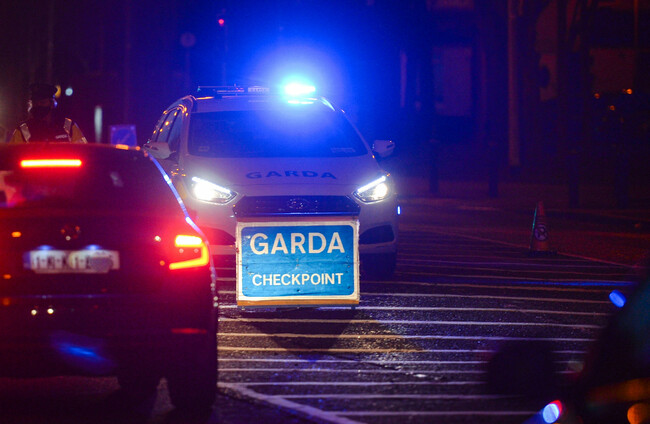
If the design-led approach to reducing injury is paramount, enforcement must be number two. Here, the failure is systemic. The number of dedicated Garda Roads Policing Unit members has plummeted from a peak of over 1,000 to approximately 620 today. In many parts of rural Ireland, a driver can travel for days without seeing a patrol car. Gardai are also generally slow to police traffic offences in urban areas, leaving that to local authorities, and the portal designed to make it easier to report hazardous driving still does not permit users to upload video or photo footage. As a result, many incidents go unreported or are not investigated. Hazards to pedestrians and vulnerable road users, such as parking on footpaths or in cycle lanes, breaking red lights and speed limit breaches, are commonplace.

And in case you’re wondering, yes, the law also applies to cyclists and other mobilities. But the general lack of enforcement and low Garda numbers mean that reckless and inconsiderate behaviour by cyclists goes unenforced too, not to mention the official tolerance of souped-up throttle-assisted e-bikes and e-scooters that are not even allowed on Irish roads.

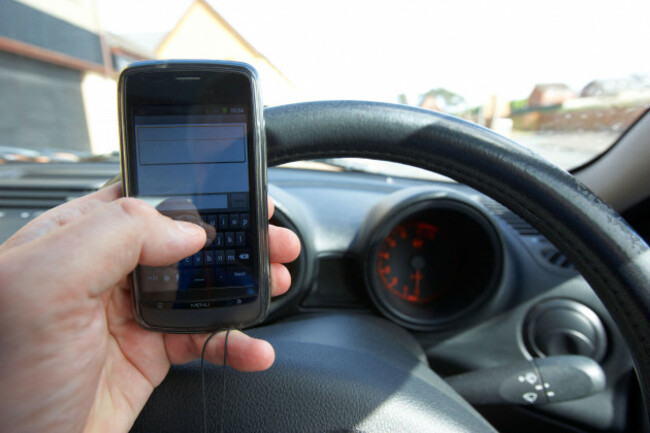
man-using-touchscreen-android-mobile-phone-to-send-a-text-message-when-driving Alamy Stock Photo Alamy Stock Photo

Technology was supposed to bridge the enforcement gap, but even here, we are mired in delays. While 390 new mobile “GoSafe” zones will be introduced in 2026, the advanced “smart” cameras and average speed cameras used elsewhere in Europe that catch red-light runners, phone users, and those not wearing seatbelts, remain tied up in “feasibility studies” and tender delays. When enforcement is absent or unpredictable, the law becomes a suggestion rather than a requirement. According to the Green Party Councillor for Glencullen-Sandyford Oisin O’ Connor,

“There’s just no appetite to move this along. If the NTA won’t act until the strategy is finalised, then this will just take forever”.

Enforcement, though vital, is not the whole story. Politicians must confront the deep-rooted belief that views road safety as an inconvenience rather than a collective necessity. My own experience cycling in Dublin city and Waterford is that cyclists are increasingly blamed for all sorts of traffic related issues. I’ve had motorists lowering their windows to scream at me for nothing, despite being decked out in high-viz and lit up like a Christmas tree. Aside from road design issues, the increasing aggression towards cyclists, fuelled by poor political leadership, misinformation and bias, is an additional hazard on top of everything else.

Political will

If 190 people were dying every year of a preventable and treatable disease, the government would not hesitate to act. Lowering speeds is not a war on cars or commuters; it is an investment in the economic and social vitality of our towns and our collective wellbeing. Evidence from the ESRI and international studies shows that compact, walkable towns with lower speed limits see up to 2.5 times higher retail density than car-centric ones. When we design for people instead of cars, we create environments where children can cycle to school, the elderly can maintain independence, and local businesses can thrive on footfall.

A Speed Limit Review was carried out by an expert team in 2023 from our main road engineering agencies and peer-reviewed by Swedish experts. This review was endorsed by the previous government, which then legislated for reduced speed limits on certain rural roads .But the introduction of 30 km/h urban default limits, due to be implemented in mid 2025, was initially postponed and then ultimately repackaged into an optional system, which completely ignored the recommendations of the expert group and international peer reviewers.

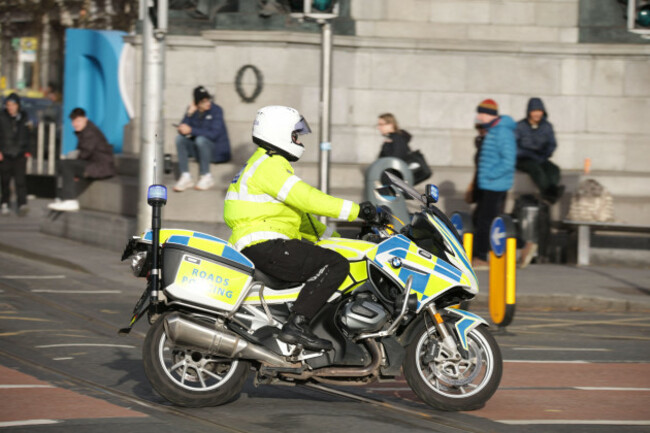
dublin-ireland-10th-december-2025-a-garda-on-motorcycle-from-the-roads-policing-unit-responds-to-an-emergency-with-blue-lights-flashing-on-oconnell-street-in-dublin-city-depicting-street-scene Alamy Stock Photo Alamy Stock Photo

Minister Canney’s decision to abandon default lower speed limits in favour of local council votes risks turning road safety into a highly politicised, localised debate. This approach may sideline the needs of active travel users and disabled people, and allows decisions to be shaped more by ideology than by evidence. As Cian Ginty of irishcycle.com remarked,

“This decision not only delays and waters down the lowering of limits in urban areas, it also ties up council officials on this detailed work [of evaluating speed limits road by road] when they could be focusing on implementing traffic calming or addressing other safety issues”.

The goverment has also done a U-turn on reforming the Road Safety Authority that was widely condemned by road safety and active travel groups. This only emboldens a vocal minority of “anti-safety” narratives, ignoring the silent majority who simply want to be able to cross the road without fear. If our politicians can’t defend cycling and walking as normal everyday activities with safer levels of traffic speed, then this is exactly the kind of politics we can expect to see here, too. We will all pay a heavy price for these incomprehensibly short-sighted and poorly informed decisions by governments. 

Vision zero shouldn’t be a utopian dream. It requires robust enforcement, and, above all, the political courage to say that a few minutes’ delay on a commute is a price worth paying to ensure that children can cross the road safely and walk to school. We do not need more awareness campaigns or calls for hi-viz and helmets.

We do not need cyclists denounced from the benches. We do not need politicians blocking safety measures and cycle lanes. We need leadership, we need lower speed limits and better cycling infrastructure. Above all, we need to stop treating 190 deaths a year as an inevitable tragedy. Until we value life over speed, our journey towards Vision Zero will remain a road to nowhere.

Sadhbh O’ Neill is a climate and environmental researcher. She is a member of the board of Transport Infrastructure Ireland but is writing in a purely personal capacity.

Readers like you are keeping these stories free for everyone...
A mix of advertising and supporting contributions helps keep paywalls away from valuable information like this article. Over 5,000 readers like you have already stepped up and support us with a monthly payment or a once-off donation.

Close
JournalTv
News in 60 seconds