Sign in. It’s quick, free and it’s up to you.
An account is an optional way to support the work we do. Find out more.
Sign in. It’s quick, free and it’s up to you.
An account is an optional way to support the work we do. Find out more.

LAST UPDATE | 18 Mar
“Well done is better than well said.”
- Benjamin Franklin
I’M ALWAYS FASCINATED by what motivates people to take action about a problem. We all have thoughts in our heads, and we may even voice them, but there is another cognitive step that actually triggers action.
In clinic, where we specialise in skin checks, I often ask patients what prompted them to come in that day. The answers can be quite revealing. Sometimes the reason is obvious, such as a painful or uncomfortable skin growth. Other times, the motivation is more subtle.
Understanding that motivation helps me build rapport with patients, so perhaps there is also a slightly selfish element to my curiosity too.
Recently, after a clinic session, I scribbled down some of the motivations I had encountered. There was the sad: a spouse who had died from skin cancer. The coerced: “My wife booked this for me.” The frightened: healthcare workers who had seen patients with advanced cancers. And the habitual: “It’s just what we did in Australia”.
Whatever the motivation, taking action about a concern is a positive step. These patients should be encouraged, educated and empowered.
More than 11,000 skin cancers are diagnosed annually in Ireland, and this number is expected to rise rapidly in the coming years. The reasons are multiple, including an ageing population, increasing ultraviolet exposure and improved detection.
The consequences will be felt across an already stretched health service. Increased demand for surgery and expensive drug therapies is inevitable.
The encouraging news is that most skin cancers are highly treatable when caught early, saving both lives and healthcare costs. Crucially, many cases can be prevented through simple sun protective measures.
Skin cancer occurs when skin cells grow abnormally after damage to their DNA. Ultraviolet radiation can trigger these DNA changes.
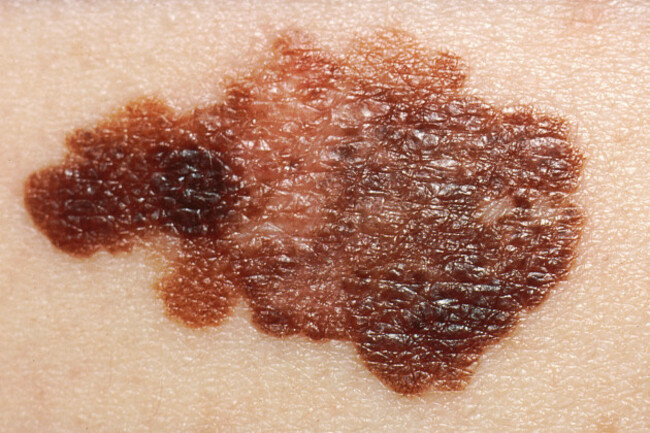
There are two broad categories of skin cancer: melanoma and non melanoma skin cancers.
Ultraviolet radiation, UVA, UVB and UVC, comes from the sun and from sunbeds. As sunlight passes through the atmosphere, all UVC and most UVB is absorbed. UVA, however, can pass through clouds and even through car windows.
One useful tool we should all become familiar with is the UV index, which is freely available online each day. When the index reaches 3 or higher, sun protection is recommended. In Ireland, the UV index can reach 5 or 6 during the summer months.
Certain professions naturally incur higher levels of UV exposure. There is a famous maxim in medicine: always take a farmer seriously. By the time they come to see you, something is usually quite wrong. This can apply to skin cancer, too. The traditional flat cap offers some protection, but the ears and neck remain exposed.
The Irish Skin Foundation promotes the SunSmart 5S rule:
Children’s SPF protective clothing is now widely available and reasonably priced at many retailers in Ireland.
With sunscreen, the key is reapplication every one to two hours, particularly after swimming or sweating.
Many of us in Ireland feel deprived of sunlight during the winter months, but that is no excuse for burning ourselves on holiday. There is a reason locals in hotter climates take a midday break. As the old saying goes, mad dogs and Irishmen go out in the midday sun.
If there were a piece of low-hanging fruit in public health policy, banning sunbeds would be it.
As bad ideas go, sunbeds rank highly. They damage skin, alter DNA and are strongly linked to skin cancers in a dose dependent fashion.
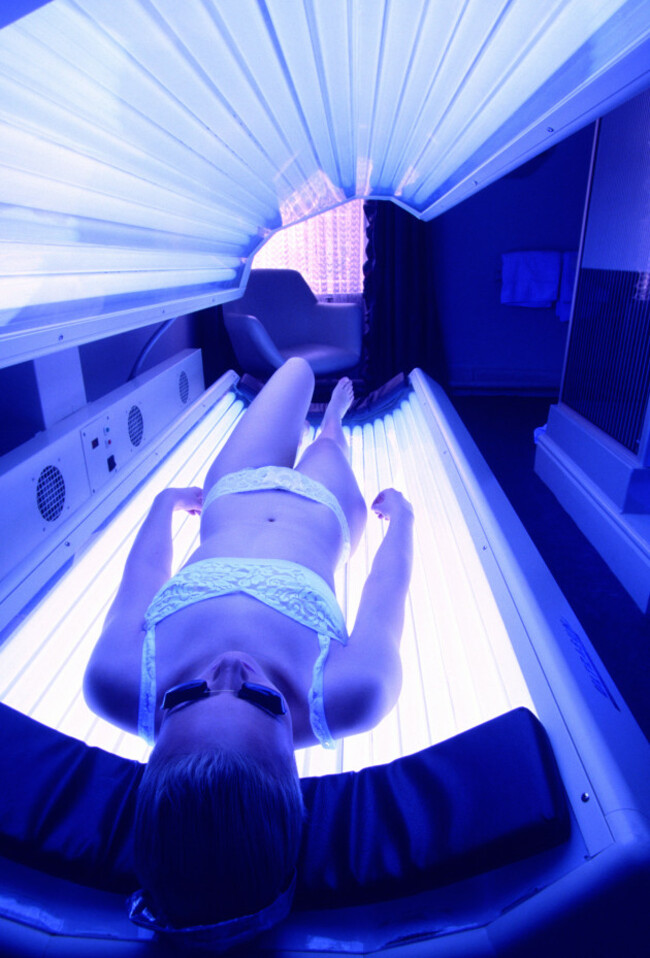
Bad ideas tend to thrive where misinformation and confusion exist. We have seen this with smoking, the anti-vaccine movement and many other issues. When it comes to sunbeds, however, the evidence is clear. They are harmful.
Positive steps have already been taken with a ban on sunbed use for minors. An outright ban may come in time. For now, they remain common. In 2023, there were 363 HSE-registered sunbed operators in Ireland.
Sometimes, clinic days provide the benefit of hindsight in real time. The invincible 19-year-old sunbed user, brought in reluctantly by their parents, sits beside the 43-year-old with sun-damaged skin and a recent skin cancer scare. You hope they might strike up a conversation in the waiting room.
Many of us can relate to the confidence of youth and the perspective that life experiences bring. It would be nice, however, to gain that perspective without the cancer.
Understanding your own risk is a good starting point. Many Irish people have fair skin, which increases the risk of skin cancer. Other important risk factors include:
Research also suggests that significant sun damage before the age of 20 is a major risk factor later in life.
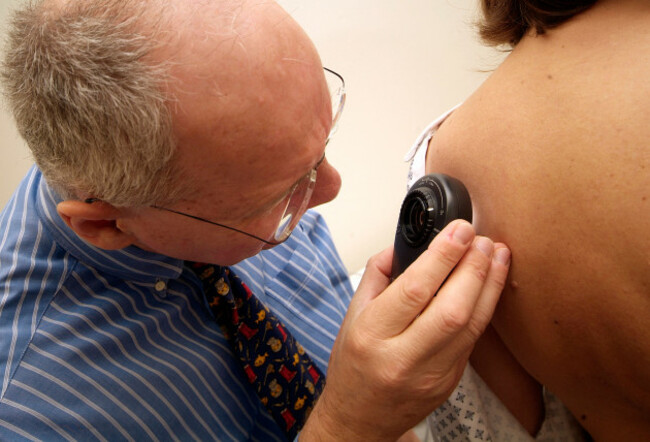
The key advice is simple: look for something new, different or changing.
Skin cancers often stand out because they look different from the surrounding skin.
The ABCDE rule can help identify concerning moles:
A Asymmetry
B Border irregularity
C Multiple colours
D Diameter greater than 6 mm
E Evolving or changing
It is also important to remember that most moles are normal. We typically develop new moles until our 30s or 40s, although this slows after age 30.

One helpful concept is the “ugly duckling” rule. Does one mole stand out from the others? Does it look unusual or different?
Another useful idea is the “buddy rule”. Moles in the same area of the body often resemble each other. For example, moles on the abdomen may look slightly different from those on the arms. What matters is that moles in the same area tend to look similar to one another.
Knowledge and reassurance can be powerful things. Taking action to protect your skin, becoming familiar with what is normal for you and knowing when to seek medical advice are all positive steps.
In a world where much of our lives happens online and inside our own heads, small practical actions can still make a meaningful difference.
Dr Michael Willoughby is a GP with skincheck.ie. He has a special interest in Dermoscopy and Skin Cancer Medicine.
To embed this post, copy the code below on your site















have your say