Sign in. It’s quick, free and it’s up to you.
An account is an optional way to support the work we do. Find out more.
Sign in. It’s quick, free and it’s up to you.
An account is an optional way to support the work we do. Find out more.

FEW APPRECIATE FREE instant messaging apps more than those who lived through the era when a single text message cost nine cents. Let’s not even get started on the cost of an SMS that was sent overseas.
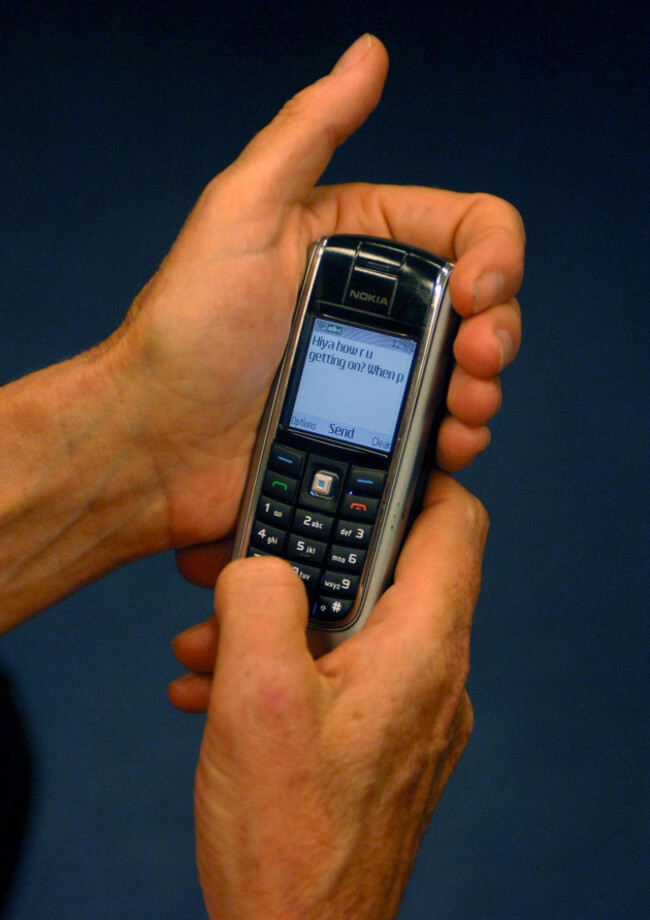
The cost of messaging used to place a cap on the amount of communication we’d make with one another via text. Those who were in the trenches will recall the 300 “web texts” (each limited to 160 characters) that service providers offered, if you were willing to sit yourself down at a PC to write and dispatch them.
It was a simpler time. We thought before we texted, working within the constraints of a meagre character-count while trying to communicate and convey everything. Homework, gossip, grievances, updates on your whereabouts, debriefs from nights out. All of it had to fit into 160 characters, including spaces.
SometimesPeopleEvenSkippedTheSpacesWhenThingsWereDire.
We had no choice but to be mindful of our output back then.
Internet-enabled real-time communication has been around for quite a while. Perhaps it’s just nostalgia, but I do feel that things peaked in the MSN era when instant messaging existed solely within the confines of a PC. Things quickly went downhill when our phones rendered us perpetually accessible.
Sure, it was novel to begin with. No longer did we find ourselves stuck somewhere without phone credit, desperately sending a free “call me” text to a friend or relative, like a digital smoke signal. The dissolution of limits to SMS texting allowed for more context and nuance.
Instant messaging has been genuinely life-changing for people who have friends or relatives living abroad, as well as those among us who regularly contact their entire bloodline to ask: “Does anyone have a Dunnes voucher?”
While it has its practical uses, it has also created a new phenomenon where many of us will immerse our friends in our individual streams of consciousness, through either texts or verbose voice notes. Parallel to this, there’s a steady stream of messages coming in from neighbours, colleagues, friends, family and acquaintances.
Many of us have ended up in group chats related to every aspect of our lives. Sports teams, book clubs, neighbourhood watch groups, birthday parties, groups of co-workers who don’t want to risk complaining about work on Slack. You’d wonder how we communicated about any of this at all prior to group chats.
As a result of all of the group chats that you have to be in, in order to exist in this world, there’s an endless mountain of messages that build up, coming at us from all angles.
For a while, I’d let medium priority messages build up before taking an evening or two each week to sit down and tackle them in one go. I tried to make it glamorous, imagining myself as a Joan Didion-type character sitting down in front of a typewriter with a cigarette burning down to the butt in a heavy glass ashtray on my antique desk. In reality, I was hunched over a Macbook with bad posture at an Ikea desk replying to my friends and my pension guy whose text I accidentally ignored for three months.
Slowly, the weight of guilt and obligation began to lift as I chipped away at the messages. And then the bastards would start to reply straight away and my heart would sink.
The sensation I was feeling was akin to burnout, which is something that’s supposed to be induced by work, rather than relationships. It seems that instant messaging just creates unnecessary work for our social lives.
I was complaining about this to one of my friends via email, because I couldn’t bear opening WhatsApp to express it. She is one of the greatest texters that I know, and I always want to reply appropriately to her, but my capacity to do so is poor. It turned out that she was on the same page as me, and she pointed out that we rarely ever think about where the person we are messaging will be when they receive our message.
That’s the problem, really. If someone was slow to reply to an email, we’d understand that they hadn’t had a chance to sit down at a computer. If someone was slow to reply to a physical letter, we’d also get it. But when you take a while to get back to someone on a messaging app, it comes across as a bit rude.
The expectation of availability is there, regardless of what the recipient is doing. Sometimes they’re paying at the checkout in Lidl. Sometimes they can’t text because they’re wearing gloves. Sometimes they just don’t feel like being on their phone.
A lot of the texts that we send and receive are things that could just wait until an in-person conversation. Hanging out with someone in person rarely imbues a sense of burnout (and if it does, it’s time to call it a day with that friend). Like MSN-era messaging, those in-person hangouts are fun because they are fleeting. Rather than existing within a fixed timeframe, communication is trickling in all day, serving a transient purpose before the sender forgets about the messages, and they become someone else’s burden, like a digital plastic straw.

Like single-use plastic, they have to end up somewhere. Sometimes these messages are someone’s notification of doom, but always, they end up on a server somewhere, filling up digital landfill. The volume of single-use messages that we generate is far more than anyone could ever read back on. And they don’t hold up as keepsakes like letters that allow people to piece together who their great-grandparents were.
A digital detox may not be the answer. Many of us still have an appetite for written communication, just not to the extent to which it currently exists.
Instead of drinking from the firehose of ephemeral correspondence, maybe it’s time to reconsider a return to longer form, less frequent communication. We have embraced conscious consumption in the physical world, so why not digitally?
Kelly Earley is a writer and podcaster from Coolock, who has a deep interest in culture, technology, community and social justice. She writes for The Journal every week.
To embed this post, copy the code below on your site












have your say