Sign in. It’s quick, free and it’s up to you.
An account is an optional way to support the work we do. Find out more.
Sign in. It’s quick, free and it’s up to you.
An account is an optional way to support the work we do. Find out more.

LAST UPDATE | 6 Nov 2025
WHEN MARY ‘MAY’ McGee died last week, tributes poured in for the woman whose Supreme Court battle in 1973 legalised contraception in Ireland.
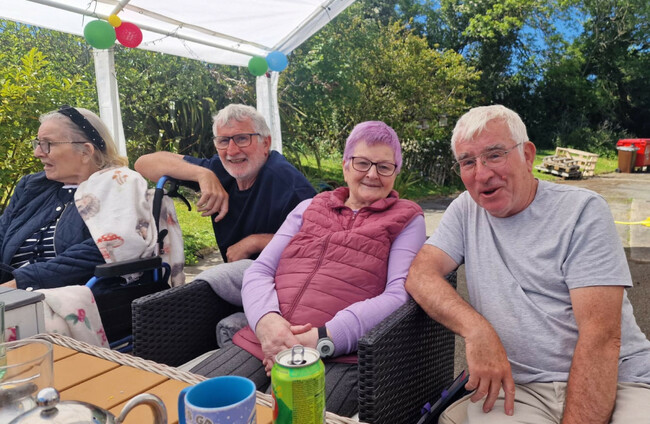
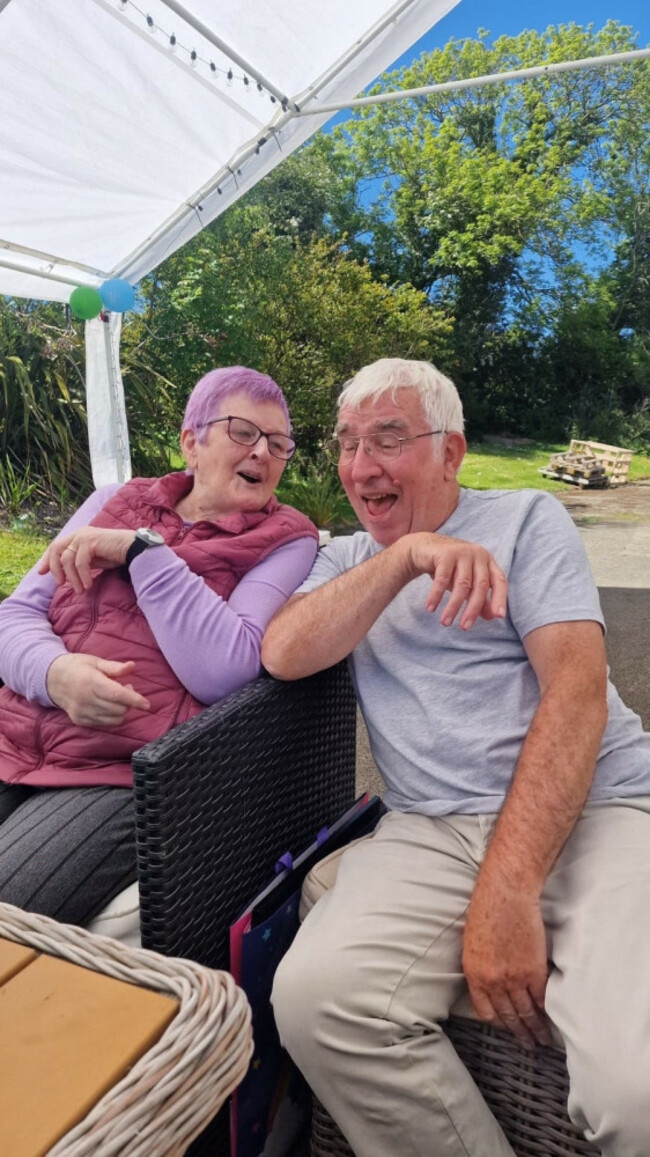
In the annals of Irish history, she will be remembered for her crucial role in breaking the stranglehold of Catholic Ireland on reproductive rights. But I’ll remember her a little differently – as my much-loved aunt whose devilish sense of humour and cheeky winks would always brighten my day.
Since her passing, May’s story and that of her late husband Seamus ‘Shay’ McGee has been told in newspapers and in touching interviews with her children, the sense of loss mitigated slightly by the celebration of her achievements. Rather than restate the accolades she has so deservedly received, I will instead try to put my aunt’s case in context to see what lessons we can draw from her extraordinary life.
May was born in 1944 in Skerries, but seeds of her struggle were sown almost a decade before. In 1935, the government of Eamon De Valera enacted legislation to outlaw the sale of contraceptives, motivated by a desire to align the newly minted Irish state with the dictates of the Vatican.
This stemmed from a 1930 decree by Pope Pius XI forbidding Catholics to use artificial contraceptives, and with the primacy of Catholicism cemented in the 1937 constitution, reproductive choice was effectively curtailed for decades after. By the latter half of the 20th century, however, many strained against such fundamentalism.
In 1971, the Irish Women’s Liberation movement (IWLM) purchased condoms in Belfast and took them back to Connolly station to highlight hypocrisy at the heart of Irish law, an important protest often conflated with May’s case by historical proximity. But May’s circumstances were far removed from the journalists and playwrights of the IWLM.
Ireland of the 1970s was mired in poverty, and her family were extremely poor. My grandfather, Francis, was a casual labourer and gravedigger who by necessity pressed his sons into work as soon as they could hold a spade. My grandmother Mary-Rose was plagued by poor health, and May alongside her sister Elizabeth helped rear her six siblings in a two-bed shack.
Escaping from poverty was extremely difficult and its consequences long-lasting.
My father, the youngest, was born at the right time to avail of free education, an opportunity not available to his older siblings. The year May’s case played out in the Supreme Court, she lived in a second-hand caravan tending to four children while Shay worked as a Fisherman, a dangerous and exhausting job.
Their clash with the state was born not of revolutionary politics but grim necessity; May’s pregnancies had been nigh-on-fatal ordeals, a litany of everything from preeclampsia to strokes. After her third, she fell into a coma for four days. This precarious health deeply concerned her physician, who would become an instrumental part of her story – Dr James ‘Jim’ Loughran.
Loughran worried that another pregnancy could kill her. By happenstance, he was a founding member of the Irish Family Planning Association (IFPA) and his responsibility to his patients outweighed any religious sanctimony. Defying Irish law, he prescribed a diaphragm and spermicidal jelly.
The interception of these by Irish customs and the threat of prosecution against the couple was the impetus for legal action. With the unerring support of the IFPA, May and Shay challenged the state in the now infamous case.
She was by no means a firebrand; far from being iconoclastic, she was, like her mother, a quietly devout Catholic. That did not shield her from derision from the local priest, who denounced her on the altar.
In an era when the church held far more influence than now, such opprobrium was deeply stigmatising. In the face of national derision and malicious gossip, my father, aunts, and uncles closed ranks around their sister in defiance of the priestly admonitions that tore my deeply religious
Dr Loughran too was lambasted from the pulpit, losing patients in the process. Like several of her siblings, May was profoundly hearing impaired, rendering a courtroom without any provision bar her ability to lipread that much more intimidating.
It would have been completely understandable had they acquiesced just to end the public humiliation and salacious whispering about their sex life.
But as Mark Twain wrote, “Courage is resistance to fear, mastery of fear—not absence of fear.” And my aunt and uncle were above all immensely brave people.
They persevered because they saw the profound injustice of the system as it was, even at a cost to themselves. So too were people like Dr Loughran, who risked reputation and practice to support them.
In court, May and Shay presented an articulate and undeniable rebuttal of the cruelty of Irish law. When the state’s barrister asked Shay if he was happy with his wife using contraception, his response remains as powerful now as it was decades ago – “I’d rather see her using contraceptives than be throwing flowers on her grave.”
Their victory against the state laid the foundations for a more progressive Ireland.
But that story is not over.
We need be wary of the comforting myth that progress marches steadily onwards, a gradual ascendent to ever more enlightened version of ourselves.
The painful lessons of history break this illusion utterly – all too often, human rights and high-minded ideals backslide violently. In 1973 as May fought her case in Ireland, Roe versus Wade granted all American women access to abortion. Up until just a few years ago, the idea this seminal shift could be reversed seemed unthinkable. And yet in 2022, a cabal of conservative justices appointed by Donald Trump did precisely that, despite most Americans being prochoice.
Europe too has been gripped by populist leaders with gay rights in their sights too, exemplified by anti-LGBT laws passed this year under Hungary’s Victor Orban and Slovakia’s Robert Fico.
Ireland is not immune to the allure of reactionary conservatism either – a vocal contingent supported Maria Steen’s abortive presidential run despite her previous affiliation with a group vocally opposed to gay marriage, amongst other things.
It is all too easy to become complacent with struggles won, but ground once won requires constant vigilance to maintain. While May’s tribulations with the supreme court paved the way for reproductive choice in Ireland, we can never afford to take that for granted, nor to presume that progress is immutable.
There’s much I will miss about my aunt; the woman with the warm smile of the grandmother that she was, who was more than capable of dropping a risqué joke just to see your reaction; the mother who would roar for her then teenage children to not forget their condoms when they were heading out with friends, just to wind them up; the left-handed lady who crocheted right-handed at staggering pace.
I saw my aunt in hospital just before she died – while the stroke had taken her ability to speak, she flashed my brother and I that radiant smile – and then, just before she slept, the trademark wink.
May died surrounded by loved ones, on her own terms, having lived a full life. And she left the country a little better than how she found it – may we all learn from her example.
Dr David Robert Grimes is a scientist and author of “The Irrational Ape – why we fall for disinformation, conspiracy theory, and propaganda”
To embed this post, copy the code below on your site













have your say