We need your help now

Support from readers like you keeps The Journal open.

You are visiting us because we have something you value. Independent, unbiased news that tells the truth. Advertising revenue goes some way to support our mission, but this year it has not been enough.

If you've seen value in our reporting, please contribute what you can, so we can continue to produce accurate and meaningful journalism. For everyone who needs it.

Global tech job losses Is ‘AI-washing’ the new trend nobody wants to call out?

AI is changing the workplace, but Tadhg Guiry wonders if it’s also becoming the perfect cover story for global tech layoffs.

ANOTHER WEEK, ANOTHER round of tech sector job losses being attributed to the rise of AI. Meta has informed the Irish Government that it plans to cut up to 20% of its Irish workforce and 10% globally, roughly 350 of the company’s 1,800 Dublin-based employees.

CEO Mark Zuckerberg has previously stated that 2026 would be the year AI begins to fundamentally reshape how the company operates, with investments in AI tools aimed at “flattening teams” and reducing layers of management.

Perhaps this is exactly what the future of work looks like: leaner companies powered by AI. But before accepting every AI-linked layoff as inevitable progress, it’s worth remembering that not all bold claims about AI replacing workers have held up.

In 2023, Sebastian Siemiatkowski, CEO of the Swedish fintech giant Klarna, made a declaration that reverberated across boardrooms and newsrooms. “AI can already do all of the jobs that we, as humans, do”. The company stopped hiring, laid off 700 customer service workers, and announced that its AI was handling the workload of hundreds of employees. Early reports claimed savings of $10 million (€8.62 million). The story was everywhere.

Klarna was held up as proof that the AI revolution had arrived.

By 2025, Klarna was quietly rehiring. Siemiatkowski publicly admitted: “We went too far.”

Customer satisfaction had deteriorated badly. The AI could not handle complexity or human emotion. It gave generic responses. It looped customers in circles. It could not manage the specific human situations that fall outside the script. The promised savings had not materialised in the way announced.

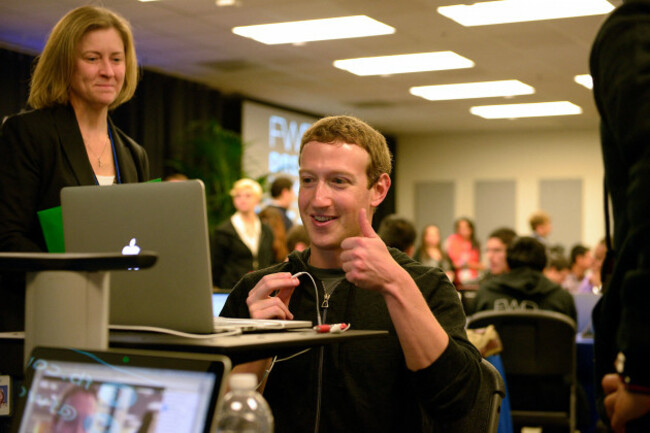
mark-zuckerberg-facebook-ceo-fwd-us-hackathon Meta CEO Mark Zuckerberg. Alamy Stock Photo Alamy Stock Photo

One of Europe’s most prominent fintech companies had made a very loud, very public bet that AI could replace human workers. Within 18 months, it had to walk that bet back. Klarna is not evidence of an AI revolution. It is evidence of what happens when a corporate narrative collides with reality.

There’s a Word for That: AI-Washing.

What is AI-washing?

AI washing is when companies use AI adoption as justification for layoffs that were going to happen anyway, or that have more complicated, less flattering causes behind them. The redundancies are real. The explanation isn’t always on the nose.

If that sounds familiar, it should. Most people already understand greenwashing: the practice of companies slapping “eco-friendly” on products without fundamentally changing how they operate.

AI washing works the same way. We are seeing some CEOs slapping “AI-driven” on restructuring decisions that are often about overhiring, or strategic mistakes made during a period of cheap capital. The label sounds modern and forward-thinking. The reality underneath it is far more ordinary.

To be fair, the picture is not entirely black and white. AI is genuinely replacing some forms of work. That is real, and it would be dishonest to pretend otherwise. The problem is that real AI-driven change and clever AI spin are starting to blur into one another, and it’s becoming harder to tell where genuine transformation ends and corporate storytelling begins.

Blaming AI is good for business. Admitting you overhired is not

To understand why AI washing happens, you have to understand the incentives at play.

Saying “AI changed our business” sounds visionary. It positions a CEO as someone ahead of the curve, making bold strategic calls in a fast-moving landscape. Saying “We overhired during a period of cheap capital and now need to cut costs” sounds like a management failure. Both statements can be true at the same time. But only one of them gets you a favourable headline and a rising share price.

The layoff announcement becomes two things simultaneously: a cost-cutting exercise and a reputational repositioning.

Should you actually be worried?

The fear around AI and jobs is not irrational. It deserves to be treated seriously rather than dismissed. AI will change work. Some roles will disappear. Pretending otherwise would be foolhardy.

But the scale of disruption being implied by AI washing narratives is almost certainly overstated. It’s being driven by companies whose interests are served by framing every redundancy as inevitable technological progress, and by an industry that has not yet proven its economics at the scale being claimed.

The more productive question is not “will AI take my job?” It’s “what kind of work is actually at risk, and what is not?”

The jobs AI can’t touch (and why yours might be one of them)

AI is genuinely effective at process-driven, repeatable tasks. If your working day is largely built around that kind of work, the pressure is real.

It’s also worth knowing that this pressure predates AI. Automation has been eating that category of work for decades. AI has accelerated the timeline, but it did not invent the trend.

Two moves matter more than anything else right now. The first is to become AI-fluent. Understand what these tools can actually do, use them to make your own work better and more visible, and start treating AI as something you can direct rather than something that is happening to you.

The second is to double down on being irreplaceably human. The safest careers going forward will belong to people who combine basic AI literacy with the skills machines genuinely cannot replicate. For example, the ability to build trust, lead others, communicate with clarity, and show up with real empathy in the moments that matter.

AI washing should be understood for what it is: a corporate communication strategy. It’s not a prophecy about the future of work.

Those best positioned workers for what comes next are not waiting for a CEO to tell them how AI will affect their careers. They are already figuring it out for themselves.

Tadhg Guiry is the founder of CoreOS, an AI platform designed to help growing companies make better commercial decisions.

Readers like you are keeping these stories free for everyone...
A mix of advertising and supporting contributions helps keep paywalls away from valuable information like this article. Over 5,000 readers like you have already stepped up and support us with a monthly payment or a once-off donation.

Close
Comments
This is YOUR comments community. Stay civil, stay constructive, stay on topic. Please familiarise yourself with our comments policy here before taking part.
Leave a Comment
    Submit a report
    Please help us understand how this comment violates our community guidelines.
    Thank you for the feedback
    Your feedback has been sent to our team for review.

    Leave a commentcancel

     
    JournalTv
    News in 60 seconds