Sign in. It’s quick, free and it’s up to you.
An account is an optional way to support the work we do. Find out more.
Sign in. It’s quick, free and it’s up to you.
An account is an optional way to support the work we do. Find out more.
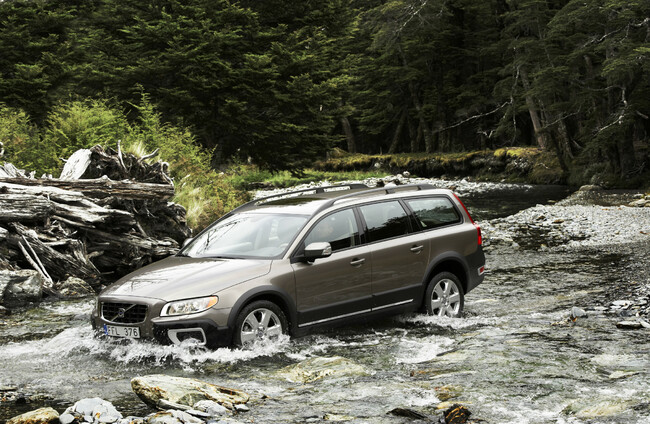

PICTURE TWO neighbours on the same road. One bought a Volvo XC70 diesel estate new in 2015 and has never let it go. It has done the school runs, the Dunnes shops, the odd trip to Kerry with a dog in the back. The other has been through three Volvos in the same eleven years, the last of them electric.
Now ask yourself which of them has been the better citizen.
If you go by the motor tax bill, it is not close. The keeper pays €1,080 a year, which adds up to roughly €11,880 over eleven years. The swapper, by my rough estimates, pays closer to €3,400.
And here is the bit that bothers me. When you count the carbon it takes to build a car as well as drive it, the two come out surprisingly close. I make it around 50 tonnes of CO2 for the keeper and about 55 for the swapper over the same period.
These are illustrative numbers, based on 16,000km a year and estimates of build emissions from the ICCT, so please do not hold me to the last tonne.
But the point survives any reasonable tweak. Motor tax counts what comes out of the exhaust. It does not count the factory.
I am not blaming anyone who buys a new EV. I have one myself, a Volkswagen eUp, and I think it is a great way to get around. But look at what the State is currently offering. A new EV pays a flat €120 a year in motor tax. Budget 2027, announced this week, extends the VRT relief of up to €5,000 on new EVs to the end of 2028.
Meanwhile, VRT is going up by one percentage point on bands above 80g/km from January, which will nudge up the price of a lot of petrol, diesel and hybrid cars.
All of that points in one direction. Replace what you have. Do it sooner rather than later.
For anyone who wants to do the right thing, that is a perfectly sensible message. But what about the person who is doing the right thing by a different route? The person who keeps a car for fifteen years, services it, and gets it through the NCT?
That is arguably the most sustainable thing anyone can do with a car. It avoids the manufacturing emissions of a replacement entirely.
This is the part I keep coming back to. Many drivers are not keeping a car out of principle. They are keeping it because they cannot afford to change it.
Some live in rural Ireland where there is no bus and no train. Some are on a fixed income. Some looked at the price of a new EV, even with the grant, and quietly closed the tab.
The scrappage and VRT supports are aimed at new cars. The SEAI grant does not apply to a used EV at all, which is where most households would actually shop. So we have a system where the people with the savings to replace a car get help, and the people without are left to pay the higher band on the car they already own.
I am not saying older cars should be let off. A 2015 diesel does emit more than a new EV when it is on the road, and emissions should still set the price. The principle of pollute more, pay more is a sound one.
But there is a difference between charging someone for what their car emits and charging them more simply because they were not in a position to swap it.
There is a bigger reason this matters. The State is slowly running out of road tax.
The Comptroller and Auditor General’s latest figures show VRT and motor tax together raised about €1.9 billion in 2024. By my sums, around €950 million of that is annual motor tax. (That figure is derived from the published totals rather than stated outright, so treat it as an estimate.)
Between 2016 and 2024, the number of vehicles on our roads rose by about 20%. Motor tax receipts fell by 12%. More cars, less tax. The reason is simple. Tax follows emissions, newer cars sit in cheaper bands, and an EV pays a flat €120. About 7% of the fleet is already electric or plug-in hybrid, and that share is only going one way.
Officials have already said that some form of pay-per-kilometre charging “will ultimately be needed” as fuel duty and motor tax fade. Simon Harris has described it as a study, not a proposal. But when somebody is looking at a gap that could run to billions, studies have a way of turning into policy.
I have no magic answer, and anyone who tells you they do is selling something. But here is what I would put on the table.
First, keep emissions as the base. It is still the best signal we have. But add a loyalty cap or taper for lower-emission bands, so that the longer one owner holds one car, the less the tax grows. Sell it, and the next owner starts at the full rate. That way there is no loophole. The only way to keep the benefit is to keep the car.
Second, look at weight. Heavier vehicles wear roads more and do more damage in a crash. The Tax Strategy Group has floated this through VRT before, and it is likely to come back as the fleet changes.
Third, back cleaner second-hand cars rather than paying people to scrap working ones. If we want ordinary households into EVs, the used market is where it will happen.
Fourth, if pay-per-kilometre does arrive, build in allowances for people with no alternative to driving. A rural commuter doing 30,000km a year is not the same as someone doing school runs in a Dublin suburb.
And finally, say what the money is for. Since 2018, motor tax has gone into general revenue rather than being ring-fenced for roads. The Government can either own that openly, or earmark some of it. Drivers would be a lot more relaxed about paying if they knew where it was going.
There are real trade-offs here. A loyalty cap costs the Exchequer money and would need careful design so it does not reward the oldest, dirtiest cars. Pay-per-kilometre is complicated, raises privacy questions and could hit high-mileage rural drivers hardest.
Reasonable people will weigh those differently, and this is a personal view, not a policy.
Where do the keepers shop?
If you are a keeper by choice or by necessity, you are not short of company. On DoneDeal Cars, Volvo XC70s of all ages are still out there, from well-travelled 2000s diesels for a few thousand euro to the odd low-mileage 2016 model from a dealer for close to €20,000. Many of them will outlast the next two budgets.
Whatever the government does next, I hope it remembers those people.
Because the greenest car on the road might just be the one that is already on it.
Paddy Comyn is the head of automotive content and communications with DoneDeal Cars. He has been involved in the Irish motor industry for more than 25 years. Journal Media Ltd has shareholders in common with DoneDeal Ltd.
To embed this post, copy the code below on your site














have your say