We need your help now

Support from readers like you keeps The Journal open.

You are visiting us because we have something you value. Independent, unbiased news that tells the truth. Advertising revenue goes some way to support our mission, but this year it has not been enough.

If you've seen value in our reporting, please contribute what you can, so we can continue to produce accurate and meaningful journalism. For everyone who needs it.

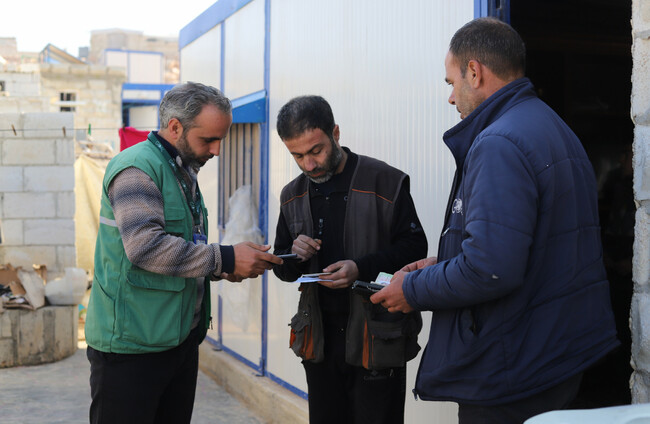
Munaf works with communities on the ground in Syria. GOAL

Syria after Assad Why humanitarian aid can’t stop now

Munaf Muadel from GOAL highlights the challenges in Syria since the fall of the regime, as well as the work they’re doing to assist local communities.

LAST UPDATE | 12 Feb 2025

I HAVE BEEN working on the front lines of the humanitarian response in Syria for over seven years.

In my current role with GOAL as a Beneficiary Selection Team Leader, I have had the privilege of working closely with internally displaced individuals and families — people who were forced to flee their homes in search of safety within their own country as conflict raged for nearly 14 years.

Over the last couple of months, following the fall of the Assad government and the end of the conflict in Syria, I have also been fortunate to witness the profound joy of people returning home after years of displacement. Everyone is excited about the prospect of a safe homeland, the chance to lead a dignified life, and the opportunity to secure a good future for their children.

Yet, alongside this joy, there is a deep sense of anxiety and uncertainty.

Many families returning to their places of origin have found little more than the remnants of their past — no shelter, food, or basic services like water and power.

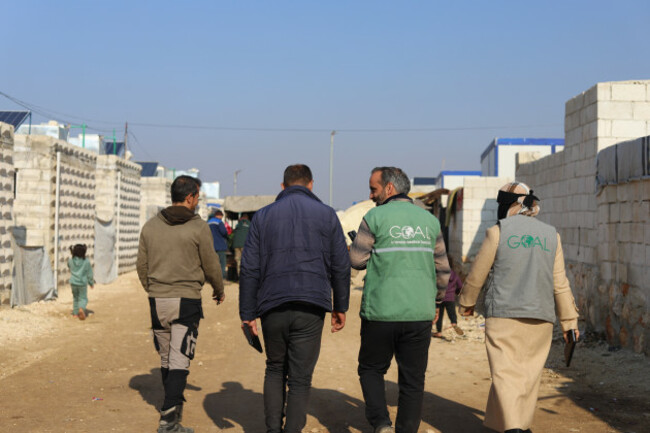
As humanitarians working in Northwest Syria, we had long prayed for the days when displaced families could finally return home to the towns and villages they had fled under bombardment. Welcoming them back has been a relief, but our work is far from over.

Munaf-17 Munaf works with communities on the ground in Syria. GOAL GOAL

From English teacher to humanitarian worker

My journey from teaching English to working as a humanitarian in Syria has been both transformative and deeply personal. It began in Idleb, a rural region in northern Syria that has hosted millions of displaced people over the past 14 years.

Idleb is also where my hometown, Kelly, sits – a village that, like many others, was devastated when, in 2011, peaceful protests across Syria were met with oppression and destruction by the now-ousted government of Assad.

In 2012, as the attacks escalated, Kelly was invaded. The forces of the former government conducted raids and set homes ablaze, while our own country’s warplanes bombed us from above.

However, after the initial wave of aggression, the name Kelly soon became synonymous with displacement camps.

For the next few years, as the government’s attacks on Idleb subsided, we watched as tents were erected across the hills surrounding our village every day. Families fleeing from regions like Hama, Aleppo, and Damascus sought refuge in these makeshift camps, often dependent on aid from humanitarian organisations stretched thin as the need for assistance continued to increase. 

During this time, I worked as an English teacher in Kelly. Along with my colleagues, we did everything we could to ensure that despite the violence and chaos, our youth could still have access to an education. We continued teaching in the face of growing challenges, believing that knowledge and hope were the pillars of a brighter future.

However, witnessing the suffering of displaced families so closely around me, I felt compelled to do more. In 2016, I began working with GOAL in Northwest Syria.

Continued need for assistance

For me, to do humanitarian work is to contribute to the protection of communities going through crisis. In addition to alleviating the suffering of affected people and ensuring their survival, we must offer displaced families a sense of welcome through the provision of essential services and ultimately improve their quality of living during the most challenging times.

In doing this work, we often get a lot more than we give. Working with displaced families teaches us invaluable lessons in patience, resoluteness, and determination.
However, witnessing the reality of displacement also compels us to recognise the value of having a safe home to call our own.

After the fall of Assad, GOAL began delivering emergency aid to families returning to the villages they had been displaced from. Very quickly, the damage caused by over a decade of conflict inflicted on our people’s homes and towns became impossible to ignore.

Thanks to the continued support of EU Humanitarian Aid and other international donors, since November 2024 we have been able to reach over 20,000 returnees in eastern Idleb — an area that had been inaccessible since late 2019, when the former government attacked these areas with shelling and aerial bombs and forced hundreds of thousands to flee further north. Only now are we witnessing the full scale of the destruction.

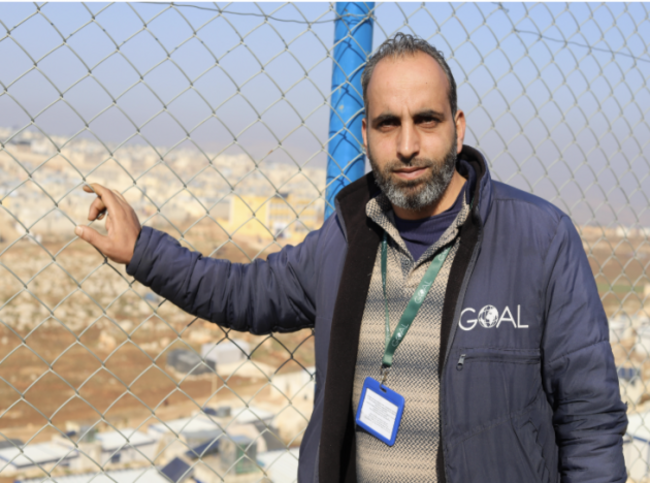
Screenshot 2025-02-10 at 09.42.34 Munaf works with GOAL as a Beneficiary Selection Team Leader. He works closely with internally displaced individuals and families. GOAL GOAL

Working in villages like Sarmin and Nairab, I’ve been deeply saddened by the sight of homes reduced to rubble. But nothing has been more humbling than listening to the stories of families who, despite everything, are finding the strength to return, only to face the painful reality of starting over once again.

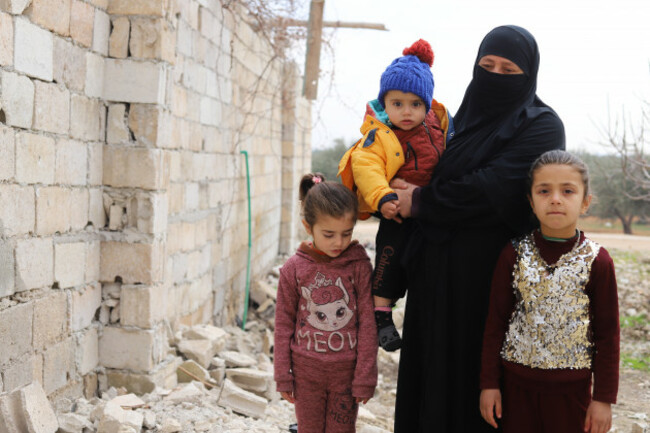
One of these resilient people I’ve had the pleasure of meeting is Amina — a 57-year-old mother of seven and a beneficiary of GOAL’s emergency response programme for returnees in eastern Idleb. She recently returned to her village for the first time since 2020.

“We are very happy to be in our hometown again. Last night, we slept in peace and security, with no bombing or warplanes. Today, my grandchildren could play under the sun. But the scenes of devastation are overwhelming. I cried a lot when I saw my son’s house, which he had built with the sweat of his brow, razed to the ground,” Amina shared.

She continued: “We are aware that no amount of aid will be sufficient for us to restore our homes. But the relief assistance we’re receiving helps us to secure a loaf of bread and some of the basics of life, such as heating supplies. This gives us optimism and lets us maintain hope.”

New challenges

GOAL has been among the first humanitarian agencies to support displaced families returning to eastern Idleb — a responsibility that fills me and my colleagues with immense pride. We remain committed to doing everything in our power to assist vulnerable communities as they strive to rebuild their lives.

This work is not just about providing immediate relief; it is a crucial step toward the reconstruction and development of our country. By supporting returning families, we help lay the foundation for hope for these communities and pave the way for a better future.

However, as a humanitarian worker whose job is to identify affected families’ needs, I am increasingly concerned about the long-term impact of declining international support for Syria.

Over the past few years, we have seen significant reductions in humanitarian funding, and the effects are beginning to take a toll on our country’s future.

amina-and-her-grandchildren-2-a3ff689d-8717-495d-9901-76c7f57625ae Amina in Syria with her grandchildren. GOAL GOAL

As a result of these global cuts, organisations like GOAL have been forced to be extremely selective in designing our humanitarian response plans — limiting our ability to meet the needs of all at-risk people.

Since the fall of the Assad regime, returning communities need support more than ever. Across Syria, people are trying to process the trauma of the conflict, rebuild their lives, and find a sense of safety before reconstruction can begin.

While it is still too soon to say when or how this rebuilding will take shape, one thing is clear: continued humanitarian efforts are essential in laying the groundwork for Syria’s recovery.

Written by Munaf Muadel, with the help of the GOAL Syria Communications and Media Team. Munaf is a Beneficiary Selection Team Leader with GOAL Syria in Idleb. Trained as an English teacher, he has worked in the humanitarian field since 2016.

***

This publication was funded by the European Union (EU). Views and opinions expressed are, however, those of the authors only and do not necessarily reflect those of the EU or EU Civil Protection and Humanitarian Aid Operations (ECHO). Neither the EU nor ECHO can be held responsible for them.

About EU Civil Protection and Humanitarian Aid: The European Union and its Member States are among the world’s leading donors of humanitarian aid. Relief assistance is an expression of European solidarity with people in need all around the world. It aims to save lives, prevent and alleviate human suffering, and safeguard the integrity and human dignity of populations affected by disasters and human-induced crises. Through the Directorate General for European Civil Protection and Humanitarian Aid Operations of the European Commission, the European Union helps millions of victims of conflict and disasters every year. With headquarters in Brussels and a global network of field offices, the EU provides assistance to the most vulnerable people on the basis of humanitarian needs.

About GOAL: GOAL has been providing humanitarian assistance and support in Northwest Syria since 2012, working in urban, rural, and camp settings to deliver aid for both host communities and displaced populations. GOAL’s programmes facilitate the supply of clean piped water and other Water, Sanitation, and Hygiene (WASH) services, deliver food security, basic needs, and nutritional aid, and provide disaster preparedness, emergency relief, and shelter and settlement support.

Readers like you are keeping these stories free for everyone...
A mix of advertising and supporting contributions helps keep paywalls away from valuable information like this article. Over 5,000 readers like you have already stepped up and support us with a monthly payment or a once-off donation.

Close