Sign in. It’s quick, free and it’s up to you.
An account is an optional way to support the work we do. Find out more.
Sign in. It’s quick, free and it’s up to you.
An account is an optional way to support the work we do. Find out more.
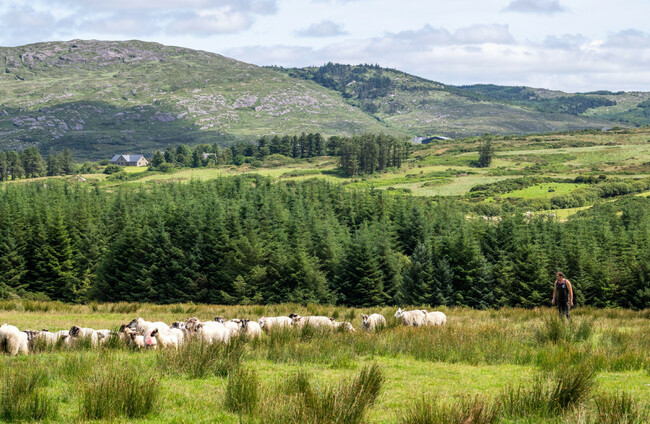

EVERY TIME A son or daughter cannot build a home in the community where they grew up, rural Ireland loses something.
It loses another family from the parish. Another child from the local primary school.
Another customer for the village shop. Another player for the GAA club.
In my previous life as a Kilkenny hurler and camogie coach, and now as Fianna Fáil Spokesperson on Rural Affairs, I have met countless young people who are not asking for anything extraordinary.
They simply want the opportunity to build a home on family land, close to their parents, grandparents and neighbours. They want to raise their own children in the same parish, send them to the local school and see them wear the colours of the local club. In Gaeltacht communities, they want to pass on the Irish language as a living language, rooted in the place they call home.
As someone whose life has been shaped by the GAA, I know that communities like these are built by people long before they are built by bricks and mortar.
The GAA tells the story better than any statistic.
Every weekend, volunteers coach underage teams, cut grass, wash jerseys, organise fundraisers and mentor young players. They also sit on school boards, lead community groups, organise festivals and support neighbours in times of need. They are the quiet strength of rural Ireland.
Volunteers do not appear by accident. They come from families who have the opportunity to stay.
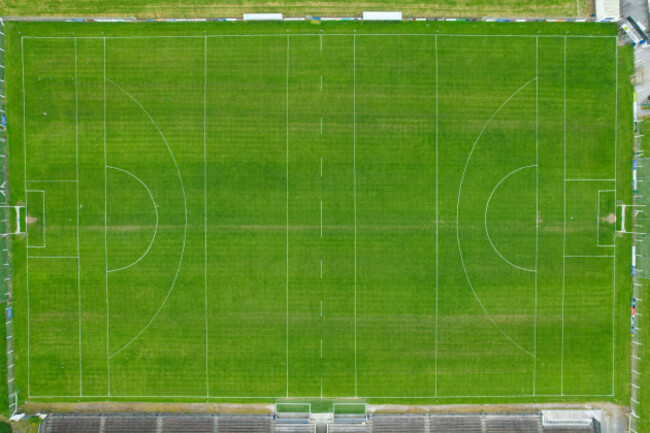
The GAA has always been at the heart of rural Ireland, and Ireland’s changing demographics are perhaps nowhere more visible than in our clubs.
Although almost four in every five GAA clubs remain in rural Ireland, population growth is becoming increasingly concentrated in a relatively small number of urban and commuter areas.
Today, just 50 clubs are home to more than a quarter of all children aged between zero and five, while almost 1,000 clubs serve just 22%.
The implications reach far beyond the playing field. They speak to the long-term sustainability of rural communities across Ireland.
If we want balanced regional development to become more than a political slogan, we must create the conditions that allow younger generations to remain and prosper outside our cities. A handful of new homes can be the difference between keeping a classroom open, fielding another underage team, supporting a local business or maintaining the volunteer base that keeps a community going.
Every young family that remains in a parish strengthens the entire community by helping to keep schools open, sports clubs thriving, local businesses busy and community organisations strong.
Housing policy cannot exist in isolation. It must sit alongside investment in water services, broadband, transport, childcare, healthcare and education. One without the other will never be enough.
Rural housing policy cannot be discussed without also discussing climate. The climate challenge is real, and we cannot afford to neglect our climate ambitions. However, achieving our goals does not mean that no one can live in rural Ireland. Instead, it means putting in place practical, workable supports that reduce emissions while recognising the realities of rural life.
Expanding Local Link services, supporting the transition to electric vehicles where appropriate, and improving rural charging infrastructure are all measures that can help us meet our climate goals while ensuring rural Ireland is not left behind.
Just like the modular home debate, we need to keep putting in place the small, practical supports that make staying in rural Ireland an option for our young people.
Minister James Browne’s updated Rural Housing Planning Guidelines represent an important step towards recognising the realities of rural life. They offer greater clarity and acknowledge that sustaining rural communities is a legitimate and necessary public policy objective.
Minister Dara Calleary’s work on the Guidelines ensures the distinct needs of our Gaeltacht communities are recognised, acknowledging that sustaining population is inseparable from sustaining the Irish language and the unique cultural heritage it represents.
This cannot be where the conversation ends.
The success of rural policy should never be measured solely by statistics or planning approvals. It should be measured by whether the local primary school welcomes another class of junior infants. Whether the parish can field another underage team. Whether the Irish Language stays alive in the village. Whether young people believe they have a future in the place they have always called home.
For generations, rural Ireland has fed our economy, preserved our culture and strengthened our national identity. It has produced entrepreneurs, innovators, artists, farmers, volunteers and sporting heroes. It continues to contribute enormously to every aspect of Irish life.
The question facing us now is whether we are prepared to invest in its future with the same commitment that rural communities have shown to Ireland.
If we truly believe in balanced regional development, then we must move beyond seeing rural housing as simply a planning issue. It is an education issue. It is an economic issue.
It is a sporting issue. It is a community issue.
Most of all, it is about people.
The future of rural Ireland will never be secured by planning policies alone. It will be secured by ensuring that the next generation has the opportunity to live, work, raise families and continue building the communities that have always been the backbone of this country.
Peter ‘Chap’ Cleere is a Fianna Fáil TD for Carlow Kilkenny and a member of the Oireachtas committee on culture and sport. He was previously manager of Kilkenny Senior Camogie and Carlow Senior Camogie.
To embed this post, copy the code below on your site














have your say