We need your help now

Support from readers like you keeps The Journal open.

You are visiting us because we have something you value. Independent, unbiased news that tells the truth. Advertising revenue goes some way to support our mission, but this year it has not been enough.

If you've seen value in our reporting, please contribute what you can, so we can continue to produce accurate and meaningful journalism. For everyone who needs it.

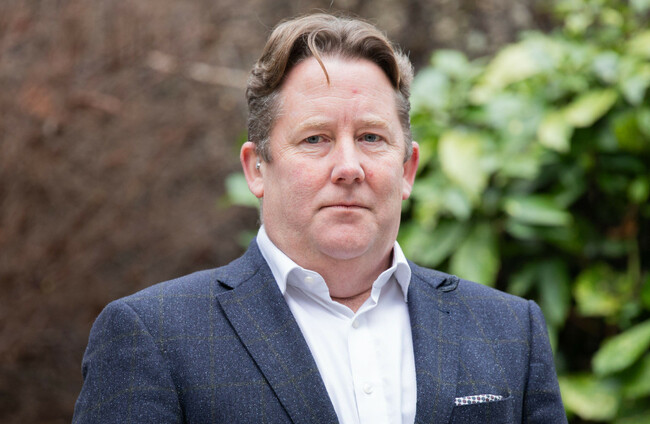
Fianna Fáil TD Darragh O'Brien is both minister for climate, energy and the environment and minister for transport. Alamy Stock Photo

Opinion Between lifting the cap and new Derry flights, is Darragh O'Brien minister for climate, or just transport?

Darragh O’Brien needs to make sure that his transport portfolio isn’t making things harder for his climate portfolio, Dr Catherine Conlon

THE MINISTER FOR Transport recently announced plans to pursue a legislative course of action to bring a memo to Cabinet setting out options to lift the passenger cap of 32 million passengers per annum at Dublin Airport.

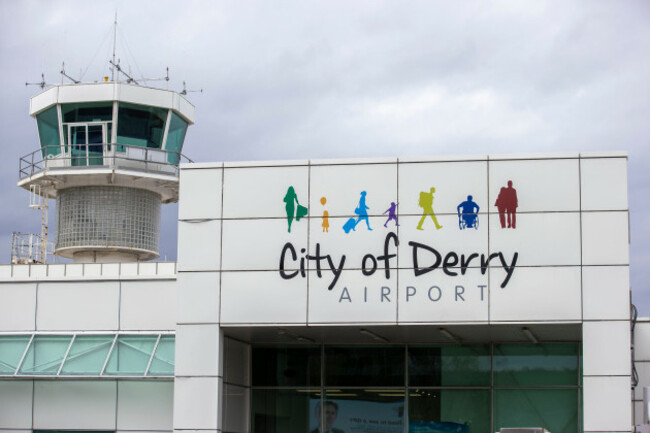
Not long after, Budget 2026 revealed that the government intends to support the establishment of flights between Dublin Airport and Derry City Airport.

The Dublin Airport Authority said it welcomed remarks from Darragh O’Brien that long-term planning should accommodate a Dublin Airport capable of serving up to 60 million passengers per year.

In thirty years, Irish aviation emissions have grown 500%.

A key reason for this is the massive subsidies the sector receives while inflicting increasing pollution and climate damage.

As minister for transport, Darragh O’Brien is representing the needs of the aviation sector to expand and the demands of businesses to maintain growth. But he also has a responsibility to address a climate that is spiralling out of control along with ecosystem collapse.

Forgetting about climate

What has Minister O’Brien done to meet those obligations since he was appointed as minister for climate and environment in January 2025?

Emissions savings from improved fuel efficiency have been wiped out by the explosion of the aviation sector, with no real path outlined towards major emissions reductions other than a vague gesture towards sustainable aviation fuels that currently meet less than 1% of the global demand for aviation fuel and is nearly three times as expensive as its fossil fuel equivalent.

The prevailing attitude that Dublin Airport’s connectivity is an essential prerequisite to economic resilience denies the reality of its escalating contribution to climate change – a factor that Minister for Climate Darragh O’Brien seems to have been able to put to one side.

We the consumers are willing participants in the denial as we continue to pack our bags and avail of cheap flights to the hotspots of Europe at every opportunity.

The climate may be spiralling out of control, but the vast majority of us block our ears to that whispering message in our brain – telling us as we book our flights that we are part of the problem.

In ‘The Lie of the Land,’ environmental activist John Gibbons suggests that if you are looking for signs of meaningful action to tackle the climate emergency, the one place you won’t find it is aviation:

“Jet kerosene for commercial aviation is exempt from both excise and carbon taxes in the EU. On top of these lavish subsidies, the Irish state pours significant resources into aviation including €35.6 million in regional airport funding in Budget 2023. What’s more, airline tickets are VAT exempt in the EU as is aircraft leasing – providing further hidden subsidies to the sector.”

Aviation fuel tax and carbon tax

Gibbons suggests that to bring aviation in line with the urgent need to cut carbon emissions, transport fuels should be taxed globally as with any other transport fuel. Added to that hefty carbon taxes should be applied to reflect the true cost of flying.

Additionally, Gibbons suggests a solution to the gross overuse of aviation by a small minority would be to introduce a system of flight rationing. The system he proposes would see each individual allocated a certain distance annually, say 1,750km (equivalent to a return flight from Dublin to Paris) that would be tied to your PPS or passport number.

If you took another flight, your next 1,750 km would come with a €250 climate levy, with the levy doubling with each additional round trip: €500, €1,000, €2,000 and so on.

“Eventually the cost will deter even the wealthy,” Gibbons concludes. “Properly managed it would be hugely effective in clipping the wings of frequent flyers.”

Not something that Minister for Climate Darragh O’Brien seems to keen on.

In terms of public transport, Director of Friends of the Environment Tony Lowes recently highlighted a “funding gap” for Public Services Obligations (PSO) of €250 million.

The PSO requires Government to ensure funding for essential routes, that are not commercially successful, especially in rural areas including Bus Connects and the “connecting Ireland rural mobility plan”, the Young Adult Card and the 90 minute fare free child fares.

The Department of Transport proposals to fund these projects include an increase in public transport fares, cutting public transport services or taking €250 million away from National Development Plan infrastructure projects.

sign-for-the-city-of-derry-airport-picture-date-tuesday-april-4-2023 Budget 2026 included plans for an air lnk between Dublin and Derry. Alamy Stock Photo Alamy Stock Photo

Lowes suggests that an alternative would be to “reinstate the €10 tax on airline tickets imposed by minister for transport, Noel Dempsey in 2009 but cancelled by this successor Leo Varadkar in 2014.”

Lowes highlights how Ireland is one of the few countries in Europe who do not impose an airline tax. Even the United States imposes a passenger facility charge of about €37 that increases according to distance.

The UK imposes a €15 tax on passengers for short haul flights, which is due to increase in April 2026. The increase will include a 50 per cent increase on private jets – from €673 to €1,141.

“Restoring the air travel tax could meet the funding gap required to maintain our Government’s commitment to public transport,” suggests Lowes, “and would be a step towards climate justice.”

I wonder what the minister for climate, the environment and transport thinks of that suggestion.

A sign that the government is going in the opposite direction is that commencement of a new “Dublin-Derry airlink” in 2026 was among the budgetary measures announced by the Government on Tuesday in Budget 2026.

Were the impacts of aviation-induced greenhouse gas emissions considered in weighing up the decision to move ahead with air travel between the two cities?

Balancing priorities

An EAT-Lancet Commission report released earlier this month acknowledged that the relationship between food systems and emissions is very challenging, but that there is a get-out-of-jail card if we are prepared to take it on.

As ever, the answer lies in where we see our priorities – short term economic protectories or long term economic, and ecosystem sustainability.

Food systems are the single biggest contributor to the transgression of planetary boundaries that place our carefully balanced ecosystems at risk of collapse.

In Ireland, agrifood is the source of almost 38% of total national greenhouse gas emissions – by far our largest single contributor and the sector most resistant to doing its fair share on emissions reductions, an industry that employs 6.4% of our workforce and accounts for just 6.7% of the gross national income and 9% of exports.

The good news is that concerted global efforts to transform food systems could bring us back within planetary boundaries and slice annual greenhouse gas emissions from food systems by more than half.

Johan Rockström, Commission Co-Chair and Director of the Potsdam Institute for Climate Impact Research outlines how the report sets out the clearest guidance yet for feeding a growing population without breaching the safe operating space on Earth set by planetary boundaries.

“By uniting the latest science, it shows that what we put on our plates can save millions of lives, cut billions of tonnes of emissions, halt the loss of biodiversity, and create a fairer food system.

“The evidence is undeniable: transforming food systems is not only possible, it’s essential to securing a safe, just and sustainable future for all.”

Has Darragh O’Brien reflected on the recommendations of the EAT Lancet report or has he allowed it to pass by? Has he read the report, or even the executive summary?

A minister with responsibilities for both climate and transport must be factoring in the former when making decisions about the latter. If this minister isn’t prepared to strike that balance, then perhaps he should hand the portfolio to someone who is.

Dr Catherine Conlon is a public health doctor in Cork

Readers like you are keeping these stories free for everyone...
A mix of advertising and supporting contributions helps keep paywalls away from valuable information like this article. Over 5,000 readers like you have already stepped up and support us with a monthly payment or a once-off donation.

Close
34 Comments
This is YOUR comments community. Stay civil, stay constructive, stay on topic. Please familiarise yourself with our comments policy here before taking part.
Leave a Comment
    Submit a report
    Please help us understand how this comment violates our community guidelines.
    Thank you for the feedback
    Your feedback has been sent to our team for review.

    Leave a commentcancel

     
    JournalTv
    News in 60 seconds