Sign in. It’s quick, free and it’s up to you.
An account is an optional way to support the work we do. Find out more.
Sign in. It’s quick, free and it’s up to you.
An account is an optional way to support the work we do. Find out more.
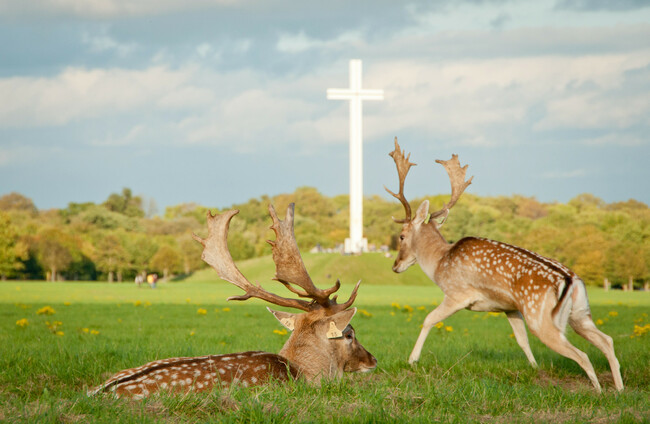

THE HERD OF roughly 600 wild fallow deer is a historically prominent treasure of Phoenix Park. For over 300 years, the deer have promoted the park’s biodiversity. Today, the park hosts an area overseen as a conservation zone, the Furry Glen, and holds 35 habitats, with other key habitats contributing to 8% of the city’s biodiversity.
An ongoing habitat for fallow deer herd, development has continued within the park without serious consideration for the secure preservation of a historic species. As a result, the welfare of the park’s deer is becoming jeopardised, particularly by visitors. To resolve the welfare crisis of the fallow deer, they need clear legal protection for assured enforcement.
The lack of active protection for a historic species is troubling. Since the park’s inception, the wild fallow deer in Phoenix Park has been absent from principal policy. In 1925, the Phoenix Park Act (1925) was passed “for continuing the maintenance and regulation of the Phoenix Park” as a public park and for other purposes. Yet, the fallow deer were not mentioned. Presently, the regulations and rules of Phoenix Park (called bye-laws) recognise visitors not to interfere with the park’s flora or fauna – though, the exact importance of deer is not signified here. All park regulations are enforced by the instruction of official park rangers, who are responsible for patrolling the park from morning to night.
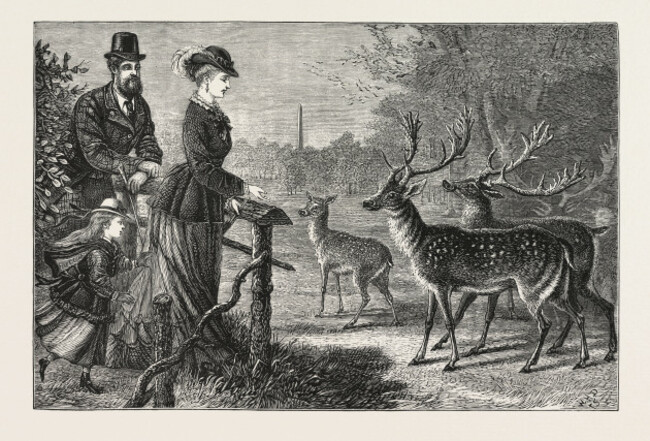
As a deer species, wild fallow deer (while non-native to Ireland) are nationally protected under the Wildlife Act (1976), which focuses on conservation and is under the jurisdiction of the National Parks and Wildlife Service (NPWS). The Wildlife Act includes hunting regulations – hunting is not permitted in Phoenix Park, though culling (killing animals as a form of population control) is carried out by the Office of Public Works (OPW). This significant detail alone fails to acknowledge the varying circumstances for the park’s fallow deer, making the act’s extensions unclear.
The Phoenix Park itself is unique as it is not a national park – a nationally protected nature park intended for nature conservation – or a nature reserve, an important area protected for wildlife. Rather, the park is a National Historical Park (as of 1986) and is overseen by the Office of Public Works (OPW) – responsible for managing heritage sites such as Phoenix Park.
Also of relevance is the EU Habitats Directive – a conservation policy implemented across European Community states, including Ireland. The natural heritage of natural habitats and certain species are being threatened throughout member states; these must be prioritised and defined to take effective conservation measures, according to the Directive. Further, under Article 6, deterioration and disturbance of “special conservation sites” should be accounted for. Phoenix Park, while a long-established habitat for the deer, has no defined or designated conversation area for them.
In June 2024, the ‘Protect Our Park – Don’t Feed the Deer’ campaign was launched by the OPW based on a study released by University College Dublin (UCD) highlighting the impacts of human-feeding on the deer’s behaviour. The study revealed shocking effects from human-feeding and interactions, including increased aggressive behaviour in deer and positive deer testings for Covid-19.
The OPW said as part of the initiative, it will install educational signage, emphasizing the importance of preserving the deer’s natural behaviours and the potential hazards associated with feeding.
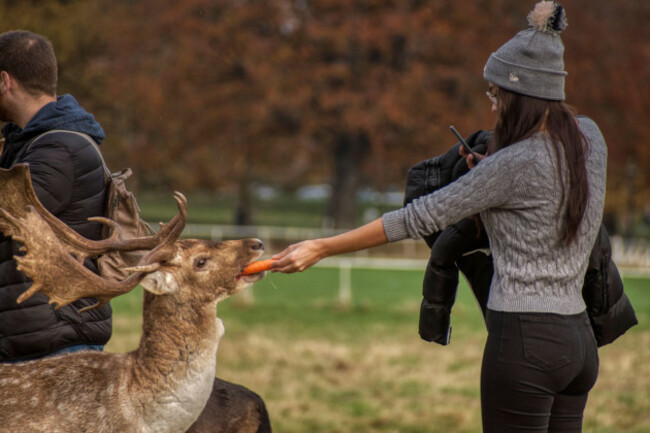
At the park’s front gate, signage on-display is minimal. As unsupervised crowds of people continue to quarrel the herd, take selfies and pass out detrimental snacks to the deer, the limited signage with no meaningful information seems to have made no impact on visitors.
On the Phoenix Park website, there is plentiful information and explanation as to why visitors need to be at least 50m away from the deer, avoid deer-feeding and practice more mindful behaviour. But it’s uncertain how many visitors are checking the site before they visit the Phoenix Park, and what the consequences are for failing to respect the wildlife.
Perhaps more importantly, why aren’t those consequences outlined? Also online, a ‘Deer Ambassadors’ initiative has been introduced by the OPW, where invited members of the public receive information on the importance of the park deer and how they then advise the public (as ambassadors). No timeline for when this will take effect was provided.
Another mentioned authority by the website responsible for monitoring the deer herd’s welfare is a Deer Keeper, which is connected to UCD’s School of Biology and Environmental Science, and the Department of Agriculture, Food and the Marine (DAFM) – separately responsible for overseeing national animal welfare. Welfare, while essential, is not equivalent to enforcement or protection.
There must be a strong enforcement presence in Phoenix Park to protect the park’s founding reason, the fallow deer. Their situation is special, but this doesn’t hold merit for being isolated from legal sanctuary. The deer’s welfare is considered important, yet without appropriate conservation measures in place, threats will continue to persist and magnify. If we don’t properly mitigate human mistreatment of deer, it will be a hazard to them and the community at large.
All designated park authorities deserve administration tools to strengthen enforcement and protection for the park’s fallow deer. Building up confidence for authorities guarantees an improved understanding of and active occupancy for deer protection. Maintaining an authoritative presence doesn’t mean domineering; reliable leaders can foster connections with visitors and build community trust, far and wide.
Distinctly acknowledging the fallow deer in Phoenix Park sets a legal precedent, which is crucial to the implementation and successful fulfilment of initiatives such as the OPW’s ‘Protect Our Park – Don’t Feed the Deer’. Protection may also extend to recognising the Phoenix Park as a conservation area for the park’s deer. Doing so would not hinder public access, but instead raise public awareness and boost community-wide nature appreciation. The fallow deer herd of Phoenix Park are a nationally historic treasure, demanding and deserving of such necessary protection.
Elizabeth Rymut is a freelance journalist with a postgraduate degree in environmental sciences.
To embed this post, copy the code below on your site












have your say