Sign in. It’s quick, free and it’s up to you.
An account is an optional way to support the work we do. Find out more.
Sign in. It’s quick, free and it’s up to you.
An account is an optional way to support the work we do. Find out more.
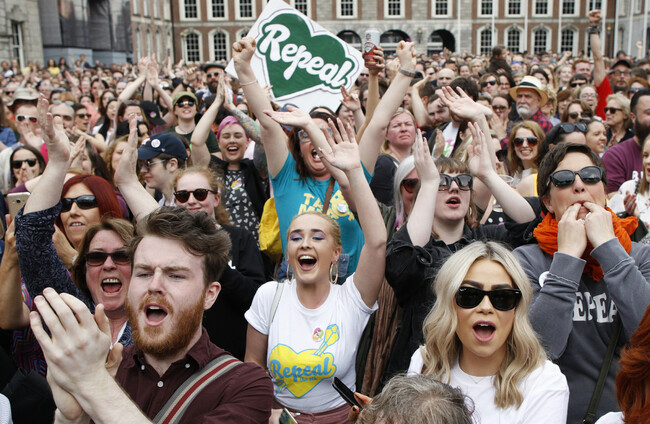

MUCH OF THE coverage since the referendum result has understandably focused on the seismic change which has taken place in Irish society in recent years. The narrative mainly pitches an ‘old Ireland’ against a ‘new Ireland’, focusing on the role of the Church in particular. But is the reality more complicated?
One of the most potent stories of the referendum campaign for me was an anecdote shared on RTE radio about two women on a bus.
They had attended a recent International Literature Festival Dublin event featuring Chimamanda Ngozi Adichie at the Convention Centre. The issue of the referendum had been put to Ngozi Adichie and the women described the strongly pro-repeal atmosphere in the audience. That moment had moved them both.
Two women on a bus
For one it was a profoundly conflictual moment, she felt a strong sense of belonging at the event yet planned to vote differently to the majority of the other attendees. These two strangers found themselves on the same bus home, sitting a few seats from each other.
One was discussing the event with her teenage daughter when the other turned around to her. In the camaraderie of a compelling shared experience they started to talk.
It turned out that the women were neighbours. Soon into their conversation the Yes voter brought up the referendum. The No voter described feeling anxious about openly revealing her views to the other woman, whose opinion was clearly in opposition to hers. Eventually she responded by asking the other woman if she thought you could be a feminist and against abortion.
We need more conversations
They began to discuss what had informed their respective viewpoints. Both of them, it turned out, had experienced an unplanned pregnancy. Towards the end of their journey a man got up to leave the bus. On his way past he turned to them and commented that what we need most in Ireland are more conversations like theirs.
Though it was a landslide result it was a hard-fought campaign with huge grassroots support.The campaign was won not by division but on the creation of a common ground between people of differing persuasions, epitomised by the wording ‘Together for Yes’.
The stories of individual woman affected by the eighth amendment were a powerful influencer on voters. In a country marked by its reticence, especially on issues relating to sex, in this campaign Ireland got real and Ireland got talking. In the end a sense of humanity trumped all else.
Revolutionary
Maybe the women on the bus provide a clue about outcome. Maybe the beauty of this result is that it signifies a different Ireland entirely. One with a new social maturity of compassion and tolerance.
Coming at a time when these values seem on the wane globally, and given Ireland’s history, this new reality is no less revolutionary.
Grainne Conroy is a freelance journalist based in Dublin.
To embed this post, copy the code below on your site












have your say