Sign in. It’s quick, free and it’s up to you.
An account is an optional way to support the work we do. Find out more.
Sign in. It’s quick, free and it’s up to you.
An account is an optional way to support the work we do. Find out more.
I WAS EIGHT years old when I learned that survival could mean losing everything.
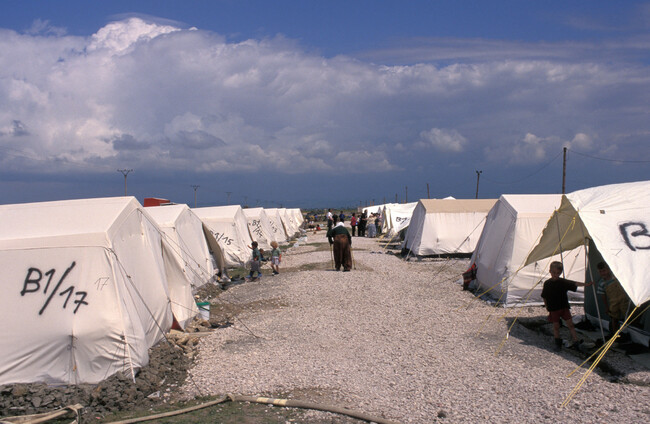
My family fled Kosovo on foot, trekking for days across the mountains into Albania. My father and older brother were taken. Later, I would learn they had been murdered.
In the refugee camp that I stayed in, I felt confused, fearful, incomplete. I carried questions too heavy for a child, and no answers came.
So I drew. On scraps of lined paper, I sketched tanks, houses in flames, people running. It was my way of making sense of the chaos around me, of putting unbearable memories somewhere outside my own head.
Months later, when we returned home, there was little left. Our house had been burned. Our family was broken. Standing among ashes, I felt not only grief but guilt, the strange burden of being the one who survived.
That day, I made a vow I could barely articulate: I would honour their suffering by continuing my education. Somehow, I would turn this devastation into something meaningful.
At first, the vow was a way to keep going. Books became my lifeline. School was not just about lessons but about survival, a way to impose order on a world that had collapsed.
But over time, education became more than a coping strategy. It became my mission. I wanted to understand human conflict, and to learn how broken communities might one day heal.
I never imagined how far that vow would take me. From a refugee camp in Albania, I went on to win a Swiss Government Excellence Scholarship, which opened the door to study in Geneva. I earned a Ph.D. in social psychology, then pursued research in Ireland, and now, in the Netherlands, I study reconciliation, dehumanisation, and intergroup healing.
Ireland became an important part of that journey. During my time teaching and researching there, I was deeply aware of the country’s own history of division and peacebuilding.
It reinforced for me that reconciliation is never abstract. It is lived, fragile, and hard-won, and it requires the courage to see one another’s humanity even after deep wounds.
I often think back to that boy in the camp, and what he would make of the man I became. He would not understand the titles or the degrees. But he would understand the longing to make meaning of loss. He would recognise the quiet determination to carry suffering forward in a way that helps others.
What I’ve learned, through both personal experience and research, is that trauma never disappears. It leaves a mark that cannot be erased – but it can be transformed.
Pain can harden into hatred, or it can be reshaped into resilience. Guilt can eat away at you, or it can fuel a life of purpose. These are not easy choices, and they do not happen overnight. They unfold slowly, through years of work, reflection, and connection.
For me, survivor’s guilt was the hardest part. No matter how far I advanced in school, I wondered if it was enough to honour those who were gone. Education felt like both a gift and a debt.
But eventually, I realised that the true way to honour their memory was not only by surviving, not only by excelling, but by helping others face the wounds of conflict.
That realisation shaped my path as a researcher. Today, as a social psychologist, I study how people dehumanise one another, and what it takes to reverse that process. I examine what makes reconciliation possible after violence, and how groups can move from mistrust to mutual recognition.
These are academic questions, but for me, they are also deeply personal. Each experiment, each interview, each paper is in some way a continuation of the vow I made as a child – to turn suffering into contribution.
My story is not unique. Millions of refugees carry similar burdens, trying to rebuild their lives after loss. With over 120 million people displaced worldwide today, the questions I grappled with as a child have become more urgent than ever.
But if there is one thing I have learned, it is that displacement does not have to mean disconnection. Being forced from your home does not mean you lose your capacity to belong.
In fact, sometimes those who have been uprooted become the very people who know how to build bridges across divides, because they have lived both the fracture and the longing for repair.
There is a quiet power in refusing to be defined only by what was done to you. For years, I thought survival was the end of the story. But survival is only the beginning. The real transformation comes when we decide how to live with what remains, how to carry memory without being crushed by it, how to honour loss without being imprisoned by it.
I return often in my mind to that drawing from the refugee camp. A house, a tank, people fleeing. It was crude, the work of a child’s hand, but it held everything I could not yet say. Today, when I look at that page, I do not only see war. I see the first steps of a promise – a child struggling to make sense of violence, a boy who would grow into a man determined to help others heal.
I learned that trauma cannot be erased, but it can be transformed. I am no longer defined by what I survived, but by what I contribute. That shift – from being a war-affected child to someone helping others understand and heal the wounds of conflict – has been the defining transformation of my life.
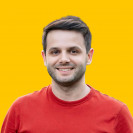
Islam Borinca is a social psychologist researching reconciliation, dehumanisation, and intergroup healing. He is an Assistant Professor at the University of Groningen and Visiting Lecturer at University College Dublin.
To embed this post, copy the code below on your site








have your say