We need your help now

Support from readers like you keeps The Journal open.

You are visiting us because we have something you value. Independent, unbiased news that tells the truth. Advertising revenue goes some way to support our mission, but this year it has not been enough.

If you've seen value in our reporting, please contribute what you can, so we can continue to produce accurate and meaningful journalism. For everyone who needs it.

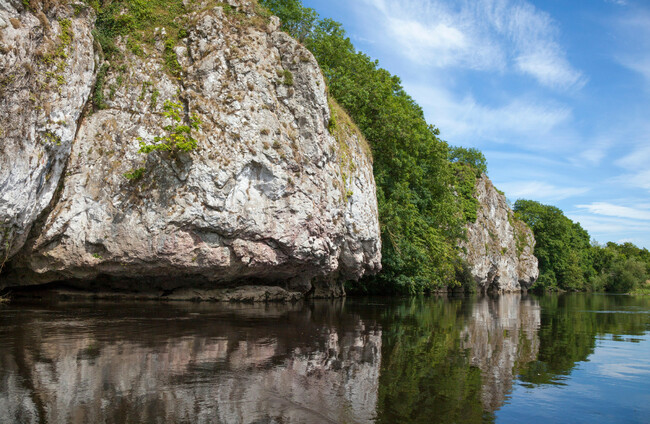
Limestone cliffs along the Blackwater River, Mallow, County Cork, Ireland. Alamy Stock Photo

Another fish kill, another shrug When will Ireland respect its rivers?

Professor Rónán Collins is a keen angler and is horrified at the recent fish kill in the River Blackwater. He asks why we continue to treat our waterways like sewers.

LAST UPDATE | 26 Aug

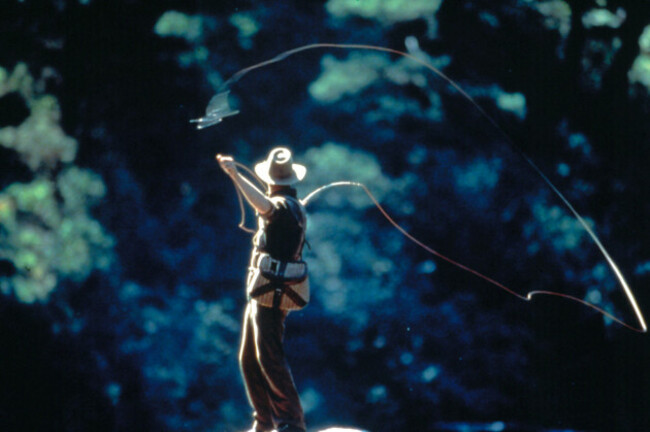
I HAVE BEEN a fisherman all my life, a fly fisherman for much of it, having fallen in a trance with the artistry of Paul Maclean’s (played by Brad Pitt) shadow casting in the 1992 movie “A River Runs Through It”.

As he ‘found a rhythm all of his own’ the unfurling loops of line hooked my mind on new possibilities beyond just catching fish, a more immersive experience. It was and is the very geographical beauty and biodiversity of a river that irresistibly calls to me and brings me to places that inspire or restore a busy mind. It is, after all, ‘fishing’, not catching.

a-river-runs-through-it-1992 A river runs through it, movie. Alamy Stock Photo Alamy Stock Photo

I’ve even spent an ‘electric’ 40 minutes wrapped around a rock in the mistaken belief I was in the fish of my life. Rivers and waters have lured me to Russia, Greenland and West Africa, among many trips and to every corner of Ireland. Their banks and pools, riffles and runs, melodic gurgling flows, all unique voices. Their accompanying cast of flora and fauna, their own individual tribe.

A return to a river once fished is like returning to meet a dear friend, with its welcoming familiarity. I have come to love rivers; I take their abusive treatment personally.

Something has gone wrong

Currently, an ecological disaster in the form of a fish kill is wiping out a 30 km stretch of one of our major rivers, the Munster Blackwater, a river I know for its majesty and breadth of wildlife.

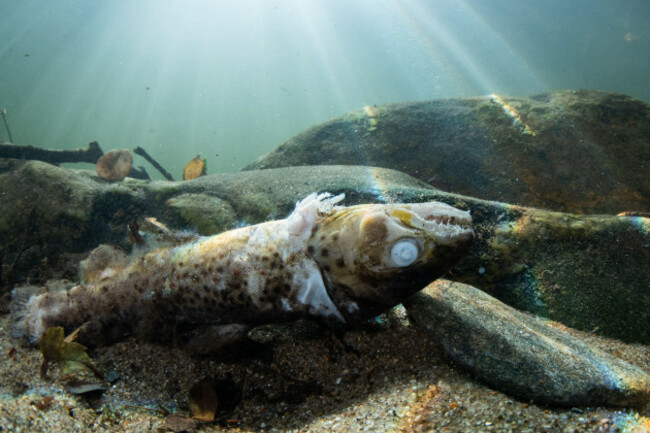
The fish kill has resulted in a huge loss of trout, salmon, eels and lamprey. Anglers estimate that around 40-50,000 fish have been killed. There will be long-lasting collateral damage with the knock-on effect it will have on the birdlife and mammals. The river may never recover its handsome state within my lifetime.

a-dead-brown-trout-salmo-trutta-on-the-bottom-of-a-river-in-eastern-north-america Inland Fisheries Ireland (IFI says thousands of fish like this wild brown trout have been killed in the Blackwater. Alamy Stock Photo Alamy Stock Photo

Initial water quality, toxin, and microbiological studies by the Environmental Protection Agency (EPA), Inland Fisheries Ireland (IFI) and Marine Institute have been carried out, and after a worrying ‘not of concern’ stance, the IFI has since confirmed that the mass fish kill is now consistent with “an environmental irritant”, the source of which appears to be unknown.

As an angler, while I know the aim of the exercise is to catch fish, those of us who enjoy this sport have become the unofficial environmental gatekeepers of rivers like the Blackwater. What’s of concern now to me and others is the possibility that this was a man-made disaster. I also share the concern of the anglers in Munster, that the official line of ‘environmental irritant’ is too vague to track down any true culprit for the kill. Time will tell, as full test results emerge. 

This situation demands transparency and robust analysis with a sense of urgency in equal measure, with a long-term impact study on the rivers’ invertebrates that from its food chain and the effect of this massive loss of fish life on its birdlife and mammals and the upcoming spawning season. We cannot just let this fish kill slip by like all the others, with shrugged shoulders, inadequate explanation, or ‘hands-up’ admissions with no meaningful actions. A river has been denuded of its dignity and stripped of its life, demeaning us all who love our waters.

Respecting our resources

Ireland has a very poor record of protecting its rivers. Fish kills are a regular occurrence. Even in our capital city, extensive efforts by angling clubs and inland fisheries to protect and restore our rivers have been hampered by recurrent fish kills, caused by sewage and detergent spills.

Hundreds of fish have been killed on the River Tolka in 2014, 2015, 2018 and 2023. According to IFI, there were 30 fish kills in Ireland over the 12 months between 2023-2024, with an estimated 19,000 fish killed. In July 2024, the river Aughrim in Wicklow was subjected to a biocide chemical spill with significant damage to fish stocks. In the same year, an uncontrolled spill of 2,500 litres of polyaluminium chloride by Uisce Éireann killed at least 5,000 fish in the river Allow in Cork. The state body was fined €3,500 for the damage, an amount almost on par with the €3,267 in legal costs. A paltry fine with no intent to ensure accountability.

There are multiple state agencies with responsibilities that are often conflicting and competing that have an interest in our rivers: ESB, OPW, Inland Fisheries Ireland, Uisce Ireland, and Environmental Protection Agency, to mention a handful. We seem to have a legacy view of rivers merely as flood threats and sewer conduits for effluent, be it farm, human or industrial; extraction sources of water or energy; recreational playgrounds for ourselves or our pets; watering holes for our cattle; or poaching opportunities for the lucrative illegal wild salmon trade. We rarely see them as the wondrous geographical jewels, highways of biodiversity or the hydrological wonders that they are.

When ‘threatened’ we seek to divert, culvert and concrete our urban river courses rather than addressing the cause of floods, the human damage to their upper catchments or floodplains. Great examples of modernist concrete ‘Ars Destructiva’ can be seen in the urban river courses through our West Cork towns of Skibbereen, Clonakilty and Bandon. In her judgement on convicting the main contractor on the river Bandon flood relief scheme, Judge Mary Dorgan stated that the Office of Public Works owed a strong ‘duty of care to the public, future generations and to nature‘. Criticising the lack of transparency in public consultation, the judge stated it ’downplayed the project’s potential to irreparably alter the river’s character for decades’. It is a tragic result for the town and nature, an eyesore so at odds with my childhood memories, that I can no longer stay awhile on Bandon’s bridge and watch her suffering state.

Abuse of nature

We extract water at increasing rates to address our various needs, with more planned in the proposed Great Shannon Water Robbery to feed the thirsty capital and its data centres, rather than addressing drinking water wastage through leaks, unscrupulous or excessive use, inadequate rain harvesting and recycling.

Large water extractions damage the flow and nature of a river’s sculpting hand, affecting our landscape, its wildlife, and creating the sluggish breeding cesspits for algae, fungi and bacteria in our increasingly arid summers that may well be responsible for this latest natural outrage. All the while we fertilise such toxic suffocating blooms with the nitrogenous run-off of our farms, our urban sewage effluent and the discharges of creameries and factories. All legally licensed and all the more appalling for that.

I have stood in a sediment-coated river Boyne, our most iconic of rivers, almost overcome with the stench of sewage effluent from upstream towns, while cattle below me urinate and defecate in the river in front of tourists from an overlooking bridge. I have stood in rivers while, sensing the incoming rain, a misinformed or careless farmer has decided to openly spread their slurry on adjacent river meadow fields in the mistaken belief that it will be washed into soil, not river.

I have watched tractors and containers being washed in rivers, dead animals being dumped from bridges, gangs in the dying light descending on rivers with nets and our rivers being used for pet baths, their ‘spot-on’ anti-tick treatments (detected in many UK rivers now) toxic to the fish and invertebrates which form a river’s food chain of life. We have much to change and learn together about our rivers and their courses if we want to protect them as real greenways. Greenways are first and foremost for ‘wing and claw’, and not solely for ‘bike and paw’.

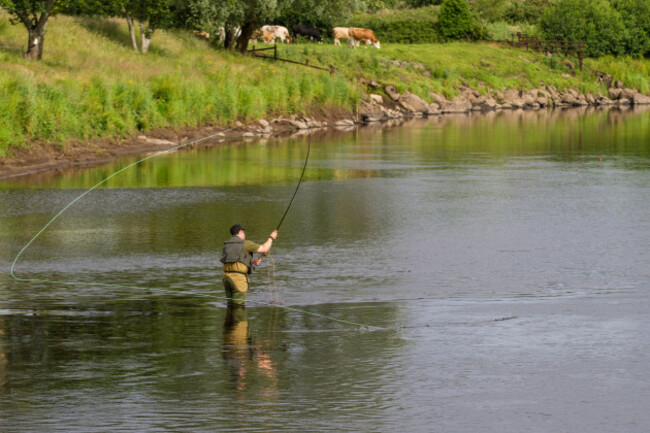
atlantic-salmon-ouananiche-lake-atlantic-salmon-landlocked-salmon-sebago-salmon-salmo-salar-salmon-angler-with-fishing-rod-ireland-river-moy An angler in Ireland. Alamy Stock Photo Alamy Stock Photo

The current disaster on the Munster Blackwater is a siren of a broad aquatic wildlife crisis. Our Irish Atlantic salmon are on the brink of a catastrophic extinction; their numbers of over 1.2 million returning fish 30 years ago are down to an estimated 170,000. The fish of our legends, coins and songs are facing extinction! While the causes may be various, Ireland’s management of our rivers and fishery protection is one we have failed at ourselves alone.

Who protects the waters?

Fishery protection in Ireland has been far below what is required in rivers and around our coast, where our current agency, Inland Fisheries Ireland (IFI) has jurisdiction. Inadequately resourced and equipped for the oftentimes dangerous job in hand, and not sufficiently supported by law and meaningful sanction, it has struggled, in my view, mixing the dual roles of fish science and protection.

It is clear to all, the current conservation and protection policies are not working, at least where wild salmon are concerned. Many rivers have such low stocks that it is hard to see beyond an interventionist approach or a hatchery rescue plan now, yet Ireland is still allowing licensed netting of salmon in certain areas, and IFI is still issuing ten ‘harvest’ tags per angler. I have no real sense or awareness of a serious attempt at fishery protection of salmonoids and bass in our estuaries or up to the 12 nautical miles specified in the legislation. The scandal of unregulated pair trawling of sprat, the food source of these larger fish, in our harbours is a good testament to that.

I get the feeling IFI is not taken as seriously by our government as Bord Iascaigh Mhara might be, for example, the latter often actively promoting what is a major cause of deteriorating stocks of wild salmon and sea trout, namely salmon farming, sometimes labelled ‘organic’, whatever that means. At the end of the day, it’s ‘the economy stupid’ or at least the economy as we see and imagine it. Not the one that prioritises rivers and has nature and angling tourism thriving as it once did, attracting the anglers who will spend an estimated €2,500 into the economy per wild salmon caught, benefiting ghillie, host, pub and restaurateur. The ‘Wild Atlantic Way’ opportunity of our inland riverside towns and villages is being lost to them.

We urgently need one river authority that has at its first principle the recognition that rivers are the arteries of our country, bringing their waters of life, biodiversity and wellbeing. They are the waters on which we all depend, the sculptors of our ever-changing landscape and the ‘Wild Atlantic Way’ opportunity for many of our inland towns through angling, nature tourism and recreation.

We must protect them, assign them a priority of respect, proper regulation and management. Our interventions, when needed, must be sensitive with careful design. Our extractions measured and restrained. Our activities licensed with proper disinfection protocols for equipment. A proper commitment to the prevention of pollution and a statutory wildlife & fisheries force with meaningful powers of sanction.

The current fish kill on the Munster Blackwater is alarming in its scale, and while we await a full transparent explanation of this catastrophe, we must recognise it is one of a long list of recurrent episodes of fish kills, all of which we have caused by pollution, eutrophication, spread of disease and a general indifference to river protection at governmental level. A visit to the Salmon Watch Ireland website may help our understanding of some of the issues facing our rivers and wild salmon.

Rivers are important sources for our own health and well-being. A walk or time spent by the riverside can be restorative, its soothing flow, the sounds and sights of its nature joyous and uplifting. Whose heart has not stirred at a glimpse of the flashing bright blue flight of a kingfisher, or at the sight of a salmon leap? We are as human beings naturally drawn to the waters; religious psalms speak of being ‘by quiet waters where He gives me repose’, Hindu culture reveres the river Ganges (Ganga) as mother, goddess and purifier. Many cultures have a belief system of new starts, rebirths or ‘baptisms’ associated with rivers. How then are we not more invested in their value in our daily lives?

I am fortunate to live near the river Dodder in Dublin and often sit to set aside my rod to watch the otter teach her young how to fish, our pause to notice the beauty of an ‘olive’ fly alight on the wall or be lucky to see a kingfisher fish or dipper dip. Thousands of people enjoy and are better for the Dodders’ company, marvel at her nature and are restored by this humble river. I fear we ask too much of her at times with over-intrusive concreting and paths. She, like all our rivers, is an invaluable health resource that needs protection if even for our own benefit. In truth, a river runs through all of us.

Prof Rónán Collins is consultant geriatrician, fisherman, and council member of the Royal College of Physicians and Clinical lead for stroke. He is a board member of Salmon Watch Ireland. The views expressed here are his own thoughts and opinions and not representative of any organisation.

Readers like you are keeping these stories free for everyone...
A mix of advertising and supporting contributions helps keep paywalls away from valuable information like this article. Over 5,000 readers like you have already stepped up and support us with a monthly payment or a once-off donation.

Close
36 Comments
This is YOUR comments community. Stay civil, stay constructive, stay on topic. Please familiarise yourself with our comments policy here before taking part.
Leave a Comment
    Submit a report
    Please help us understand how this comment violates our community guidelines.
    Thank you for the feedback
    Your feedback has been sent to our team for review.

    Leave a commentcancel

     
    JournalTv
    News in 60 seconds