We need your help now

Support from readers like you keeps The Journal open.

You are visiting us because we have something you value. Independent, unbiased news that tells the truth. Advertising revenue goes some way to support our mission, but this year it has not been enough.

If you've seen value in our reporting, please contribute what you can, so we can continue to produce accurate and meaningful journalism. For everyone who needs it.

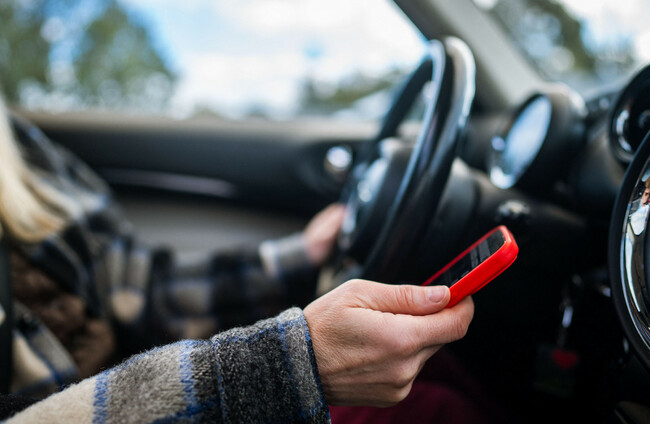
Alamy Stock Photo

Road safety Drivers use Netflix in their cars and we wonder why people are dying on the roads

Are we willing to accept inconvenience, reduced connectivity and stricter controls in exchange for fewer funerals?, asks our resident motoring expert.

THE GOVERNMENT’S DECISION to abandon plans to split the Road Safety Authority has been framed as a pragmatic U-turn. Minister for Transport Darragh O’Brien says the focus should now be on stabilising the existing organisation, improving delivery and avoiding another period of disruption. That may all be true. But if we’re honest, structural reform – or the lack of it – is only a small part of Ireland’s road safety problem.

Because while we debate governance models and organisational charts, people continue to die on our roads. And the uncomfortable truth is that no reshuffle of agencies will compensate for the choices we make every day behind the wheel.

Ireland’s road death toll in 2025 was the highest in over a decade. Vulnerable road users accounted for a significant proportion of those killed. The data is sobering, but it’s also familiar. Speed, alcohol, drugs, fatigue and distraction continue to dominate as causal factors. And distraction, in particular, is becoming the defining risk of modern driving.

We are more connected – and more distracted – than at any point in history. Most of us would readily admit that our phones are rarely out of reach. We use them for work, navigation, music, communication and, increasingly, for dopamine hits delivered via social media algorithms engineered to keep us scrolling. The idea that this behaviour magically stops when we get into a car is fanciful.

From my own vantage point in the motor industry, including through insights gathered at DoneDeal Cars, we can see how ingrained phone use has become in everyday motoring life. Cars are now marketed – and bought – on the basis of connectivity, screens and seamless integration with our devices. Convenience has become a selling point. But convenience, unchecked, can also be a risk.

On a recent episode of the Driver’s Republic Podcast, psychologist Dr Becky Spelman made a point to us that landed uncomfortably well. She suggested we may now be at a stage where we need two devices: one with social media apps that stays at home in a single room, and another “utility” phone we take with us. It sounds extreme, until you consider the reality of how modern apps are designed.

International research consistently shows that smartphones – and social media in particular – exploit the brain’s reward system in much the same way as gambling. Variable rewards, endless feeds and algorithmic reinforcement are not accidental features; they are the product. Studies from the US and Europe have linked excessive smartphone use to reduced attention span, impaired impulse control and increased risk-taking behaviour. All of which are precisely what you don’t want when controlling a two-tonne vehicle at speed. You don’t have to look too long on any given morning on Ireland’s most expensive car park, the M50, to see people watching Netflix, or chin-lit by the uplighting of their mobile phones. 

This issue becomes even more complex when we look at younger drivers, particularly young men. Neuroscience has long established that the prefrontal cortex – the part of the brain responsible for judgement, impulse control and risk assessment – is not fully developed until the mid-20s. Multiple longitudinal studies have shown that this developmental gap contributes to higher-risk behaviours, especially in male adolescents and young adults.

Layer smartphone addiction on top of an underdeveloped impulse-control system and the results are predictable. We see it in collision statistics, in enforcement data and, tragically, in coroners’ courts. Yet our response remains cautious, incremental and politically palatable.

Which brings us back to the RSA and the wider question of responsibility. The authority has faced justified criticism in recent years, including around data quality and mixed messaging – not least when it appeared to cast doubt on its own research into mobile phone use by drivers. But even a perfectly functioning RSA cannot compensate for societal reluctance to confront uncomfortable solutions.

We know what would save lives. Harsher penalties for phone use. More enforcement. Graduated licensing with tighter restrictions for novice drivers. Possibly even an outright ban on handsets in cars, regardless of whether they’re hands-free. The technology exists to do this. Other countries are already moving in that direction.

The real question is whether we are prepared for the consequences. Are we willing to accept inconvenience, reduced connectivity and stricter controls in exchange for fewer funerals? Are we ready to acknowledge that personal responsibility – not institutional reform – is the missing piece in our road safety strategy?

The RSA U-turn may buy time and stability at an organisational level. But it won’t change behaviour. That part is on us. Every notification we ignore, every phone we leave untouched, every decision to focus solely on the road is an act of road safety. Until we start treating distraction with the seriousness it deserves, no amount of restructuring will stop the numbers from climbing.

Paddy Comyn is the Head of Automotive Content and Communications with DoneDeal Cars. He has been involved in the Irish Motor Industry for more than 25 years.

Note: Journal Media Ltd has shareholders in common with Done Deal Ltd 

Readers like you are keeping these stories free for everyone...
A mix of advertising and supporting contributions helps keep paywalls away from valuable information like this article. Over 5,000 readers like you have already stepped up and support us with a monthly payment or a once-off donation.

View 75 comments
Close
75 Comments
This is YOUR comments community. Stay civil, stay constructive, stay on topic. Please familiarise yourself with our comments policy here before taking part.
Leave a Comment
    Submit a report
    Please help us understand how this comment violates our community guidelines.
    Thank you for the feedback
    Your feedback has been sent to our team for review.

    Leave a commentcancel

     
    JournalTv
    News in 60 seconds