We need your help now

Support from readers like you keeps The Journal open.

You are visiting us because we have something you value. Independent, unbiased news that tells the truth. Advertising revenue goes some way to support our mission, but this year it has not been enough.

If you've seen value in our reporting, please contribute what you can, so we can continue to produce accurate and meaningful journalism. For everyone who needs it.

Body of evidence Trump says four hours’ sleep a night is enough. Science strongly disagrees

As part of her new health series, Dr Catherine Conlon looks at how sleep or lack of it affects everything from brain health to emotional regulation.

DONALD TRUMP CLAIMS he usually gets between four and five hours of sleep per night. He says he usually goes to bed at midnight or 1am and wakes up at 5am to eat, read newspapers and watch television.

“Don’t sleep any more than you have to,” he wrote in his 2004 book Think Like a Billionaire.

His predecessor, the late UK prime minister, Margaret Thatcher, also famously said that she only ever needed four hours’ sleep a night.

Both figures arguably benefited politically from the notion that they were leaders who were ‘always on’ and, in a sense, to be feared. Certainly, Trump’s recent late-night online pronouncements have caused many to wonder if he sleeps at all. 

MixCollage-26-May-2026-01-41-PM-8453 The late British PM, Margaret Thatcher famously said she survived on four hours' sleep. Trump swears by seven. Alamy Alamy

Increasingly, in a society that prizes productivity, sleep is considered expendable, something to trade for working late, but with experts advising that the optimum amount of sleep is 7–9 hours each night, Trump and Thatcher’s advice is once again not good or helpful.

Adequate sleep, so vital to good health, is a major factor that can improve brain health and reduce the risk of dementia. Too little sleep (less than six hours) or too much (more than nine hours) is associated with reductions in attention, memory, logic and reasoning.

What is good quality sleep?

We humans spend about a third (30%) of our lives sleeping. The brain goes through a series of sleep cycles every night, each cycle lasting from 90 to 110 minutes.

Stage 1 is the lightest stage when you first doze off and lasts a few minutes.

Stage 2 is slightly deeper, where brain waves slow down, and memories are organised. It accounts for up to half of the time spent asleep.

Stage 3 is the stage of deep or slow wave sleep that is crucial for physical restoration, immune health and cellular repair.

The final rapid eye movement (REM), Stage 4 is the phase where vivid dreaming occurs and is critical to emotional regulation.

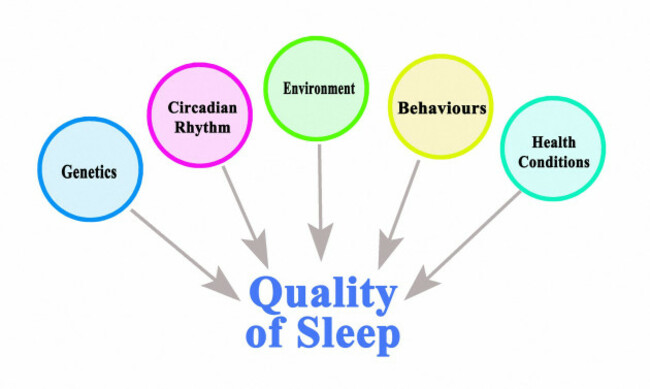
what-influence-quality-of-sleep Alamy Stock Photo Alamy Stock Photo

When people go to sleep, ideally, they proceed uninterrupted through the sleep cycles to get the most out of sleeping.

Alcohol in particular can affect REM sleep, interrupting your circadian rhythm, resulting in fragmented sleep, fatigue and brain fog that can last for days.

The body clock that controls sleep

A good night’s sleep is underpinned by two things: how tired we are, our ‘sleep drive’, and our ‘body clock’ – the 24-hour circadian rhythm that underpins our physiology.

The body clock is controlled by the hypothalamus – an area of the brain that controls heart rate, body temperature, eating, sleeping and hormone production.

Melatonin production, the hormone that helps us to fall asleep and stay asleep, is controlled by light. It is exposure to morning light that causes messages to travel to the hypothalamus for the body to wake up.

closeup-image-of-brain-and-wooden-cubes-with-sleep-icon-tired-sleeping-concept Alamy Stock Photo Alamy Stock Photo

Mixed messages, caused by alcohol before bedtime; sleeping in a bedroom that’s too warm; too much artificial light at night from computers and phones, hallway lights or streetlights; along with too little light during the day; or sleeping during the day can upset the body clock and have a heavy impact on a good night’s sleep.

When it comes to poor sleeping habits, Ireland is right up there.

A global sleep survey in 2025 revealed that China has the highest score for sleep quality, while Norway has the lowest, with the US second to last. Globally, Ireland ranked in the top five poor sleepers.

Norway has a good excuse – with its extreme seasonal daylight variations ranging from 24-hour daylight from May to July, to prolonged darkness known as the Polar Night in winter.

high-angle-view-of-young-woman-communicating-online-on-mobile-phone-before-sleep-lying-on-her-bed Alamy Stock Photo Alamy Stock Photo

Ireland has no such excuse. Yet almost half (49%) of us feel tired almost every day.

The average amount of sleep Irish people get is just over 6.5 hours. Three-quarters use their phone in the bedroom, and almost one in five (20%) regularly takes sleep medication.

This crazy world we live in compounds this phenomenon of less sleep. Always on digital culture, blue-light exposure from screens, late-night caffeine and alcohol and irregular schedules have undermined our natural rhythms.

Does good quality sleep reduce the risk of dementia?

Research shows that sleep is critical for maintaining long-term memories and for removing toxins within the brain.

A recent review in the BMJ (2019) looking at sleep problems and links to cognitive decline suggested that sleep could influence core biomarkers or indicators of Alzheimer’s disease.

Difficulty falling asleep, poor sleep quality, sleep loss, excessive daytime sleep and disordered breathing during sleep were suggested to increase cerebral Aβ (amyloid-beta) deposition – the insoluble protein fragments in the brain that form amyloid plaques, the primary hallmark of Alzheimer’s disease.

senior-couple-asleep-in-their-bed-at-home Alamy Stock Photo Alamy Stock Photo

Sleep quality was even found to reduce the protective effects of other environmental factors, such as physical exercise, on brain amyloid deposition. In other words, even if you are doing lots of walking or exercising in the gym, cycling, swimming or Zumba dancing, all this effort could be giving you less benefit than you think, if you are not getting sufficient good quality sleep.

How can risks from lack of sleep be reduced?

Director of the Optimal Ageing Programme at Oxford, Muir Gray, and co-author of Increase your Brainability – and Reduce your Risk of Dementia, suggests that sleep medication should only be used as a short-term treatment for insomnia. Long-term use risks possible side effects, addiction to medication, interactions with other medications and the fact that sleep medications interfere with all stages of sleep, particularly REM sleep.

The authors advise the elimination of computers or televisions in the bedroom. Block additional lighting from streetlights or an alarm clock. Reduce noise levels or operate a fan to disguise any background noise.

television-set-in-bedroom TVs in bedrooms are not a good idea for sleep quality. Alamy Stock Photo Alamy Stock Photo

Physical activity during the day, plus a few hours of daylight exposure are necessary to preserve melatonin to ensure a good night’s sleep. Napping during the day should be avoided or kept to a minimum and not late in the afternoon. Sleep can be improved if the bedroom is cooler (less than 18C) rather than hotter (more than 20C).

Critical to good sleep hygiene is establishing a routine. A standard time to go to sleep and a standard time for waking up should be established. Seven hours of sleep a night should be the goal. Avoid snacks, sugar, caffeine, alcohol, nicotine and stimulation from any screens before going to sleep.

Do supplements work?

Overall, the evidence suggests that sleep supplements can help, but they are generally more effective for temporary issues such as jet lag, as opposed to chronic insomnia, and offer only moderate improvements over placebos. While supplements like melatonin and magnesium can aid relaxation, they are best used as short-term aids alongside good sleep hygiene rather than long-term solutions.

Magnesium is more likely to help sleep if you are magnesium-deficient, and there is a good chance that you may be. Magnesium deficiency is surprisingly common, affecting anywhere from 10% to 60% of people, yet it often goes undetected.

self-care-flat-lay-with-mask-for-sleep-sleeping-pills-vitamins-dietary-supplements-herbal-tea-bags-and-flowers-concept-of-healthy-sleep-and-no-de Alamy Stock Photo Alamy Stock Photo

Rich sources of magnesium include cabbage, broccoli, kale, spinach, brussels sprouts, chia seeds, flax seeds, almonds and whole grains. Foods that we all love, but unless these are featuring largely in your diet, you may well be deficient.

In terms of sleep, magnesium promotes muscle relaxation and calming, potentially improving sleep quality. My experience with magnesium is exactly that – it makes me feel more relaxed at night, and both quantity and quality of sleep seem to improve.

Am I on the right track?

If you are wondering about the quality of your sleep each night, and you are still not sure, ask yourself the following questions:

  • Am I getting seven or more hours of sleep each night, and not sleeping more than nine hours?
  • Do I not wake up more than once during the night?
  • Can I go to sleep most nights within 30 minutes?
  • Do I avoid sleeping during the day?

If the answer to all of these questions is yes, you are doing well. If the answer to one or more is no, you may need to alter your routine or sleep environment, and if that does not help, seek the advice of a health professional.

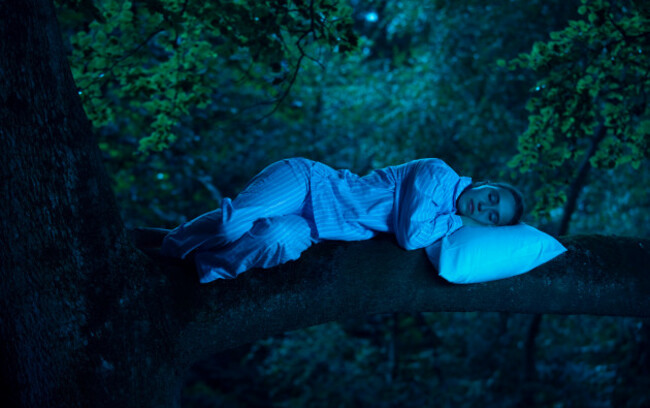
woman-in-pyjamas-asleep-in-a-tree Alamy Stock Photo Alamy Stock Photo

A good starting point is to remember that most sleep advice starts too late. People spend the day overstimulating their nervous system and then try to undo it with magnesium or chamomile tea before bed, blue-light glasses, sleep supplements and meditation apps.

But sleep is quietly built up much earlier in the day, in the way you wake up, the amount of daylight your eyes receive first thing and throughout the day, whether your brain ever truly pauses.

Start early. Let the daylight hit your eyes first thing. Build exercise and fresh air into your day. Take breaks from screens and work. Switch off early in the evening.

Build a routine around avoiding screens, TV, alcohol and sugary foods in the hours before bed. Get to bed around the same time each evening in a cool, dark, screen-free room. Read to unwind. Wake up to the light after seven hours and see if you can feel the difference.

Pay no attention to Thatcher and Trump’s approach – it’s just more fake news. Building a robust routine around good quality sleep makes for a great start to your day and is one of the best steps towards maximising brain health well into middle and elder years.

Dr Catherine Conlon is a public health doctor in Cork.

Readers like you are keeping these stories free for everyone...
A mix of advertising and supporting contributions helps keep paywalls away from valuable information like this article. Over 5,000 readers like you have already stepped up and support us with a monthly payment or a once-off donation.

Close
12 Comments
This is YOUR comments community. Stay civil, stay constructive, stay on topic. Please familiarise yourself with our comments policy here before taking part.
Leave a Comment
    Submit a report
    Please help us understand how this comment violates our community guidelines.
    Thank you for the feedback
    Your feedback has been sent to our team for review.

    Leave a commentcancel

     
    JournalTv
    News in 60 seconds