Sign in. It’s quick, free and it’s up to you.
An account is an optional way to support the work we do. Find out more.
Sign in. It’s quick, free and it’s up to you.
An account is an optional way to support the work we do. Find out more.
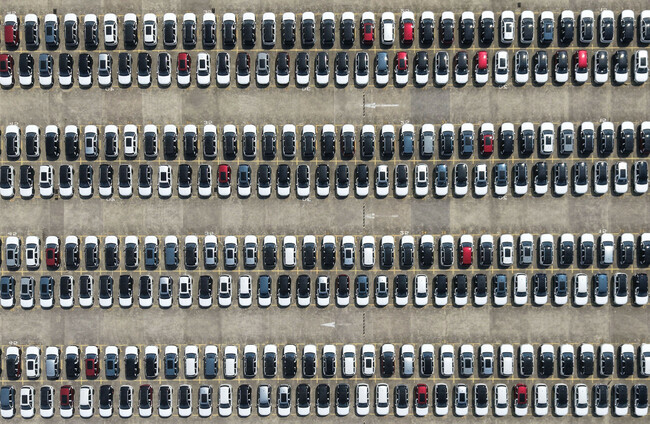
IRISH CONSUMERS ARE taking on an increasing amount of debt to buy cars.
Central Bank figures on hire-purchase agreements and ‘personal contract plans’ (PCPs) – a similar type of finance arrangement that allows you to drive a car you do not own in return for monthly payments – show the value of outstanding loans has climbed in the past two years.
The amount borrowed by consumers on PCPs increased by 20% to €2.17 billion between January 2024, when the Central Bank started collecting data, and June 2025.
The value of outstanding hire-purchase loans – which can be used for various products but in practice are overwhelmingly used for cars – increased by 8% to €3.2 billion over the same period.
PCPs have been available in Ireland for almost 20 years, since Volkswagen first began offering them. These contracts offer lower monthly repayments than hire-purchase but require an upfront deposit or trade-in and, if you want to keep and actually own the car, a large final “balloon payment”.
In practice many people give the car back and start another PCP rather than make this payment, explained Paddy Comyn, head of automotive content and communications with DoneDeal Cars.
“In effect, they’re pretty much leasing the car, because they’re just paying a monthly figure, they’re having the use of this car, they hand it back and go again,” Comyn said.
That suits the manufacturer, because they get another unit gone. They’re getting a car back that’s in good condition, it’s been serviced with the dealership – which is what they want as well, because they will make some money on the servicing.
“A lot of people will be on their second, third or fourth PCP at this stage.”
Hire-purchase means you pay an amount each month to hire the car and only become the legal owner when you have made the final payment.
There are a few reasons why drivers are borrowing more for cars, including that cars have become more expensive. When PCPs first came on the market in Ireland almost 20 years ago, a Volkswagen Golf cost about €20,000, whereas today the same model is closer to €40,000.
“The cars that are selling now in big numbers – hybrids, electrics – these are all more expensive machinery,” Comyn said.
“Some brands will report that 70% of their new cars would be PCP,” Comyn said.
PCPs have changed the market for new cars in Ireland, allowing a new set of drivers to access new cars who would not have had one before.
New car sales surged 30% to more than 120,000 units in 2015, driven partly by economic recovery and partly by the increased availability of finance, and have remained at about that level since, motor industry data shows.
PCPs are very popular because they allow people to drive a brand-new car for much lower monthly repayments than they would make on hire-purchase.
The annual percentage rate (APR), or yearly cost of borrowing, on many PCP and hire-purchase contracts is lower than high street banks or credit unions typically offer, and sometimes as low as 0%.
Comyn believes some manufacturers have been trying to push consumers back towards traditional hire-purchase because this means the consumer rather than the company takes on the risk associated with the uncertain future value of electric vehicles.
“At the end of the day, if I bought an electric car on PCP and the value of it plummets, I can just hand the car back and walk away. The risk is with the lender, not with the customer,” Comyn said.
“If you go and buy that car in cash, the risk is all with you – and the same if you hire-purchase it, and then you’re left with this thing which hasn’t retained the value you thought it might.”
For example, Volkswagen is offering 0% APR on hire-purchase for a new Polo worth just under €25,000 and a 5.9% rate on PCP.
Hire-purchase would typically cost €359 per month for four years, on top of an €8,600 deposit. PCP would cost €239 per month for three years, on top of a deposit of €7,700, plus a balloon payment of €12,000 at the end of the term to keep the car.*
Comyn has found himself in the situation of having a PCP on an electric car that has dropped in value. It was valued at €30,000 when he bought it, but the manufacturer dropped the price by €10,000 a few weeks later. Under the terms of the contract, he would have to pay €14,500 to buy the car at the end of the PCP, but he could buy the same car second-hand for €6,000-€7,000.
“The only option to me is to hand that car back, which is exactly what I’ll do,” Comyn said.
The Competition and Consumer Protection Commission (CCPC) said PCPs are “one of the least flexible forms of credit”.
“Rules around reasonable condition and certain mileage limits can apply to the contract and may impact the final payment if these conditions are not met,” the CCPC said.
It urged consumers to check the interest rate and read the fine print. It urged consumers to plan for the final payment which can be “very large”.
“The biggest risk when it comes to PCPs is the final balloon payment at the end of the contract. Consumers can often assume that they will trade in their car at that point, which might cover the balloon payment and a deposit for a new PCP contract.
“However, this strategy comes with real risks. Car values fluctuate and there are lots of things that could happen to your car, like damage, before that point.
“You don’t want to find yourself in negative equity on the car and facing into a substantial final payment bill.”
The CCPC said that if consumers run into difficulties with a PCP arrangement they may be offered the option to voluntarily surrender the car, but they should not agree to this without looking at other options.
For active PCPs, the proportion of overdue loans is low at just 0.06%, but for hire-purchase it is higher at 0.8%, according to the Central Bank’s figures. These figures have remained stable over time.
The CCPC said consumers who cannot repay their car finance should try to use a legal provision known as the ‘half rule’.
“Under the law you have the right to return a car bought with PCP or hire-purchase once you’ve paid half the price of the car, and you won’t have to pay the rest,” it said.
“If you’re returning your car under the half rule, do not sign a voluntary surrender form. This is likely to be extremely expensive, and you’ll end up owing far more money than with the half rule.”
The increased accessibility of new cars has helped to lower transport emissions and got people into safer cars, Comyn said.
However, it was raised at the Environmental Protection Agency’s annual climate change conference this week that government policy encouraging uptake of electric vehicles is seeing many people roll over one PCP into the next, meaning a new car every three years – but the emissions involved in the manufacture of these vehicles are not being accounted for here in Ireland. In response, the EPA said it is funding research on calculating consumption-based emissions.
New cars also tend to be bigger, which makes the roads less safe for pedestrians and cyclists.
Journal Media Ltd has shareholders in common with DoneDeal Ltd.
*The number of years in this paragraph has been corrected from an earlier version.

To embed this post, copy the code below on your site















have your say