Sign in. It’s quick, free and it’s up to you.
An account is an optional way to support the work we do. Find out more.
Sign in. It’s quick, free and it’s up to you.
An account is an optional way to support the work we do. Find out more.

LAST UPDATE | 11 Dec 2024
IT WAS 2013 and I had just started as CEO of GOAL. I had received strong advice not to travel to Syria because of the security situation there. The uprising that had begun in 2011 had turned extremely violent. The Government was fighting rebels in many parts of the country.
In the northwestern province of Idlib, GOAL had a humanitarian programme distributing aid, repairing water systems and supporting bakeries. Getting to meet the staff was complicated but, I felt, worthwhile.
Crossing into Syria from Turkey at a normal border crossing was not an option. Arrangements were made with local farmers to cross at a river that bordered agricultural land. In the river sat a metal barrel about eight feet across. You stepped in and pulled yourself across the river using a cable suspended between the two banks.
Most people are not aware of the complications and dangers associated with supporting vulnerable people in a conflict. I never cease to be amazed by those who stood by Syria throughout the war, not least GOAL and the Irish Syria Solidarity Movement.
It was clear to me at the time that the uprising had been taken over by extremists and radicals. It was not surprising given the lack of international support. This was despite the widespread evidence of chemical attacks and the use of barrel bombs.
Two weeks later, I gave evidence in the Oireachtas Foreign Affairs committee that the death toll had already reached 80,000. I next addressed the same committee in 2015 by which time the death toll had reached 250,000.
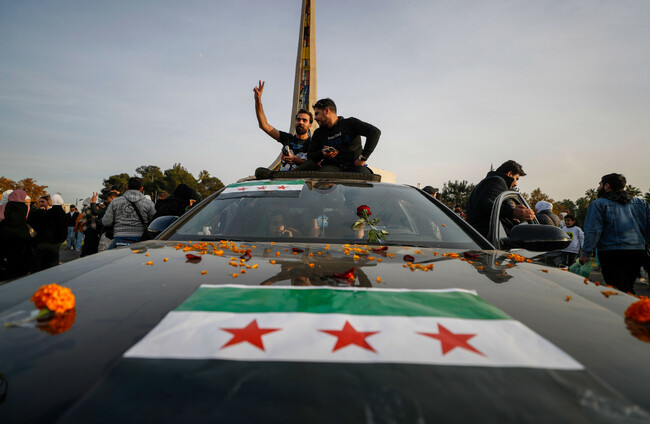
Now it is estimated that at least 600,000 Syrians have lost their lives. Syria has been in crisis for more than 13 years, with millions displaced, cities in ruins and a political landscape marred by sectarian divisions. The question for the EU and for Ireland is how to react to the new situation.
The first instinct of EU governments was to suspend asylum applications for applicants from Syria. This is despite the fact that the EU continues to designate Syria as an unsafe place. It is bad enough to suspend one of the most basic international human rights, but to do so at such a difficult time for Syria is shameful.
All conflicts are dynamic situations, and taking a wait-and-see approach to such basic rights is not justified. I was disappointed today to see that the Irish government had decided to follow suit and I hope the ‘temporary pause’ is just that. I also hope that Syrians who have received refugee status in Ireland are assured that they can go back to Syria without losing that status. Their skills and expertise are required to rebuild their country — providing a fallback is the sensible and decent thing to do.
In many cases, returning Syrians will face new challenges, including unresolved property disputes and land claims, which threaten to escalate tensions and violence. We need a framework that protects the rights of these Syrians and ensures that their return is not just a political tool used for propaganda.
The cautious approach of EU governments is informed mostly by the chaos that followed regime change in Iraq and Libya. The better example should be Sudan. After the fall of Omar al Bashir in 2019, there was a flicker of democracy. However, the international community didn’t do enough to help and a new descent into Civil War has left the country in ruins. Now, Syria finds itself at a similar crossroads, and the stakes could not be higher.
Failing to invest in post-conflict reconstruction is a dangerous gamble. It leads to instability and violence, and these are some of the root causes of migration. For years, Libya has been an exit route for migrants attempting to reach Europe. The EU has been forced to contend with the consequences of its inaction, from the humanitarian crisis in the Mediterranean to the growing presence of armed groups across the region.
Another issue that needs to be addressed is the question of impunity in Syria. The failure to hold perpetrators accountable for war crimes has only entrenched the suffering of the Syrian people. If we are serious about peace and stability in the region, justice must be part of the conversation.
In Ireland, the large Syrian community is watching on, cautiously optimistic for a new dawn after years of bloodshed. For many, Ireland is home now, but for the majority, they are waiting for the day that they can return to their homeland.
Additionally, the EU and its allies must conduct a swift review of the current sanctions regime on Syria. While targeted sanctions are vital for applying pressure on oppressive regimes, we must now reassess our sanctions on the Syrian economy in light of this new scenario.
Syria’s future is in the hands of Syrians, but there are many ways in which we can help. This is not just about humanitarian aid; it is about ensuring that Syria does not descend into a bloodbath or become a battleground for external powers. The lessons of Libya, Sudan and other fragile states are clear: we must invest in peace today, or pay heavily later.
Barry Andrews is MEP for Dublin.
To embed this post, copy the code below on your site















have your say