Sign in. It’s quick, free and it’s up to you.
An account is an optional way to support the work we do. Find out more.
Sign in. It’s quick, free and it’s up to you.
An account is an optional way to support the work we do. Find out more.

LAST UPDATE | 24 Jun 2025
“THEY DON’T KNOW what the fuck they’re doing!”
This is just the latest colourful language from President Trump earlier today, after Israel responded to Iranian rocket fire, in what felt like three minutes after a supposed ceasefire between the two, which Trump wanted credit for.
Things are moving incredibly rapidly and dramatically in the Middle East. Trying to forecast with any confidence what will happen next is a fool’s errand. IF is the key word at the moment. It is a fact, however, that President Donald Trump has been playing high-stakes poker. No wonder he’s angry and prone to swearing in front of the media. Merely five chaotic months into his second term, he has a lot on the line – politically and otherwise.
Rewinding the clock 10 years, it is worth noting that what made Trump stand out in a huge field of aspirants for the Republican nomination was his steadfast opposition to the neoconservative agenda, in which military interventionism features prominently. The space he created was not only unique among the candidates; it was far more in tune with the sentiments of Middle America and a large swathe of the GOP grassroots. The United States was collectively reeling from decades of failed wars and their devastating effects.
Trump’s reticence to employ the might of America’s armed forces, which polls consistently show is shared by the overwhelming majority of the electorate, has worked greatly to his political advantage since he emerged on the scene. Speaking personally as a trenchant critic of his, I have always regarded it as one of his few redeeming qualities and occasionally saluted him on this front.
For I, too, despaired at the horrendous fallout from sending young, often working-class or poor, men and women to fight battles with manifestly insufficient justification. In addition to the countless lives lost, many US soldiers returned with physical and mental scars that will never heal. I am familiar with some of them, who have subsequently died by suicide or overdose or who are mired in the grip of addiction, and will never forgive those in positions of power who are responsible for breaking them and their loved ones for no good reason.
Given that Trump has benefitted from his stance and that his friends and foes alike have long said that he is averse to war, seeing it as a futile waste of money, I was genuinely shocked when he ordered the bombing of Iran over the weekend, especially after he floated a two week period for making a decision as to the road ahead.
Why voluntarily forfeit a political strength when even a successful bombing campaign would not eliminate Iran’s hotly debated nuclear capacity, would engender the possibility of becoming embroiled in extended hostilities with “boots on the ground” and would heighten the threat of a terrorist act against America and its allies?
It has been argued that he was pushed or duped into it by Benjamin Netanyahu and Co, who are waging their own war with Iran. There has been reporting that an animus against the influential right-wing journalist Tucker Carlson, who expressed his vociferous disapproval of a “hit and run” bombing campaign in an interview with US Senator Ted Cruz and elsewhere, provoked the sudden command.
One also wonders the extent to which the president’s fury at the “TACO” acronym – Trump always chickens out – prompted him. The world witnessed his rage when a question about the label was posed at a press conference. Indeed, multiple commentators responded to the announcement last Friday that he would take a while to determine what to do by roaring TACO, almost gleefully. That is precisely the sort of thing that would incense the bombastic New Yorker.
At any rate, following the bombing mission, the efficacy of which is unknown, Iran launched a tokenistic counter-attack on a US base in Qatar. Then, this morning, we awoke to the promising news that a ceasefire had allegedly, somehow, been arrived at between Iran and Israel. But Iran has fired missiles after the tentative truce was purportedly reached, and the Israeli defence minister has instructed the resumption of “intense operations to attack Tehran and to destroy targets of the regime and terror infrastructure.” Trump is not happy, to put it mildly.
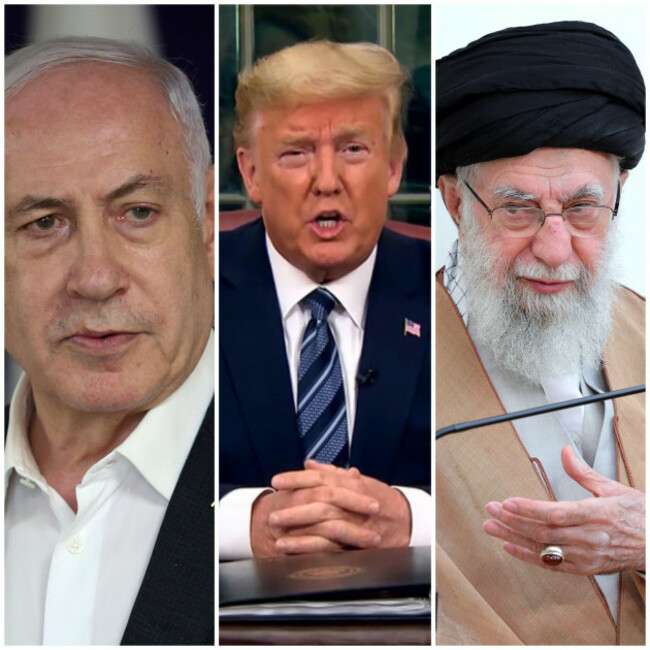
There is no shortage of moving parts and variables here. Iran’s Supreme Leader, the 86-year-old Ayatollah Ali Khamenei, continues to hate and yearn for ill to befall the US and Israel and is not amenable to a de facto surrender, though the vulnerability of his country’s military has been laid bare in recent days.
Netanyahu, meanwhile, is dependent on maintaining a state of emergency because, when and if normalcy is restored, he must face the Israeli citizenry, who want him gone, and serious legal charges, which could land him in prison. And he knows that taking on Iran is considerably more popular with his people than the ongoing atrocities being perpetrated in Gaza.
Lastly, there is the 47th POTUS. Volatile, unpredictable, mercurial, malevolent – any of an array of vivid adjectives apply to Donald Trump. The immediate reaction from those who despise him has been to dismiss completely his claim of having helped to broker a ceasefire, which some experts still think could ultimately stick.
And to be sure, there is ample cause for doubt, but we have to hope and pray for a cessation to the conflict, whether brought about by the Trump administration or another player.
“May you live in interesting times” is a commonly used phrase of disputed origin. Well, we live in frightening times.
Larry Donnelly is a Boston lawyer, a Law Lecturer at the University of Galway and a political columnist with TheJournal.ie.
To embed this post, copy the code below on your site













have your say