Sign in. It’s quick, free and it’s up to you.
An account is an optional way to support the work we do. Find out more.
Sign in. It’s quick, free and it’s up to you.
An account is an optional way to support the work we do. Find out more.
 InvestigatesEastern Garvoge Bridge
A €50 MILLION bridge first approved during the Celtic Tiger era is moving closer to construction – despite no clear evidence of updated environmental checks along its protected river corridor.
Sligo’s Eastern Garvoge Bridge project was granted approval more than 15 years ago under 1990s roads legislation – a planning framework that predates significant changes in environmental protections.
Now, as the scheme advances through the tender process, residents and campaigners say authorities have not reassessed the multi-million euro development under tighter EU protections.
Documents obtained by The Journal Investigates show that while ecological surveys and mitigation measures are now underway, no new environmental screening or compliance documents have been prepared since June 2023.
This includes an ‘Appropriate Assessment’, the EU-mandated test used to determine whether a project could harm protected habitats, despite the area being home to dozens of protected swans, bats, newts and other wildlife.
Opponents warn that both the construction and long-term operation of the bridge could disrupt the ecosystem, through increased traffic, noise, and sustained human activity in close proximity to the river.
Residents also fear the bridge and associated roads scheme will bring major disruption to a number of quiet residential areas which, according to council documents, will see traffic go from hundreds of vehicles a day, to at least 10,000.
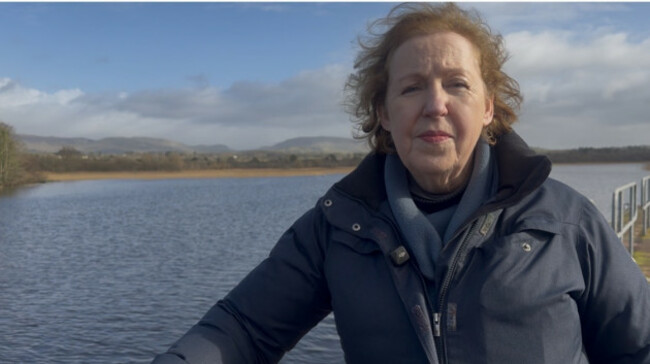
“It’s designed for up to 20,000 vehicles a day,” Patricia Gardiner, Secretary of Doorly Park Residents Association, told The Journal Investigates.
“The first question is, where exactly will this traffic go? It just feeds into the existing residential road network.
“As for the wildlife, this bridge will be built directly in the flightpath of the many, many swans that live on the river.”
Eoin Casserly, a structural engineer in the city, has also raised concerns over the size and scale of the bridge which he described as “a giant symbol of Celtic Tiger excess”.
“To put it in context, the span of the bridge is less than half the length of a GAA pitch, but the height is more than a nine-storey building,” he said.
“The proportions don’t make sense – structurally, economically, or in the surrounding context.”
In response, Sligo County Council said it had carried out “extensive engagement” with “interested parties” over the project and had addressed “any issues that were raised”.
Investigations like this don’t happen without your support… Impactful investigative reporting is powered by people like you.
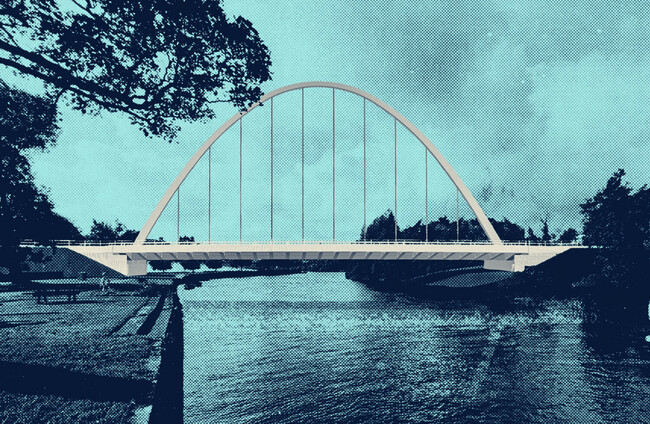
Approved by An Bord Pleanála in 2009, the 70 metre span-arch bridge forms part of a wider plan to improve connectivity on the eastern side of Sligo.
Sligo County Council obtained planning permission for the project under the Roads Act 1993, which means the bridge is not subject to the same level of reassessment that would typically apply to major developments today.
At the time, the development was estimated to cost in the region of €30 million. However, minutes from Sligo County Council in 2024 indicated that the tender is now in the region of €50 million.
While the project has been framed as a solution to congestion issues in the city, its environmental footprint has remained a consistent point of contention.
The River Garavogue – spelt differently to its namesake bridge – flows into Lough Gill, a Special Area of Conservation.
Parts of the surrounding environment also fall under protected EU status, placing legal obligations on authorities to ensure any development does not adversely affect habitats or species.
One of these species is mute swans, protected under Ireland’s Wildlife Act, which hold a constant presence along the river.
For locals, the swans are a defining feature of the Garavogue. Yet, those who spoke to The Journal Investigates say their fears on the dangers posed by the bridge to in-flight birds have not been addressed.
Eoin Casserly, a director of an award-winning Sligo-based structural engineering firm, lives close to the proposed bridge site.
“In terms of swans, this design is incredibly dangerous,” he told The Journal Investigates. “They can’t see straight ahead and so they’re just going to fly straight into the cables.
“It’s going to pollute a Special Area of Conservation. It’s going to block views and tower over an entire neighbourhood. So even if you wanted a bridge here, you don’t want this bridge.”
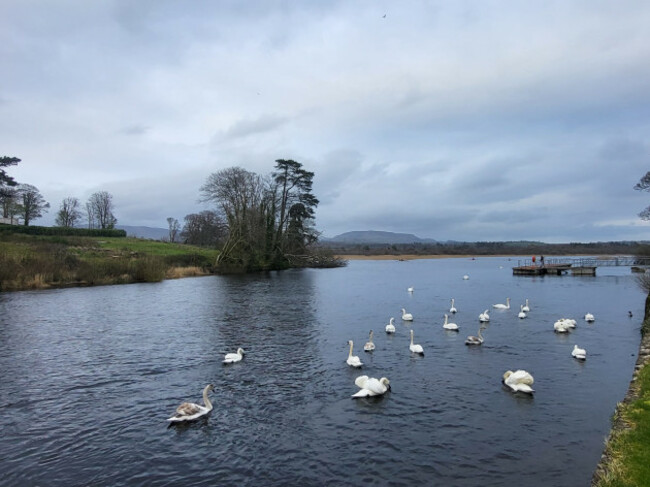
The bridge has been designed to cut a striking figure across Sligo’s skyline.
In a landscape and visual impact assessment, prepared for the council by a consultancy firm in 2007, the structural design was described as a landmark that would become “iconic” in the city.
According to council tender and design documents, the landmark structure will include a sweeping arch and cable-supported deck.
Campaigners say these features – along with the scale and height of the bridge – will create an inherent danger to the large population of swans.
Sligo County Council did not directly answer questions surrounding the protected species when asked by The Journal Investigates.
However, documents obtained under Access to Information on the Environment (AIE) show that in 2024, mitigation measures surrounding the bridge and several protected species was discussed by both the National Parks and Wildlife Service (NPWS) and Sligo County Council.
This included otters, smooth newts, bats and badgers. While ecological surveys also identified mute swans on the river, the only mitigation discussed relates to halting construction during nesting periods, with no assessment of collision risk.
The NPWS documents do not show any assessment of the potential risks posed by the bridge, including collision with cables or disruption along the river corridor.
In a statement to The Journal Investigates, a NPWS spokesperson said: “Applications for road schemes made under the Roads Act 1993 would have been referred to the Minister.
“Observations made at the point of referring are a matter of public planning record. The decision to grant permission was a matter for the competent authority at the time and the Minister had no further role in this regard.”
In Co Wicklow, concerns about swans proved enough to trigger further scrutiny of a strikingly similar bridge project.
A proposed €3.4 million suspension bridge over Bray’s River Dargle, designed by the same structural engineering firm, was flagged over its potential environmental impact.
In 2024, An Bord Pleanála directed that an assessment should be carried out on the proposed bridge because it considered that “there are likely significant negative effects on the environment” arising from the project.
The ruling follows a previous decision in April 2022 that a report was not required.
This decision was quashed by the High Court in May 2024 following a legal challenge initiated by local campaign group, SaveBray, and reverted back to An Bord Pleanála for a further review.
Records obtained by The Journal Investigates from Wicklow County Council suggest that this bridge is at the very least on hold due to the requirement to carry out an environmental assessment.
Discussions were held at the council in October 2024 over concerns that the bridge wouldn’t be completed by 2030, by which time the government funding for the project – under the Urban Regeneration and Development Fund (URDF) – is supposed to have been used.
Alternative designs were also considered, records show, including the possibility of significantly lowering the height of the bridge.
Since An Bord Pleanála’s 2024 ruling, however, little progress appears to have been made.
In an email from the consultancy firm attached to the project to the council in March 2025, information is sought on what the council plans to do next, while remarking that “the emotive response to the swans won over in the end.”
The council also met with the Department of Housing in February this year to discuss the bridge. Records from the meeting show that the council told the Department that the original bridge proposal is “now not feasible” in the lifetime of the URDF.
A spokesperson for Wicklow County Council told The Journal Investigates that a bridge over the River Dargle “is still being actively considered”, but added, “the council is reviewing the original project and may pursue an alternative design approach.”
Tap or drag the slider below to compare the photos of the proposed Eastern Garvoge Bridge in Sligo along with a similiar bridge proposed for Co Wicklow:
The difference between Bray and Sligo’s bridges appears to lie in the legislation governing each project.
The Eastern Garavoge Bridge was approved under the Roads Act, while the Wicklow scheme falls under more recent planning laws that require additional environmental assessment.
For residents like Patricia Gardiner, difference in approach to two very similar schemes is “deeply frustrating”.
She said: “An almost identical bridge planned by Wicklow County Council has been sent back to the drawing board by the planning inspector for its negative effects on swans on the River Dargle.
If Sligo County Council cared about the swans on the Garavogue they would at least change the bridge design. That’s all we are asking for.
For many residents in Sligo, opposition is not rooted in the development, but in the scale and design of what is being proposed.
Casserly, who has worked on many structural engineering projects, explained how the bridge will have a height-to-span ratio of around 54%, making it, in his words, “effectively the biggest in the world” by that measure.
“This isn’t an engineering achievement, it’s the opposite. It’s like paying extra to buy the slowest bus in the world with the worst fuel efficiency,” he said.
He also pointed out that alternative designs had previously been proposed.
“The designers actually offered a more appropriate option, around three metres high instead of 34 metres. But the council asked for the biggest possible structure.”
We asked Sligo County Council about the rationale behind the scale and height of the proposed bridge and about alternative designs. However, it did not directly respond to these questions.
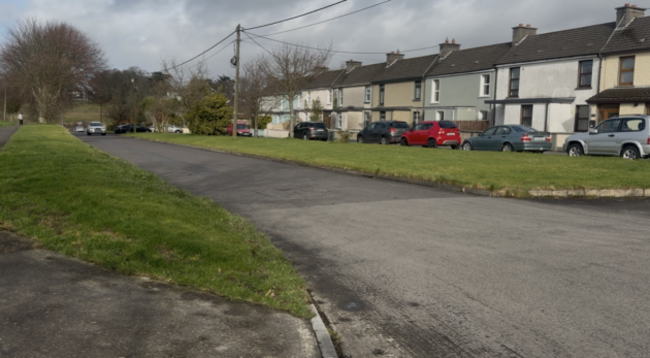
In 2022, the Doorly Park Residents’ Association brought High Court proceedings against Sligo County Council and the State, challenging the bridge amid warnings it would funnel traffic through quiet residential streets.
The case later concluded following an agreement between the parties, clearing the way for the long-approved scheme to proceed – but leaving core concerns about traffic impact and routing unresolved.
Residents say they have raised concerns at multiple levels of government over the last 15 years, but they feel their voices haven’t been heard.
They argue that the passage of time has only intensified the need for scrutiny particularly as environmental standards and awareness have evolved significantly since the project was first approved more than a decade ago.
Patricia Gardiner, who has lived in the area for two decades, said: “Legislation around the environment has tightened. European legislation has tightened as well.
“So why is a development that was passed 15 years ago allowed to proceed with no up-to-date assessments?”
Dympna Mannion, chair of the Markievicz Heights Residents Association, said the potential impact extends beyond wildlife to the surrounding communities.
“The impact is on the residents,” she told The Journal Investigates. “I really don’t know how they’re going to stop the volume of the large vehicles…these are all narrow streets, so where are they going to direct all the large vehicles?”

Mannion said her residents’ association had submitted a report to the council about what she described as the absence of “a real good traffic management plan”, arguing that vehicle numbers in the area have already increased sharply.
She said the biggest unanswered question is how heavy traffic would be routed through already narrow roads serving residential areas.
“It’s a residential area, and it has been a residential area since the end of World War Two,” she added.
According to documents obtained by The Journal Investigates, the last traffic management analysis in relation to the bridge project was carried out in 2009.
However, the Department of Transport confirmed it had approved funding for a new study earlier this year.
In a statement, a spokesperson said: “Sligo County Council is responsible for the implementation of the scheme and the Department understands that the Council has carried out extensive engagement with interested parties throughout the process.”
We asked Sligo County Council about traffic management surrounding the bridge project. It did not directly address those questions.
A council spokesperson said: “With regards to the concerns and issues raised through your interviews and documents, there has been extensive engagement with interested parties throughout the process, any issues that were raised have been addressed.”
With additional reporting from Conor O’Carroll.
Reporter: Patricia Devlin • Editor: Noel Baker • Video: Nicky Ryan • Social Media: Cliodhna Travers • Main Image Design: Lorcan O’Reilly

To embed this post, copy the code below on your site











have your say