Sign in. It’s quick, free and it’s up to you.
An account is an optional way to support the work we do. Find out more.
Sign in. It’s quick, free and it’s up to you.
An account is an optional way to support the work we do. Find out more.

LAST UPDATE | 14 Jan
“WE’RE TALKING ABOUT acquiring, not leasing…We have bases on Greenland. I could put a lot of soldiers if I want but you need more than that. You need ownership. You really need title.”
So said the President of the United States of America, Donald J Trump, recently when queried on his interest in Greenland. He subsequently posted on his Truth Social network: “NATO becomes far more formidable and effective with Greenland in the hands of the UNITED STATES. Anything less than that is unacceptable.”
Tellingly, the real estate baron opines without any regard for national sovereignty or the human rights of the inhabitants of the vast arctic island that is a part of the Kingdom of Denmark. Instead, he wants to have “title” to Greenland, as if it were a merely another
skyscraper or golf course being added to his sizable collection.
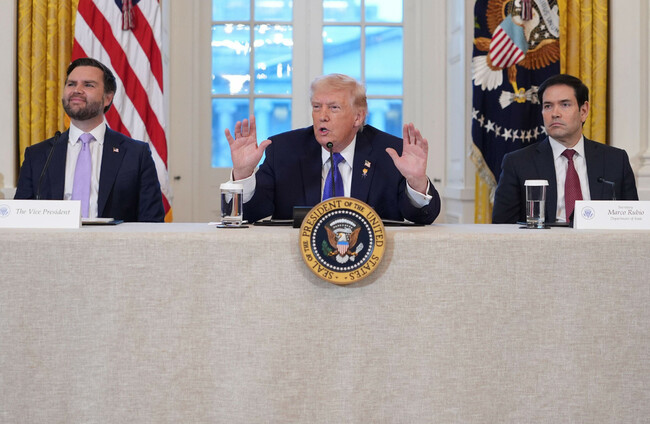
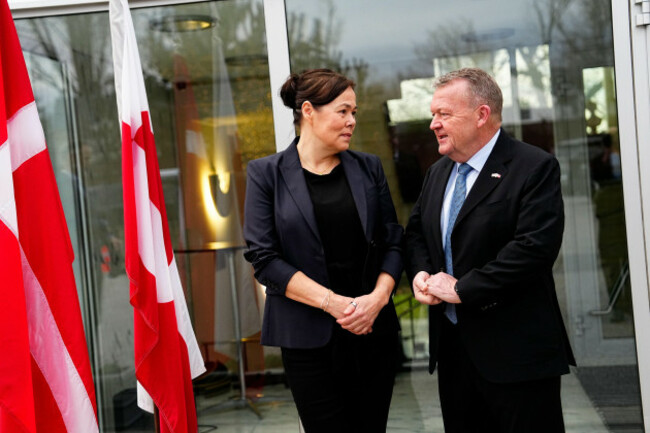
At any rate, it is in this fraught milieu that Lars Løkke Rasmussen and Vivian Motzfeldt, the foreign ministers of Denmark and Greenland respectively, attended a meeting at the White House with Vice President JD Vance and Secretary of State Marco Rubio.
The western world had been looking on anxiously. Would the visitors be treated to a dressing down akin to the one President Volodymyr Zelenskyy of Ukraine received in February 2025?
Were President Trump’s top deputies prepared to inform their guests that the US was going in full steam ahead, the transatlantic relationship and the concerns of old friends be damned? Might this be the de facto end of NATO?
While it is far too early to say that the European worries have been completely allayed, it does appear that there has at least been something of a temporary reprieve. At a press briefing outside the Danish embassy shortly after the conclusion of the gathering, the two foreign ministers attested that the two sides had agreed to disagree on the ideal future for Greenland. They evidently had “a frank but also constructive discussion.”
Further, they announced the formation of “a high-level working group to explore if we can find a common way forward.” Lars Løkke Rasmussen indicated that the group’s work will commence in the next few weeks. A source told CNN that the Danes and Greenlanders have “cautious optimism” and that the hour-long confab could have gone much worse.
Most of us who were filled with trepidation are breathing a sigh of relief. There will be abundant speculation as to what exactly was said, yet given Vice President Vance’s penchant for bellicosity when it comes to Europe, it is a reasonable guess that the more measured Secretary of State Rubio helped to ratchet down the tension.
It is crucial to be mindful, however, both that President Trump seems absolutely determined to take Greenland by any means required and that he will not hesitate to overrule his minions if he is so moved. On the other hand, he will face pressure to abandon his expansionist ambitions in the arctic from his fellow Republicans.
Those endeavouring to get elected or to hold their seats in the November midterms, in which Democrats should perform well if history is any guide, will be unnerved by the polls on the allegedly “America First” commander-in-chief’s dramatic shift in priorities.
According to a Reuters/IPSOS survey conducted on 12-13 January, only 17% favour US efforts to acquire Greenland; 71% do not think it’s a good idea to utilise military force to take it.
It is nearly impossible to disagree with their assessment. Looked at from any vantage point, this course of action is flat out stupid. Thanks to existing deals, there is no obstacle to increasing the amount of US soldiers on the ground that President Trump asserts is so important for his country’s security. American businesses can bid to extract Greenland’s natural resources. Experts are unanimous that Trump’s claims that it is being encircled by Chinese and Russian ships have no basis in fact.
And all of that is before pondering the irreparable damage to NATO that deploying troops to control Greenland would do. It is true that he will be off the stage in three years, and may be succeeded by an individual with a more benevolent attitude toward trusted allies and established commitments. But it still would be exceptionally tricky to repair relations in the wake of such an unprovoked, unnecessary act of hostility.
As with so much of President Trump’s words and deeds in the last twelve months, one is left with a single question: Why? Those who long ago arrived at a judgment they see as inescapable – that Donald Trump is a narcissist, a profoundly evil man, a fascist at heart, a clear and present danger to the US and to the world, etc – have a ready answer.
It’s getting harder to contradict them. Politically speaking, though, precious little of this makes sense in the wake of an extraordinary election triumph in which he assembled a diverse coalition of voters very few deemed possible.
Since his inauguration, he has done everything in his power to alienate millions of those who believed in him. Send overreaching Immigration and Customs Enforcement Agency (ICE) officers out to instil fear in the population and lose support from Latinos.
Embrace interventionism around the globe and dismay those sickened by their experience of witnessing young women and men returning home from failed wars in body bags or with emotional wounds that won’t heal. Attack and dismiss previously faithful party acolytes for the unpardonable sin of just once standing on principle and declining to kiss his ring.
Then again, those in Trump’s corner will cite his enduring loyalty with grassroots conservatives and in a GOP that he has fundamentally reordered. They can refer to aggregated opinion polling data showing that he has better approval numbers on this date in Trump 2.0 than Presidents Obama and Bush in their second terms. That doesn’t make much sense either.
I know that many, many people in Ireland consider all of the foregoing – and plenty other sad realities that are unique to the US in 2026 – and have developed an antipathy for the place of my birth. I could never feel that way. But at the moment, I confess that I am confused about America.
Larry Donnelly is a Boston lawyer, a Law Lecturer at the University of Galway and a political columnist with The Journal.
To embed this post, copy the code below on your site














have your say