Sign in. It’s quick, free and it’s up to you.
An account is an optional way to support the work we do. Find out more.
Sign in. It’s quick, free and it’s up to you.
An account is an optional way to support the work we do. Find out more.
(Alt é seo ónár bhfoireann Gaeltachta. Is féidir leat an bunleagan as Gaeilge a léamh anseo.)
ALMOST 100 YEARS ago, the body of a man was found on a mountainside in a Native American reservation in remote Oklahoma, and it was subsequently reported in local newspapers that his name was Patrick Foley and that he had been beaten brutally and shot twice.
That murder, and the life of the Kerry-born man who was killed, is the subject of a new documentary to be broadcast on RTÉ One on Monday.
RTÉ Raidió na Gaeltachta broadcaster Dara Ó Cinnéide presents Rian na Fola (Trail of Blood), and his interest in the story began when he came across a book written by Foley that was thrown out of a house being renovated in the Corca Dhuibhne Gaeltacht.
That book, The History of County Kerry Corkaguiny by Patrick Foley, sparked his curiosity and the more he investigated, the greater his fascination with the man who wrote it became.
“This man was a very interesting character and there would be little mention of him here in Corca Dhuibhne today,” said Ó Cinnéide.
He was born in Cathair Dheargáin, a townland on the northern side of the Dingle Peninsula in Leitiriúch — or “thíos fén gcnoc/below the hill,” as they say locally, referring to Mount Brandon.
He was a skilled carpenter, was recognised as a historian in the area, and wrote a number of books. He was elected to the local Board of Guardians, was married with two sons, and was also known for his strong opposition to alcohol. The extracts from his book that are shown in the documentary reveal a writing style that was both readable and richly expressive.
In 1909, after losing his seat on that council, he decided to go to America, leaving his wife and children at home.
In America, he appeared to have been a wanderer and, though he landed in New York before settling in Boston at a time when the Irish held sway in that city — and the Kennedys in particular — there were reports of him in Fort Worth in Texas and as far west as Oklahoma.
“There was a question mark over why [Foley left] — debts, perhaps, his own son, a son he had never met, he said he had house debts, he was probably also in low spirits after failing to be re-elected to the Board of Guardians, having lost the authority he once held, and there are notes and evidence that he was still in contact with his family as you would expect and sending money home.
“Another theory is that he left the country in 1909 because of his political views, but that’s hard to imagine before the Easter Rising, before the Civil War that followed — though perhaps.”
Ó Cinnéide follows Foley’s trail across the places associated with him — Boston, Fort Worth and Oklahoma, of course — but he also left his mark in Mexico, California and at Niagara Falls.
In Boston, the broadcaster spoke with Sean Cahillane, a former politician whose mother came from the Blasket Islands and whose father was from Baile na nGall. Cahillane has an interest in Foley’s story because of its connection with his own family’s home place.
“The 1900s, Foley comes into a nice Boston, he was probably well received — this is the Kennedy era, Honey Fitz is the mayor, the Irish are now cops, they’re firemen, they’re teachers, now the Irish have landed.”
Cahillane noted the extent of the travelling Foley was doing — in addition to the other places he was associated with, word reached him that Foley had gone as far as Cuba, Canada and Philadelphia. In the former politician’s view, that indicated he had money.
In 1920 that costs money — this guy’s not a carpenter, I would even question if this guy has a hammer and screwdriver. It seems like there’s more to this guy than meets the eye.
Before he leaves Boston, another twist emerges in the story. Foley — the great champion of temperance — was arrested for being drunk in public in 1927.
According to Emily Sweeney, a writer with the Boston Globe who covers historical affairs, this was not the first time such a thing had happened to him, as he had been sentenced to 30 days in prison in 1924 for being drunk in public and attempting to strike the police officer who arrested him. That prison sentence was suspended.
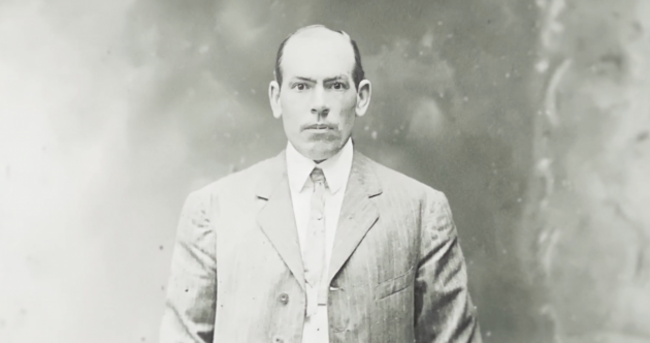
There is no explanation for the travelling Foley was doing throughout his time in America, but Ó Cinnéide follows the clues carefully — there is much recorded in letters he sent home that his family kept, and further information is to be found in newspaper cuttings.
Foley’s end came in a place called Sallisaw, Oklahoma — a town referenced in John Steinbeck’s celebrated novel The Grapes of Wrath, set during the Great Depression.
It appears that in 1930 Foley was there in search of work as a carpenter. When Ó Cinnéide visits the town, there is a palpable sense of loneliness about it and the signs of America’s social problems are visible too — a notice about the drug epidemic that is rampant in various parts of the country can be seen.
The broadcaster went to the local Sheriff’s Office for Sequoyah County in search of a record relating to the murder, but the search proved fruitless. No such record existed, and he was told that there had been a high rate of unsolved murder cases at the time.
Across the border in Arkansas, with the help of another local journalist, Sue Robison, he found a newspaper cutting that provided another clue. The front page of the Muldrow Sun reported that Foley’s body had been found on Badger Lee Hill with a bullet through one eye and another bullet in his back. He had change worth $1.26 in his pocket.
According to Robison, this suggested robbery was not the motive — this was the era of the Great Depression and a robber would not have left even that small amount of money behind.
According to a cutting in the Fort Smith Times Record, Foley had gone to the police station in the city in the days before he was killed to introduce himself and give an assurance that he would not be a source of trouble — as if he already had that kind of bad reputation.
The film travels to Badger Lee Hill, which forms part of the land of the Cherokee, the indigenous tribe. It is a remote area — nothing there but a church and a lonely crossroads.
There is no satisfying conclusion to the mystery, insofar as nobody knows who killed Patrick Foley.
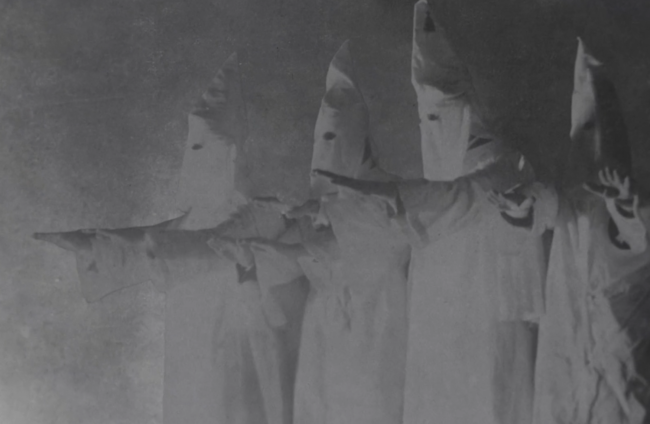
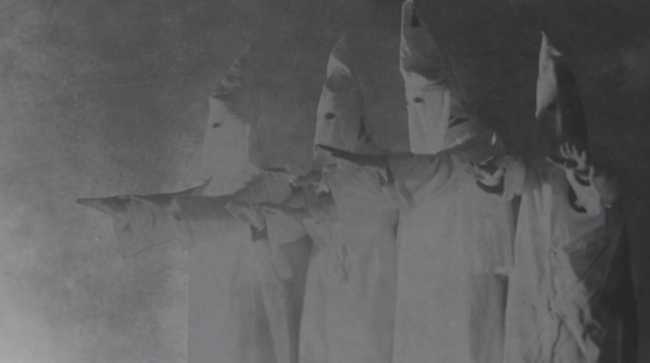
Was it the KKK, who were active in the area, as his family at home believed? The KKK’s involvement is believed to have been suggested in the message the family received informing them of Foley’s death in the US.
He himself thought that gangsters from New York were after him — did they finally catch up with him in this remote spot, thousands of miles from home?
One final twist emerged in the story.
The undertaker was robbed while Foley’s body was in his care, before he was buried. Documents found on the body were taken.
Ó Cinnéide believes it is possible that people were suspicious of this man who could be seen going around the town taking notes — he was known for writing notes in a black book. Perhaps that bred enough suspicion to attract the attention of people who did not want anyone noting things in this way.
Although his relatives in Boston were informed that his body was available for collection, they never came for him — perhaps the journey was simply too far. He was buried in a pauper’s grave in a cemetery in Fort Smith, Arkansas. There is no headstone on his grave, nor any inscription. His name is recorded on his wife’s gravestone at her homeplace in Waterford in the cemetery Mount Melleray.
Rian na Fola will be broadcast on RTÉ 1 at 6.30pm on Monday.
The Journal’s Gaeltacht initiative is supported by the Local Democracy Reporting Scheme
This article was originally written in the reporter’s native Irish and has been translated to English here. AI was used as part of the translation process before final edits.

To embed this post, copy the code below on your site












have your say