Sign in. It’s quick, free and it’s up to you.
An account is an optional way to support the work we do. Find out more.
Sign in. It’s quick, free and it’s up to you.
An account is an optional way to support the work we do. Find out more.
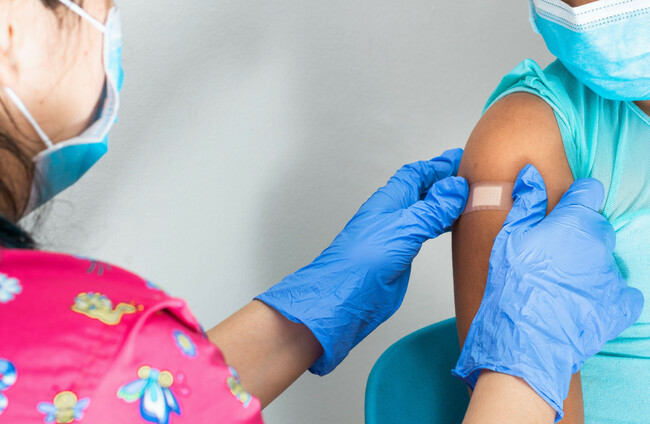

AMID A WAVE of scepticism about the childhood vaccination programme that has caused a furore in the United States, its president Donald Trump has suggested an overhaul of how children get vaccinated, claiming without evidence that many vaccines are unsafe within the current schedule.
The comments came after discussions between Trump and health secretary Robert F. Kennedy. His extraordinary statements included suggested changes to how many shots children get and the time periods over which they get them.
The claims the president is suggesting about childhood vaccination, as well as potential changes to the schedule, could have monumental consequences for infectious disease control not just in the United States but across the globe as vaccine hesitancy increases.
His suggestions included spreading vaccine doses over four or five years, splitting the measles, mumps and rubella vaccine into three separate shots, delaying the hepatitis B vaccine for more than a decade, and removing aluminium and mercury from vaccines.
The mercury-based preservative thimerosal has already been removed from vaccines, while aluminium used in tiny doses to increase the effectiveness of some vaccines has been shown to be safe, according to a nationwide study published in the Annals of Internal Medicine last July.
The study used the vaccination records of more than 1.2 million children over 24 years and found no evidence that exposure to aluminium in vaccines led to a significant increase in a child’s risk of developing any of a wide variety of conditions, including asthma and autism.
“Don’t do it,” Trump said, urging parents to move away from the long-standing evidence-based schedule. “Get them broken into four or five visits… It can only help. There’s no downside.”
“It’s a disgrace,” Trump said of the vaccine schedule, with Kennedy and other senior health officials at a White House event on the rise of cases of autism among children.
Trump said the MMR should be taken separately. “This is based on what I feel, the mumps, measles, the three should be taken separately. And it seems that when you mix them, there could be a problem. So, there’s no downside in taking them separately.”
Clearly, there is a downside. Unsubstantiated changes to vaccinations could leave children vulnerable to infectious disease for a longer period of time that could lead to unnecessary illness and death.
Trump: "The MMR I think should be taken separately. This is based on what I feel." pic.twitter.com/g6yIJbUkWY
— Aaron Rupar (@atrupar) September 22, 2025
The Centres for Disease Control and Prevention (CDC) advise health care providers to adhere to the recommended vaccine schedules carefully created to make vaccines as effective and protective as possible.
The former Director of the CDC, Susan Monarez, who Kennedy fired, said that Kennedy wanted to make changes that weren’t backed by “data or science”.
Let’s take a step back and look at the evidence. Vaccines have been in use for over 200 years since the first ever vaccine was developed against smallpox, a disease that killed half of all those infected and took a major toll on civilisation.
The smallpox vaccine used material from a cowpox sore- a much less dangerous disease related to smallpox – to protect people against the disease without risking them developing smallpox. The smallpox vaccine was a live attenuated vaccine, which used a weaker version of a disease-causing germ to immunise people against it.
It took a worldwide vaccination campaign in the 20th century to finally eradicate smallpox in 1980. Widespread vaccination meant that a disease that had killed hundreds of millions of people in the 20th century alone no longer poses a risk to human health and is no longer transmitted anywhere in the world. The last human case was detected in 1978. Smallpox is the first and only human disease to have been eradicated.
At the end of the 19th century, scientists discovered that bacteria killed with heat or chemicals in the lab could still make the immune system react. This led to the development of the first inactivated vaccines to protect people from infection with typhoid and cholera bacteria in 1896.
The 1918 Spanish Flu epidemic that killed up to 50 million people globally precipitated research on producing a vaccine against influenza. The first influenza vaccine was approved for use in 1945 – the first inactivated vaccine that protected against a virus. Since then, an updated influenza vaccine has been produced every year to help protect communities from the disease.
In the 1920s, scientists discovered that adding certain substances to vaccine could strengthen the body’s immune response safely. These substances, called adjuvant, was a breakthrough and led to the first vaccine for whooping cough being strengthened with aluminium salts in 1932.
Polio is a disease that was thought to have killed over two million people in Europe and caused life-altering disabilities in millions before a vaccine led to its elimination in Europe. This inactivated vaccine was first administered in large numbers in 1954 in the United States. Today, it is included in childhood vaccine schedules across the world to ensure all children are protected. Mass vaccination campaigns led to the European region being declared polio-free just over two decades ago in 2002.
A vaccine against measles was developed in 1963, another major cause of death and disability across the world. The vaccine has since been introduced in national vaccination schedules globally, causing cases and deaths from measles to plummet. Outbreaks still occur including in Ireland, Europe and the US in the last two years, showing the importance of sustaining vaccination efforts.
As our understanding of immunity, diseases and genetics improved throughout the second half of the 20th century, new developments in vaccines were developed. In the 1960s, scientists discovered the protein that enables the hepatitis B virus to cause disease. They used this discovery to develop the first protein-based vaccine in 1981, that uses a small piece of the virus to teach the body how to fight off the disease.
In 1972, viral vector vaccines were successfully demonstrated in the lab for the first time. These are vaccines that take material from the virus that causes disease and place it in a modified harmless virus to elicit an immune response. It took almost 50 years (2019) until a viral vector vaccine was approved for human use to prevent Ebola.
In the 1960s, mRNA (messenger ribonucleic acid) was discovered for the first time. mRNA similar to DNA is part of the coding system to make proteins. It took several more decades to develop mRNA vaccines that were tested against influenza in the 1990s with a potential rabies vaccines being tested in 2013. It was only during the Covid-19 pandemic that extra funding, unprecedented international collaboration, and renewed efforts led to the first mRNA vaccines being released.
Vaccines are the silent heroes of public health. Over the last 50 years, the World Health Organisation estimate they have saved the lives of over 150 million people – one hundred million of those lives were infants. They are reputed to be humanity’s greatest invention, teaching the body to protect itself against specific microbes without taking the risk of infection.
There are a lot of misconceptions. It’s not surprising that the general population may not have a full understanding. But the one thing we do know is that the vaccines that are available are incredibly safe. They have all been tested. They don’t cause autism. They save lives.
Dr Catherine Conlon is a public health doctor in Cork
To embed this post, copy the code below on your site











have your say