Sign in. It’s quick, free and it’s up to you.
An account is an optional way to support the work we do. Find out more.
Sign in. It’s quick, free and it’s up to you.
An account is an optional way to support the work we do. Find out more.
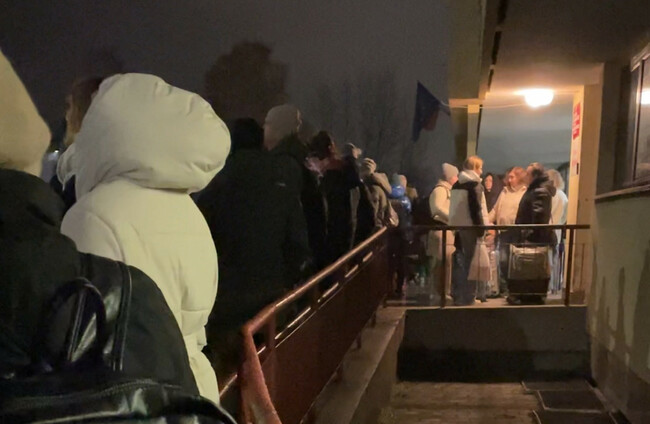

“I BOUGHT MYSELF a new pair of pyjamas”, writes a Ukrainian on Facebook.
“I understand! I’ve started wearing my nicest underwear to sleep,” replies another. The post receives hundreds of likes.
Ukrainians need no context to understand this isn’t about treating oneself. It’s about being prepared for the worst. If a missile strike collapses your house, you’ll look decent in media photos when rescue workers find you — dead or alive. Isn’t it curious what we think about in times of such extreme threat to our lives?
It’s been almost impossible whether you’re Ukrainian or not to avoid the headlines in recent days about what the fate may be for our country. It’s tough for us to watch global leaders play with our home and our people as if they were pieces on a chess board. All we want is peace, a chance to go home and rebuild, but I know that most Ukrainians will say that even at that, we can’t accept those outcomes if it means we are still at the mercy of Putin’s Russia.
For now, we carry on as we have done for the last three years, living away from home, pushing hard to maintain our ‘normality’ in a time of war and keeping hope alive for a time of peace to come.
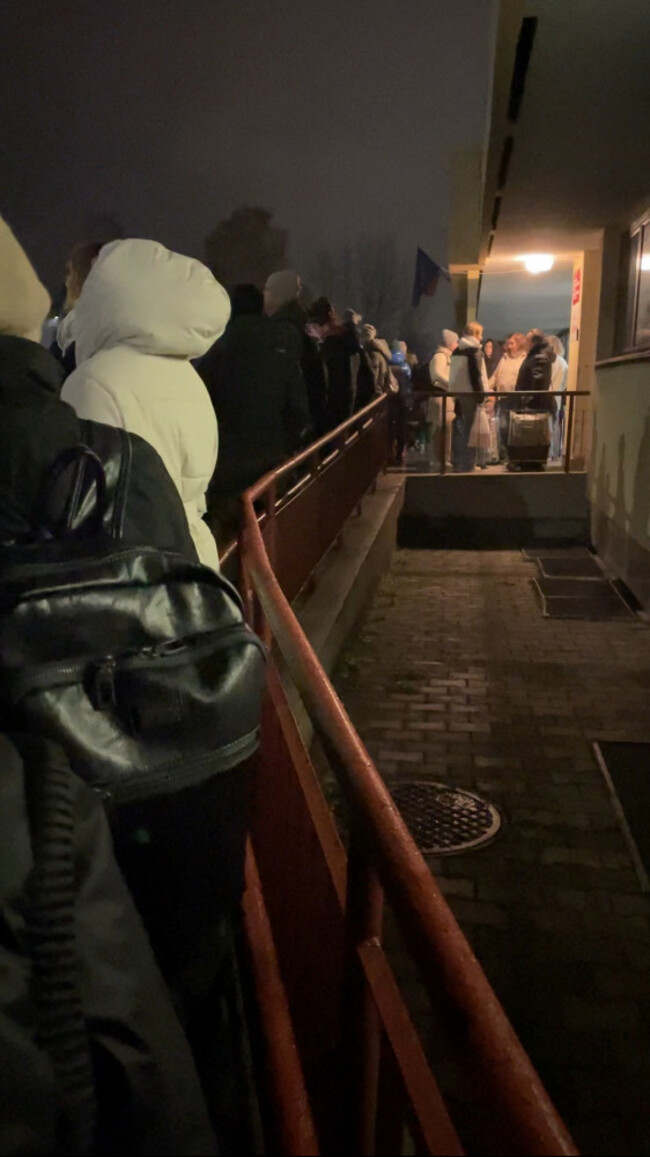
Part of that push for normality is managing our health, after so much stress. It’s no secret that the Irish healthcare system is under pressure. We hear about waiting lists, people on trolleys and many years of cries for more hospital beds.
Ukraine’s healthcare system, based on the Soviet-era Semashko model with equal and free access to medical services was completely reformed in 2018 by ex-Health Minister Ulyana Suprun. Her reform transformed healthcare delivery through the eHealth platform where patients connect with family doctors online, including not only digital prescriptions or appointments but also direct communication with access to test results and referrals.
The healthcare system is free for Ukrainians, and over 80% of the population is registered with family doctors through the digital platform. The contrast with Ireland’s HSE appears first of all in time access: while Irish patients can wait for appointments with rare specialists like dermatology or orthopaedic for 10 months, Ukrainians usually can schedule a visit within days or a week.
Ukrainians living here are also engaging with the Irish system, with some finding that their health challenges are so great that they just cannot afford to wait for that hospital or GP appointment.
There are many Ukrainians who make this choice every month: leaving the safety of Ireland to seek medical care in their war-torn homeland. While Irish citizens often travel to Spain or Baltic countries for affordable dental work, or Hungary for less expensive surgery, Ukrainians risk their lives for a different reason — access to immediate, comprehensive healthcare.
From the safety of Ireland, Iryna (not her real name) travels to Ukraine with her five-year-old son. Her journey takes 36 hours each way: flying from Dublin to Krakow, then taking three trains through Przemyśl to reach Kyiv.

Under new rules, she risks losing her Irish accommodation by leaving the country even for one night. But the greater risk is to her life — for now, Russia continues to launch missiles and drones daily at civilian targets.
While spending every night in bomb shelters is impossible, each morning brings uncertainty about survival. This might seem incomprehensible — choosing a war zone over Ireland’s peaceful healthcare system.
Our minds naturally view the unfamiliar with scepticism. But these journeys reveal a deeper story about two vastly different approaches to healthcare, prevention and the value of time.
Yaroslava Paievska’s case shows why some Ukrainians choose to risk their lives rather than wait. A doctor herself, she recognised potential colorectal cancer symptoms and requested a colonoscopy.
She was placed on a waiting list at an Irish hospital. “They promised the colonoscopy within nine weeks at most,” she says. “I called the hospital multiple times weekly, emphasised the urgency to my GP, and pleaded to expedite the exam. All my requests were ignored.”
The breaking point came during a night in an emergency room. “The abdominal pain was unbearable. I waited from 3:30 PM until 6:00 AM, but no doctor came. That morning, I booked a flight to Ukraine. There, they immediately took me to surgery and diagnosed colorectal adenocarcinoma with obstruction — a life-threatening condition.”
In Ukraine, Yaroslava received comprehensive care within days. “Each patient has a dedicated primary doctor available whenever needed,” she explains.
“Irish hospitals work differently: each day brings a new doctor who repeats the same questions. Crucial information seems to get lost. Ireland finally offered me a colonoscopy four months later — after I’d already had two surgeries in Ukraine and started chemotherapy.”
Oksana (name changed) returned to Ukraine seeking treatment for persistent back pain after a car accident in Ireland, where she had received only basic care — no MRI for soft tissue damage, no CT scan or X-ray to check bone healing, no treatments like massage or electrical stimulation. She received just three exercises to do at home.
When conventional painkillers proved insufficient, Oksana returned to Ukraine for rehabilitation. But it was during a routine callus removal procedure that her life changed dramatically. Her Ukrainian doctor recommended a preventive ultrasound — a standard practice there but not in Ireland.
This simple screening revealed a 1.5 cm tumour and an immediate biopsy confirmed cancer requiring urgent surgery. This raises a critical question: if Oksana hadn’t returned to Ukraine for her back pain, would her cancer have ever been discovered? Her story illustrates how different approaches to preventive care in various jurisdictions can have life-altering consequences.
Let me share my own experience. I also face ongoing challenges in Ireland. These aren’t immediately life-threatening conditions, but they profoundly affect my quality of life — enough to make me sleep on a bathroom floor in Ukraine, following the “two-wall rule” for better survival chances if a drone hits.
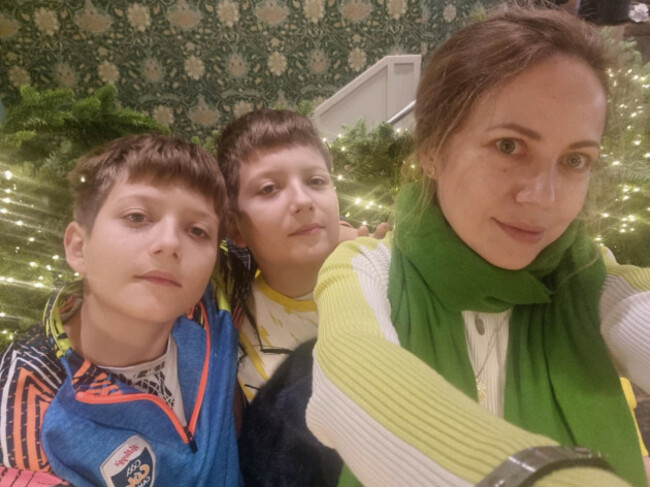
My son with autism and ADHD faces serious developmental challenges. Beyond sensitivity to noise and crowds, he exhibits severe behaviours: tearing clothes with his teeth, biting his hands until they bleed, and losing friends due to hyperactivity.

In nearly three years in Ireland, we haven’t managed a single consultation with a psychologist, despite having Ukrainian medical documentation.
“He can use the toilet independently — your case isn’t urgent,” one clinic told me.
“Since he’s over five, he no longer qualifies for certain programs. Expect several years’ wait.”
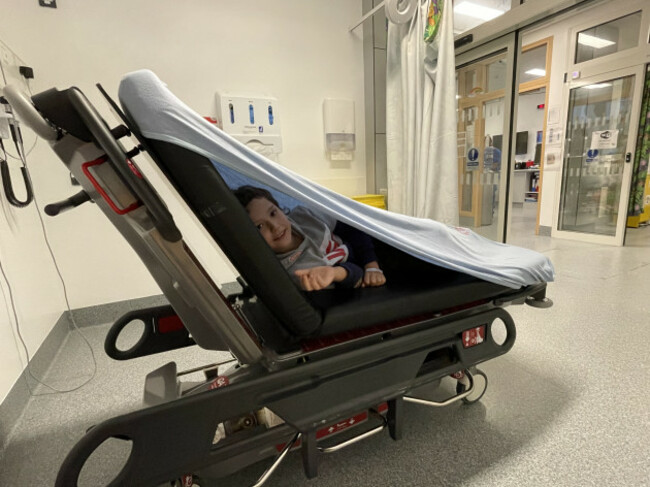
When we moved counties in Ireland, our 1.5 years of waiting vanished, forcing us to start over. The bureaucracy reached absurd levels when two doctors corresponded about my son via paper letters, copying me without return contact information.
One wrote: “The mother claims her child has autism and ADHD but cannot provide proof” — this after two years of waiting with official Ukrainian documentation in hand. Similar frustrations echo through other families’ stories. Nataliia Vorona’s son developed mastoiditis, a serious condition requiring specialist care.
“The doctor only recommended fever reducers, saying ‘It will resolve itself.’ Because I speak English, I could demand a specialist referral, despite receptionists repeatedly offering just paracetamol. I managed to save my child’s hearing, though I’m just a mother, not a medical professional.”
My dental experience in Ireland likely sounds familiar. With an abscess inflaming my trigeminal nerve and sinus cavity, I couldn’t find a single clinic willing to extract it sooner than two weeks — regardless of what I would pay. A simple CT scan turned into a costly ordeal.
Quoted at €240, the bill doubled to €480 with an unexpected consultation fee. During a seven-minute consultation, I learned I needed to spend another €1,100 for treatment. They noted my sinus inflammation and sent a referral to a specialist. Three months later, predictably, I’ve heard nothing.
The supposed “best” dental clinic in the area in which I live proposed a fragmented solution: extraction at one clinic, root canal treatment in another, and prosthetics at yet another clinic. The contrast with Ukraine was striking, once I was able to travel home for care. At an upscale clinic — still four times cheaper than in Ireland — the chief physician personally conducted a two-hour consultation. Their verdict? The teeth that Irish dentists deemed hopeless could be saved — and were.
They dedicate entire days to single patients, enabling complex reconstructions within seven days. Modern pain management, comprehensive care and patient comfort come standard, proving that even in wartime, healthcare can be both efficient and humane.
Others face similar struggles. “I was in severe pain from a previously treated tooth,” recalls Natali Usyk. “With a swollen cheek, we tried multiple private clinics: the shortest wait was 20 days. Finally, I told one doctor, ‘I’m leaving my sick tooth with you — do whatever you want with it.’ That doctor found 15 minutes that same day for the extraction. I’m deeply grateful for their understanding and help.”
Nina Ivchenko’s doctors discovered her critically low vitamin D levels only after she broke a bone. “But why wait for bones to break before testing?” Nina asks. “Why aren’t there preventive tests and public awareness campaigns — especially in Ireland, where sunlight is so rare?”
Perhaps nothing better illustrates the contrast in medical approaches than antibiotic prescription practices. In Ireland, it is common practice to prescribe antibiotics without a blood test. Or prescribe the same antibiotic many times in one year. That’s a direct path to reducing its effectiveness in the future. Some doctors are cautious with antibiotic prescribing, but many are not, while in Ukraine, prescribing antibiotics without a blood test and 100% certainty it is a bacterial and not viral infection would be considered foolish.
The difference between Irish and Ukrainian healthcare isn’t just about waiting times or costs. It’s about fundamentally different approaches to human life and time. In Ukraine, even under missile threats, healthcare remains remarkably responsive. We don’t blindly trust the system — we actively participate in it.
Digital health records are in our smartphones, doctors respond through messaging apps, and test results are instantly accessible. No procedure gets delayed beyond three days, even during wartime power outages.
As Olga Prokhoda told me: “Ireland has excellent healthcare, but it’s designed for those already dying. Ukraine gives you the chance to catch problems before they become life-threatening. That’s the crucial difference.”
Speed, quality, service and specialist access without long waits — these are Ukrainian healthcare standards. We value our time and can’t afford to be ill. While Irish patients wait months for tests, Ukrainian doctors investigate causes rather than just managing symptoms.
While Irish patients struggle to obtain their test results, Ukrainians share their complete medical histories with any specialist instantly. The ongoing war has forced further adaptations to our health system, of course. Most hospitals now provide care without traditional GP referrals, for instance. But for many of us from rural areas, the reformed system still has gaps: some public hospitals lack rare specialists like endocrinologists and patients need to turn to private clinic services where a consultation costs €18-35 — a substantial expense for many families but still much lower compared to Ireland.
It’s interesting still that Ukraine’s healthcare spending reached only €368 per capita in 2022 versus Ireland’s €6,700 in 2022. So why then is the Irish system so inefficient?
This isn’t a criticism — it’s an invitation to imagine something better. That is why hundreds of Ukrainians risk their lives to tackle their health problems in a country where air raid sirens have become as familiar as the sound of morning traffic. Because sometimes waiting is more dangerous than war.
Polina Bashkina is a Ukrainian journalist living in Ireland.
To embed this post, copy the code below on your site















have your say