Sign in. It’s quick, free and it’s up to you.
An account is an optional way to support the work we do. Find out more.
Sign in. It’s quick, free and it’s up to you.
An account is an optional way to support the work we do. Find out more.

WHEN ONE OF our readers moved into his new four-bedroom house in West Dublin three years ago, he was surprised to see that it came with an annual service charge of €370.
The charge, or management fee as it is often referred to, covered landscaping of the communal areas in the estate, a sinking fund for possible future expenditure, and household waste collection.
Three years on, the reader (who wishes to remain anonymous) has reached his wits’ end as the management fee continues to climb, while issues in the estate go unresolved.
Other residents who have bought houses in the estate also got in touch with The Journal to voice their unhappiness.
They detailed what they see as an unfair and undemocratic process where they have virtually no control over the level of management fees and decisions in the estate that impact them, such as the decision to introduce parking permits.
The estate, Kilcarbery Grange in Dublin 22, is a joint housing venture between South Dublin County Council (SDCC) and Adwood Ltd that will consist of over 1,000 properties once complete.
The minutes from the estate’s Owners’ Management Company (OMC) 2025 AGM detail that 787 properties were complete at the time of the meeting last summer, with the developer holding 156 units and SDCC holding 323.
308 properties in the estate were owned privately. Each property gets one vote at the AGM, but only if they have paid their service charge for the year prior.
Year-on-year, the management fee has crept up, and residents feel there has been little to show for it.
At the most recent OMC AGM, held earlier this month in a local hotel near the estate, the annual management fee was pushed up to €730 by the developer of the estate and SDCC.
As the developer of the estate still owns a significant portion of the properties, Adwood and SDCC retain a key voting share in the Owners’ Management Company.
On its decision to vote to increase the management fee, a spokesperson for the Council told The Journal that it was satisfied that the proposed increase was “reasonable and necessary to meet the actual costs of managing the development”.
At the most recent AGM, the OMC’s draft budget for 2027 detailed a rise in a number of costs.
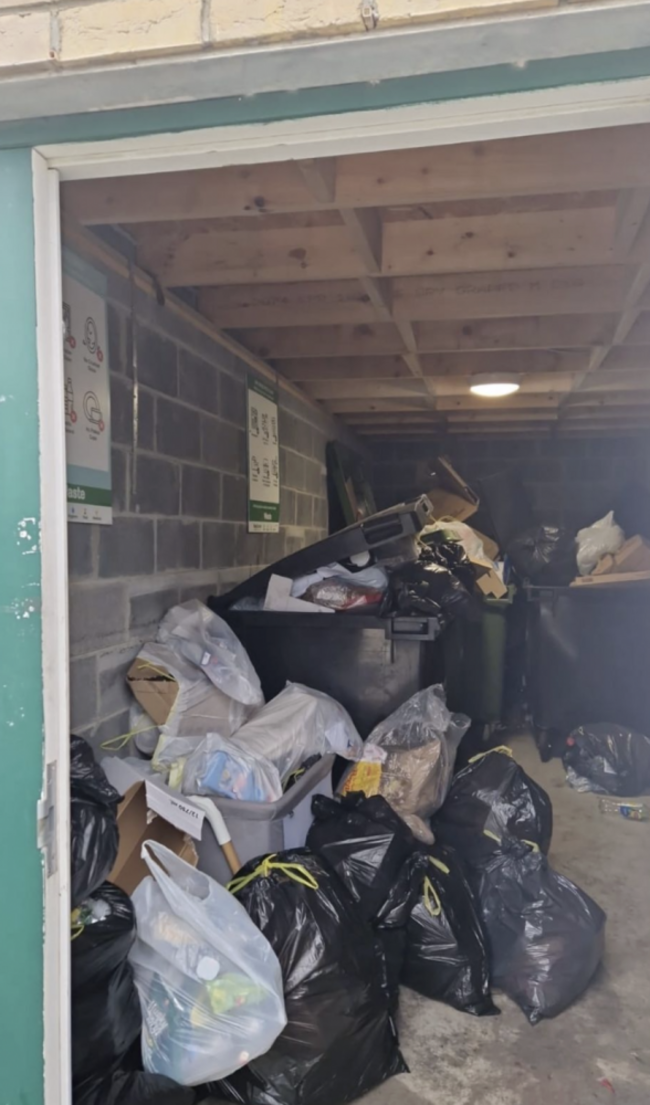
One of the main cost increases that has baffled and irritated residents was for bin-shed lighting.
The housing estate uses communal bins rather than individual bins for each house, with 81 bin stores dotted across the estate.
This year’s draft budget, seen by The Journal, saw the budget for lighting these bin stores increase from €8,000 last year to €48,600 this year.
It was explained to residents that the increase was due to each of the bin stores having to have its own individual meter, with a standing charge due on each.
Due to issues with how the communal bin system was operating, the OMC also opted to hire a caretaker to help maintain it. The draft budget said the cost for the ‘janitor/concierge services’ was €47,670.
Residents say this approach is “driving costs up for people”.
“If we had our own wheelie bins, we wouldn’t be paying for the high fees, the janitor or the bin sheds,” one resident said.
Because of these concerns, along with a shortage of parking in the estate, which has led to conflict among residents, a lot of homeowners have made the decision to stop paying the full fees, which in turn means they lose their vote on future fee hikes.
It also leaves them in a situation where they are breaching their legal obligation to pay the fees, even though they have no control over how high they can get.
The chairperson of the estate’s residents’ association told The Journal that homeowners feel as though the estate is being run by SDCC, even though homeowners are the ones who have to pay the management fees.
Earlier this month, mortgage expert Eoin O’Connor, an associate director at Finance Solutions, posted a video on Instagram to highlight his shock at the high level of management fees that are being charged on some new homes.
He made the point that most people associate management fees with apartments, but that they are the norm now with new houses.
They tend to cover the cost of bins and the upkeep of the common areas in the estate and can range from €200 to €2,000 for a house, depending on what part of the country you are located in and the value of the property.
In the video shared online, O’Connor said he was viewing houses in a new estate in North County Dublin and that he was shocked that, along with the steep management fee, a four-bedroom house with a price tag of €950,000 only came with one car parking space.
Speaking to The Journal, O’Connor said management fees on houses are an expense most buyers aren’t aware of.
His first experience of them was when he bought his own house in Lucan in 2019 and was told there was an annual management fee of €550.
“Now that’s not bad when I look at it compared to a lot of the new developments,” he said.
Within his own estate, he says the fee seems to just cover bins and the lawns in the estate being maintained once a year.
“So that’s why I find the €1,500 to €2,000, whatever the fees are, quite harsh.
“It’s an added expense that buyers aren’t really aware of,” O’Connor said.
Off the back of his video, O’Connor said he has had clients reach out to him with stories of management fees being doubled in recent years.
In one case, a woman who owns a one-bedroom apartment saw her fees jump from €1,500 to €3,000 annually.
“She’s no control over it, which is wrong,” O’Connor said.
“We work hard to get on the property ladder, and now we’re kind of being penalised with these additional fees that can change [over the course of] us living in these homes.”
He argued that fees should be set for a certain time period and then reviewed, possibly after a five-year period, to give homeowners certainty.
Local Independent TD for Dublin Mid West, Paul Gogarty, said the issues that have cropped up in Kilcarbery Grange aren’t unique.
He made the point that people who live in older housing estates get the benefit of the local authority being the one to look after communal areas in the estate and argued that in new estates, the OMC management fee is akin to a form of “double taxation” on homeowners who already pay a property tax.
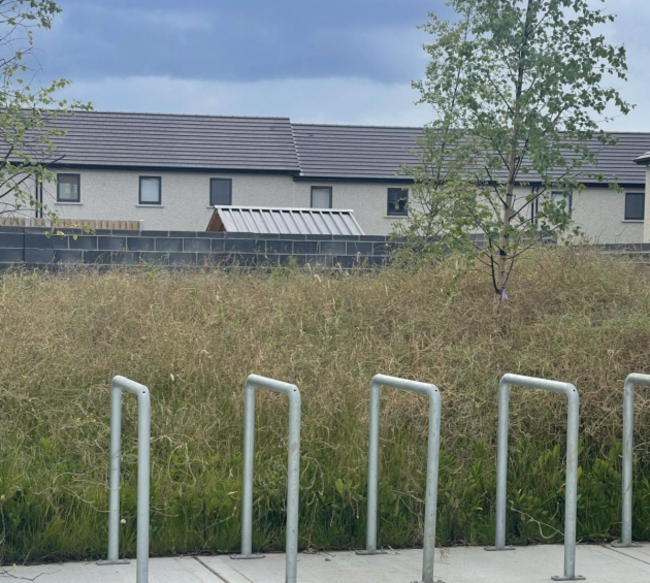
In Gogarty’s view, the OMC model is not entirely without merit, but the legislation underpinning it (the Multi-Unit Developments Act 2011) is in need of reform.
“The most important thing that I would like to see would be that individual residents have more of a say,” Gogarty said.
This was a sentiment shared by local Sinn Féin councillor William Carey, who told The Journal that the legislation governing OMCs and management fees needs to be “overhauled”.
“The big issue is people feel there’s no democratic process even though it’s supposed to be your management company,” he said.
Meanwhile, Social Democrats housing spokesperson Rory Hearne said part of the problem is an unwillingness of local authorities to take over common areas in estates.
“This is increasing as an issue. We’re hearing more and more cases of this, and it is linked, I think, to the reluctance of Councils to take over ownership of the common areas in housing estates, and that’s part of the underfunding of councils,” he said.
In the absence of any reform, residents in estates like Kilcarberry Grange have been forced to familiarise themselves with their rights and responsibilities as homeowners.
The original reader who reached out to us told us he has attended several seminars run by the Housing Agency to help educate homeowners on the Multi-Unit Development (Mud) Act and OMC structures.
“When I went to one of those Housing Agency seminars, it was a room full of broken people,” he said.
He explained that many of those in attendance were people who found themselves involved in the running of their own OMC and were suddenly bogged down in the stress and issues that come with it.
“And they hate it, they can’t get out of it because they’re tied in with it… Genuinely, the room was just full of broken people who have major issues with their estates,” he said.
The reader told us that for him, the issue boils down to local authorities “privatising their civic responsibilities to look after and maintain [estates]“.
He said he grew up in a council estate and his family never had to give out about how the estate was being managed and the same was true when he bought his first home in an older estate in the locality.
“I’m here three years, I’ve had to contact county councillors, I’ve had to go to AGMs, I’ve had to go to seminars to find out things. I’ve been reading up left, right and centre to find out what my rights and responsibilities are. It’s a nightmare,” he said.
The Journal reached out to Adwood and South Dublin County Council to ask about the rise in management fees and to ask about the issue with the bins. At the time of publication, we have not received a response from Adwood.
South Dublin County Council did not answer our question about the cost of operating the lighting in the bin shed and told us that it was a matter for “the Developer and their Management Company”.

To embed this post, copy the code below on your site















have your say