Sign in. It’s quick, free and it’s up to you.
An account is an optional way to support the work we do. Find out more.
Sign in. It’s quick, free and it’s up to you.
An account is an optional way to support the work we do. Find out more.

THE RENTERS’ TAX credit will be increased in the budget, the Taoiseach has said, as fuel excise is also being examined.
The scale of the increase will be closely watched as ministers seek to finalise negotiations before budget day on 6 October, with the government also examining measures on energy and fuel.
Tánaiste Simon Harris said it “may not be prudent” to proceed with the unwinding of excise cuts to petrol and diesel in November if prices remain elevated.
The renters’ tax credit was introduced in 2022 and has since been extended and increased up to a yearly maximum of €1,000 for an individual or €2,000 for a couple who are jointly assessed for tax.
It was reported in the Irish Examiner that Housing Minister James Browne is seeking to increase the credit by €300.
Asked if he supported an increase of that scale, the Taoiseach said the credit has been “positive”, adding: “We will be increasing it in the forthcoming Budget.”
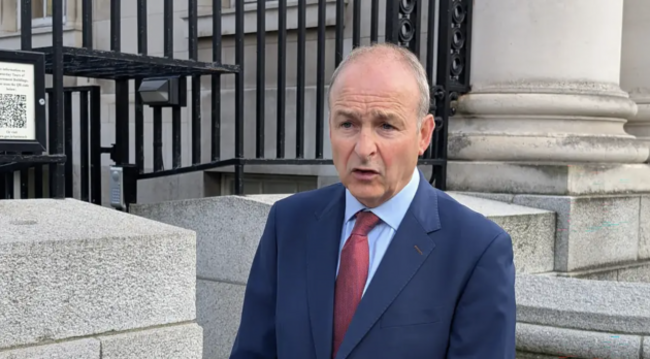
Micheál Martin told reporters before cabinet: “The only issue I’d have is some people are not availing of it and that’s an issue that we need to really examine.”
Over 335,000 taxpayers benefitted from the rent tax credit in 2024, with more people applying for the tax benefit than previous years. In 2023, it had been reported that just 256,205 renters claimed the tax credit, at a total cost of €145 million.
In terms of 2025 and 2026, only data from PAYE taxpayers is available.
Excluding self-assessed taxpayers, Revenue said 303,590 taxpayers have claimed the RTC for 2025, with a total credit claim value of approximately €315 million. To 15 June 2026, 68,260 PAYE taxpayers claimed the RTC so far in 2026.
Data on claims by self-assessed taxpayers for 2025 and 2026 will not be available until mid-2027 and mid-2028.
Since the introduction of the credit, worries have been expressed about the low uptake of the credit, with the Department of Finance estimating that some 400,000 renters are eligible for the credit.
Simon Harris said there was a “need to help people with the cost of rent”, adding he was “positively disposed” to increasing the credit.
Specifically asked if it would be increased by €300, Harris said: “It’s going to be a long 15 days (until the Budget) if we’re going to go through every specific line of the Budget and every specific amount inside the Budget.”
He added: “There will be tax measures in that Budget. The bulk of the tax measures will go on a personal income tax.
“There’s a tax package of around 1.5 billion. We all know any personal income tax package comes in at around 1.2-ish billion.
“So, there’s a little bit left to do other things. The programme for government is clear – that’s what unites everybody in Government – that the renters’ tax credit is an area that should be increased if possible, and therefore we will look favourably upon that.
“The level at which we do it is a matter for Budget day.”
Harris also said there are a “couple of big calls” left in the budget negotiations including the “profile regarding the excise restoration” for diesel and petrol, which is currently due to recommence in November.
He said: “That may not be the prudent thing to do now if the current elevated prices continue. So we need to look at that.”
Meanwhile on housing, Harris said abolishing stamp duty for first-time buyers would be a “bad measure” and a “tax cut for developers”.
The idea had been put forward by Fianna Fáil’s Seamus McGrath and backed by the Taoiseach.
Harris said: “It would be a bad measure. That’s just not my view, it’s the view of the economists in my department.
“You know, I’m old enough to remember when people tinkered with stamp duty in the past, and I’m old enough to remember the devastation that people lived through in this country.”
He added: “That’s not the intention of everybody, everybody’s putting forward good ideas, everybody’s being constructive – but you don’t narrow the tax base, what you do is you increase supply.
“And all of the economic evidence available to my department is that not one cent of a reduction in stamp duty would be passed on to a first-time buyer. It would effectively be a tax cut for developers.”
Harris also said there are no proposals to increase the help-to-buy scheme in the budget.
Elsewhere, the Tánaiste also raised the prospect of further measures on the fuel allowance and living alone allowance, as well as specific interventions for home heating oil.
“I am really conscious that while people are talking about Iran and global issues, this is very real.
“It’s the tank in people’s back garden that they’re worried about filling this winter, and we’re actively seeing what we can do.”
Harris said another issue in the budget is potentially modifying carbon tax for specific products like home heating oil, as well as additional measures on energy transition like solar panel grants.

To embed this post, copy the code below on your site













have your say