Sign in. It’s quick, free and it’s up to you.
An account is an optional way to support the work we do. Find out more.
Sign in. It’s quick, free and it’s up to you.
An account is an optional way to support the work we do. Find out more.
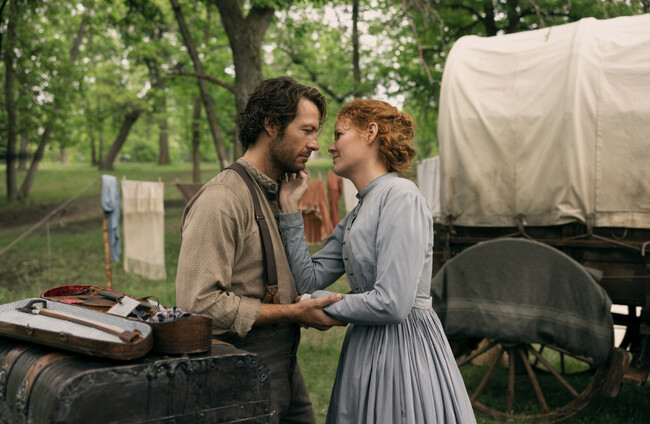
WHEN A TALE has already been told, can a retelling of it add anything new? That’s the question I’m asking myself as I sit down to watch the new Netflix adaptation of Little House on the Prairie. Will this production add anything fresh to this settler tale, originally told by the author Laura Ingalls Wilder back in the 1930s?
Some readers will remember that the story has already been on screen before. Ingalls Wilder’s series of books was based on her own family’s story of moving from Wisconsin to a new town named Independence in Kansas in the 1860s. A TV series starring Michael Landon (then a massive star due to his role in Bonanza) ran from 1974 to 1983 and was a humongous success.
This latest series is inspired by the third Little House book, and is showrun by Rebecca Sonnenshine (The Boys, The Housemaid). The Ingalls family at its centre are Pa/Charles (Luke Bracey), Ma/Caroline (Crosby Fitzgerald), their daughters Mary (Skywalker Hughes) and Laura (Alice Halsey), and their dog, Jack (Good Boy).
We arrive in Independence as the Ingalls do, unsure of what is ahead of them. (In the series, unspoiled prairies in Manitoba stand in for Kansas.) In the first few episodes the family encounter new people, like fellow settler neighbour Mr Edwards; The Mitchells, an Osage family who live nearby; and a gossipy neighbour called Jemma James.
Themes slowly surface: tension between newcomers and indigenous people; alcoholism and hidden trauma; PTSD and the impact of the Civil War on men; how family provides succour but can also be a source of stress.
The Ingalls are a beautiful family, with everyone perhaps a smidgen too good-looking to make this feel truly realistic. But it’s a sign of the balance that the series is trying to strike, between a dreamy, idealised version of settler life and the more gritty reality.
Frontier settlers
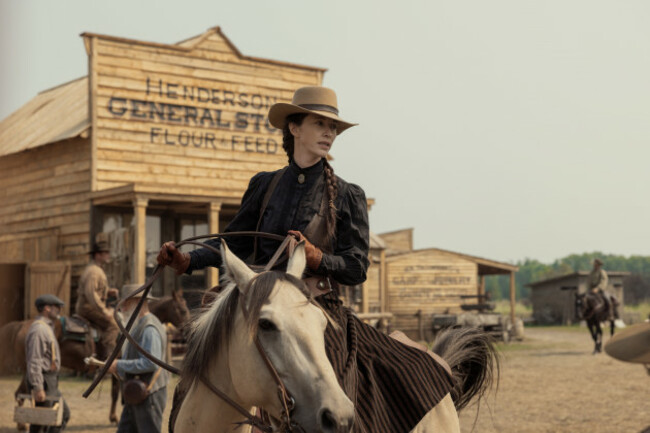
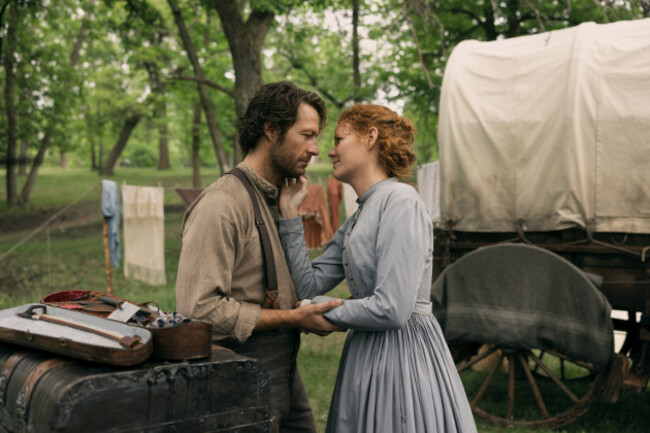
The search for home and belonging is what motivates the Ingalls, a microcosm of the greater American desire in the 18th and 19th centuries for expansion into the frontier. The series is unabashedly sentimental and even romantic, leaning into the Ingall parents’ love match and the tiny tokens that make their house feel like home.
But at the same time, it never loses sight of the fact that expansion into Kansas meant literally setting up home on other people’s land. The white American settlers were not the ‘first’ to make their home on the prairie.
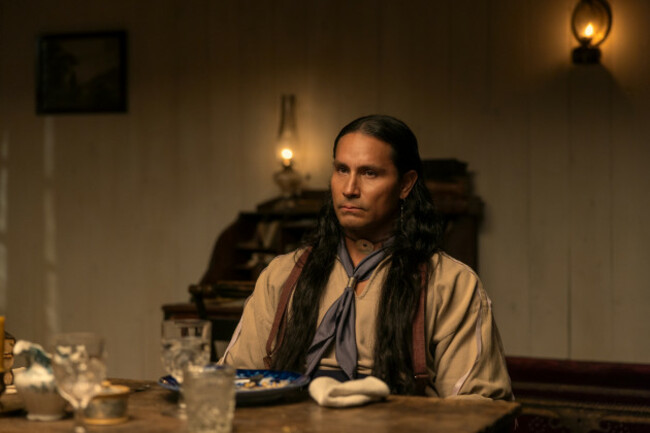
The series allows room for complicated feelings about this, and crucially it moves Osage characters from the side to the centre. Key Osage characters are the Ingalls’ neighbours The Mitchells, who all approach the white family with their own mixed emotions. Father William Mitchell (Meegwun Fairbrother) is a mixed-blood Osage man, a welcoming figure who’s in sympatico with Pa. Daughter Good Eagle (Wren Zhawenim Gotts) gently gets to know Laura, but mother White Sun (Alyssa Wapanatâhk) is wary and suspicious.
There are also Black characters, though they remain mostly on the periphery: General Store employee Emily Henderson (Barrett Doss) and Dr George Tann (Jocko Sims). The pair have a tentative romantic connection, but Dr Tann – despite his essential role in the community – faces racism from ‘upstanding’ members of this new society.
A tale of two sisters
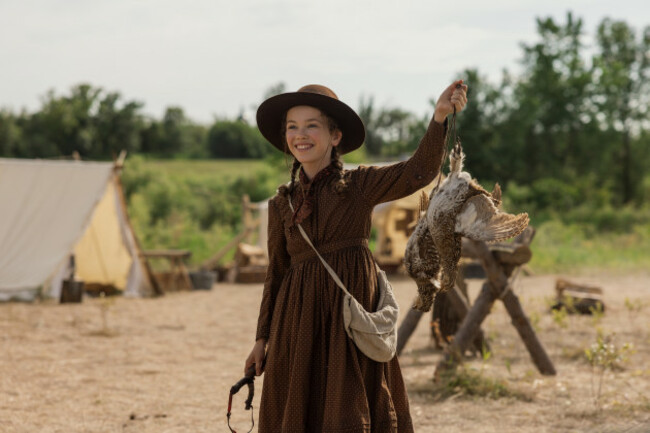
Like the original series, the female characters are given agency. The young Laura’s innocence and instinctive trust in people together serve as a means to diffuse tensions between her family and Osage members, though the show does not lose sight of why Osage people might distrust the Ingalls.
Sisters Mary and Laura are very different to each other – Laura is a rule breaker with dirty fingernails, who’s willing to get stuck into prairie life even if she’s a little bewildered by it. She’s learning that adults are hard to understand, and their motivations confusing.
Mary, meanwhile, finds the hardscrabble prairie life more difficult, is unhappy with the dirt and mess and more interested in abiding by rules than her sister. The pair’s dynamic can be testy, but often the series introduces friction between them before returning to centre: to the idea that at our core, us humans are good people who want the best for each other.
Sometimes the series feels aimed at children, or pre-teens, as a means of teaching them about life. It introduces simple concepts around relationships – like a first crush, or an adult letting a child down, or a parent concealing a harsh truth from a child – in a way that feels somewhat naive, thus appealing to younger viewers. But at the same time, it nods to the adult watching, and the knowledge that they perhaps don’t want the young person to know too much too soon.
Still, the adults also have much to learn. While Ma begins the series full of optimism, a third of the way through she learns a destabilising fact about where they have built their home. She’s allowed to show anger and frustration in a realistic, hurt way, and her stand-off with her husband dismantles any sense of idealism she’s built up.
Friction
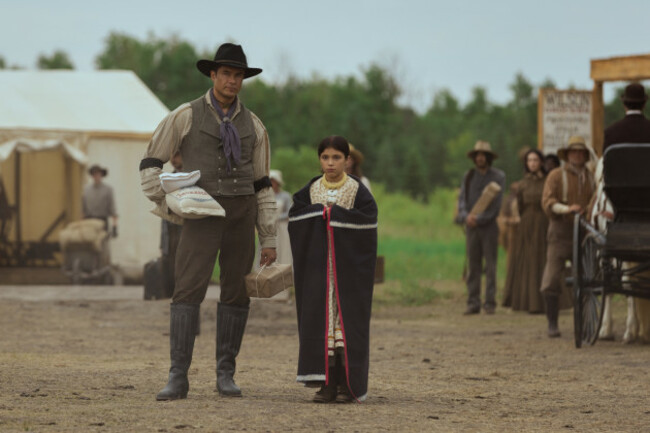
The show is at its most interesting when there’s true friction between the sisters, the parents or between settlers and Osage people. That’s when characters feel most textured, and when the themes in the show get a chance to rub up against each other. Just like in real life, not everyone is a good person all the time. This tempers the sentimentality that runs through the series, which at the beginning threatens to flood it.
A scene where an Osage tribe passes the family in silence is an opportunity to show a range of feelings via the characters’ individual and nonverbal responses. We witness Ma’s sense of worry and Laura’s awe at their clothing and body paint. This feels like a realistic depiction of how some white settlers might have behaved when encountering Osage members. A tense scene in the third episode allows two young Osage men to express their own frustrations around settlers’ behaviour.
Undoubtedly some ultra-conservative American viewers will be searching for examples of this ‘wokeness’ to criticise the show’s noble intentions. US conservative journalist Megyn Kelly decried the show on X for being woke before it even aired. But the original series also tackled topics like discrimination and alcoholism, though it didn’t provide Indigenous characters with much screen time.
As American culture evolves, and particularly now with Trump at the country’s helm, its citizens find themselves reassessing their own past and their own path to ‘American freedom’. The Manifest Destiny that spurred some 19th century settlers on, the belief that white settlers are somehow entitled to land, has long been interrogated. And so each iteration of Little House on the Prairie has used contemporary mores to retell the settler story. This latest version of the frontier tale has widened the lens to include more than just white people. For that, it certainly must be applauded. That said, its version of this era, it has to be added, is a lot less violent and bloody than the reality it’s trying to depict.
The series has already been renewed for a second season. Little House on the Prairie takes an original story and thankfully adds new brushstrokes to its overall picture. Viewers who are willing to accept its relatively slow unfurling, and its twee or sentimental moments, will be rewarded as it progresses with a deepening of its darker and more nuanced themes.
Little House on the Prairie is streaming on Netflix now.

To embed this post, copy the code below on your site







have your say