Sign in. It’s quick, free and it’s up to you.
An account is an optional way to support the work we do. Find out more.
Sign in. It’s quick, free and it’s up to you.
An account is an optional way to support the work we do. Find out more.
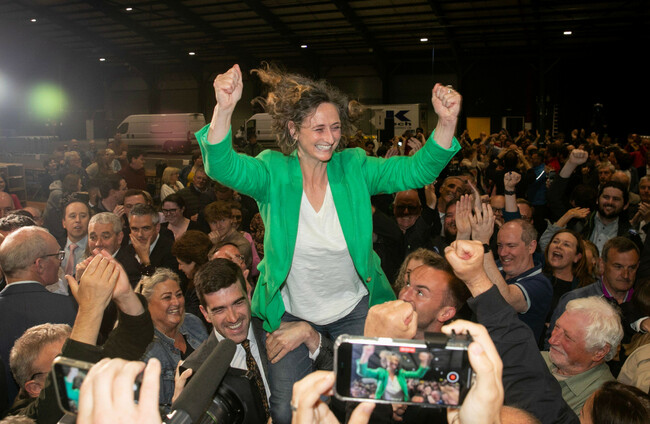
SINN FÉIN WILL rejoin The Left, also known as GUE-NGL, grouping in the European Parliament, after some ambiguity over their membership during their election campaign.
Incumbent Sinn Féin MEP Chris MacManus told The Journal in April that his party would not be considering a move from The Left but, during the election campaign, the party’s candidates did not disclose which group they would join when asked.
Groupings in the European Parliament allow for MEPs to easily come to consensus, find common group and help to determine the type and level of representation of political ideologies in the EU.
The size of the groups in the Parliament also set out the number of seats that will be allocated to them at committee level – where the majority of the legislative work and key-positions, such as lead negotiators (or rapporteurs are they’re known in Brussels) are up for grabs.
The tactic for parties withholding their decision is not uncommon, as often the candidate might not want to commit to a group that will leave them with very little legislative power after the results of the entire election are announced.
In The Journal‘s pre-election candidate database, MEP-elect Lynn Boylan said: “If I am lucky enough to be elected in June, depending on the make up of the next Parliament and what groups are successfully formed, I will be joining the group that is best aligned with my values.”
But today, a day after Boylan was elected to the Dublin constituency, The Left group posted a picture to X, formerly Twitter, welcoming her and Sinn Féin to the group ahead of the next term in the EU.
Welcome @LNBDublin to The Left group ✊ pic.twitter.com/BLttZr2WDB
— The Left in the European Parliament (@Left_EU) June 12, 2024
The Left in the European Parliament have managed to maintain their seats in Brussels after the expected shift to the right did not come to pass as once thought.
Though right-leaning groups have increased and The Left expected to lose just one seat, their mandate could shrink as there are 15 additional seats in this terms’ Parliament.
—
This work is co-funded by Journal Media and a grant programme from the European Parliament. Any opinions or conclusions expressed in this work are the author’s own. The European Parliament has no involvement in nor responsibility for the editorial content published by the project. For more information, see here.

To embed this post, copy the code below on your site














have your say