Sign in. It’s quick, free and it’s up to you.
An account is an optional way to support the work we do. Find out more.
Sign in. It’s quick, free and it’s up to you.
An account is an optional way to support the work we do. Find out more.
IT’S A DAY of rest, and you may be in the mood for a quiet corner and a comfy chair.
We’ve hand-picked the week’s best reads for you to savour.

That’s what Rebecca Mead calls the inimitable Mary Beard, the classics professor who has taken on the trolls, and earned quite a deserved following in the process.
(New Yorker, approx 34 minutes reading time, 6968 words)
Her first, knee-jerk response to the criticism was to keep quiet; then she reconsidered. “I thought, This is stupid. You have written something which is really upsetting people, and you didn’t mean what they thought you meant, so for God’s sake tell them.” She wrote to her critics individually, clarifying what she had meant, and replied to their replies.
Aaron Sankin looks at Reddit’s ‘trolling problem’, where racist and sexist comments are an everyday occurrence.
(The Daily Dot, approx 17 minutes reading time, 3411 words)
In the wake of Ferguson, anonymous Reddit users on burner accounts deluged r/BlackLadies with racist posts and comments. The moderators—all volunteers, not paid Reddit employees—tried to delete the hateful content as best they could, but the entire experience exhausted and demoralized them.
3. Should we eat like our ancestors?
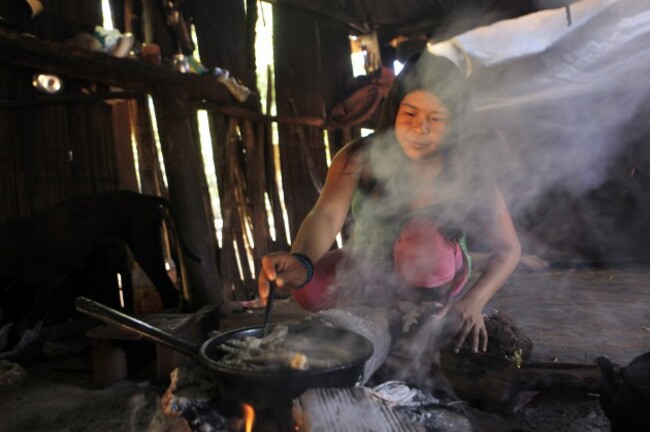
Ann Gibbons looks at the evolution of the human diet over centuries, visiting countries like Pakistan, Crete, Afghanistan and Malaysia to see what the average diet is like there.
(National Geographic, approx 34 minutes reading time, 6854 words)
Until agriculture was developed around 10,000 years ago, all humans got their food by hunting, gathering, and fishing. As farming emerged, nomadic hunter-gatherers gradually were pushed off prime farmland, and eventually they became limited to the forests of the Amazon, the arid grasslands of Africa, the remote islands of Southeast Asia, and the tundra of the Arctic. Today only a few scattered tribes of hunter-gatherers remain on the planet.
4. Who killed Pier Paolo Pasolini?

A new film looks at the murder of the Italian director Pier Paolo Pasolini, who was killed in 1975. Starting Willem Dafoe, the film details his last day.
(The Guardian, approx 8 minutes reading time, 1627 words)
At 1.30am, three hours after the station rendezvous, a Carabinieri squad car stopped a speeding Alfa Romeo near the scrappy coastal promenade of Idroscalo at Ostia, near Rome. The driver, Giuseppe (Pino) Pelosi, 17, sought to run, and was arrested for theft of the car, identified as belonging to Pasolini. Two hours later, the director’s body was discovered – beaten, bloodied and run over by the car, beside a football pitch. Splinters of bloodied wood lay around.
Jenny Slate is perhaps best known as the woman who was dropped from SNL after she let fly an f-bomb on her first night. But her new film, Obvious Child, looks set to make her name in a new way – as the star of a comedy about an abortion.
(The Guardian, approx minutes reading time, words)
“I don’t think so, because I don’t put a stigma on abortion,” she says, and then pauses. “I feel I have to be totally cemented in my position, all: ‘You can’t tell me what to do with my body’, but there is another part of me that is, you know, myself: vulnerable, with lots of doubts. I think our film shows that complexity.”

We know that Ebola has hit Western Africa, and we know of the risks it poses. Wendy Orent takes a look at the world’s history of plagues, and argues that the next pandemic won’t come from the jungle, but ‘disease factories’ like hospitals and refugee camps.
(Aeon, approx 14minutes reading time, 2883 words)
Pandemics arise out of more than mere contact between human beings and animals: from an evolutionary point of view, there is a missing step between animal pathogen and human pandemic that’s been almost completely overlooked in these terrifying but entirely speculative ideas.
…AND A CLASSIC FROM THE ARCHIVES…

Studs Terkel travelled across America to speak to people about work. It’s all collected in the sizeable 1970s book Working, giving an oral history of an era now gone. Here’s an excerpt, online for the first time.
(Longform, approx 23 minutes reading time, 4731 words)
What bugs me now, since I’m on welfare, is people saying they give you the money for nothin’. When I think back what we had to come through, up from the South, comin’ here. The hard work we had to do. It really gets me, when I hear people … It do somethin’ to me. I think violence.

To embed this post, copy the code below on your site
















have your say