Sign in. It’s quick, free and it’s up to you.
An account is an optional way to support the work we do. Find out more.
Sign in. It’s quick, free and it’s up to you.
An account is an optional way to support the work we do. Find out more.
IT’S A DAY of rest, and you may be in the mood for a quiet corner and a comfy chair.
We’ve hand-picked some of the week’s best reads for you to savour.
Birth rates around the world are plummeting. In this thoughtful and informative piece, Gideon Lewis-Kraus examines what’s driving the decline and what it might mean for the future.
(The New Yorker, approx 50 mins reading time)
Anyone who offers a confident explanation of the situation is probably wrong. Fertility connects perhaps the most significant decision any individual might make with unanswerable questions about our collective fate, so a theory of fertility is necessarily a theory of everything—gender, money, politics, culture, evolution. Eberstadt told me, “The person who explains it deserves to get a Nobel, not in economics but in literature.” The global population is projected to grow for about another half century. Then it will contract. This is unprecedented. Almost nothing else can be said with any certainty. Here and there, however, are harbingers of potential futures. South Korea has a fertility rate of 0.7. This is the lowest rate of any nation in the world. It may be the lowest in recorded history. If that trajectory holds, each successive generation will be a third the size of its predecessor. Every hundred contemporary Koreans of childbearing age will produce, in total, about twelve grandchildren. The country is an outlier, but it may not be one for long. As the Korean political analyst John Lee told me, “We are the canary in the coal mine.”
More and more people are turning their backs on dating backs in favour of in-person events. So what happens when a group of 500 people are released in the Alps on a singles trip hosted by a dating company? Kassondra Cloos found out.
(Outside, approx 19 mins reading time)
When I heard about the first Thursday ski trip in 2023, I put down a deposit immediately. I had only skied once—and barely—since tearing my ACL on a blue run in 2016, but I wasn’t in it for the skiing; I was in it for the skiers. Like a lot of people in their early thirties, I haven’t found a lot of success on dating apps. Until I deleted it in November, my Hinge profile was full of the sort of adventure porn that’s requisite for Colorado, where my last serious relationship ended. In London, being outdoorsy is more novel than normal.
Everyone here “loves traveling” and is “just looking for someone to explore the world with!” but backpackers, climbers, and general rugged outdoorsmen are in short supply. The only camping most people do is in fields, on drugs, at music festivals. I had no trouble getting likes and matches, but often men seemed more interested in my lifestyle than in me. I’m an independent freelance travel writer who regularly plans international trips with barely a week’s notice. There are a lot of men on dating apps who “want” to travel the world together, and very few who actually will. A ski trip seemed like a far more efficient way to vet lumberjack-adjacent men whose hiking boots may or may not be ornamental.
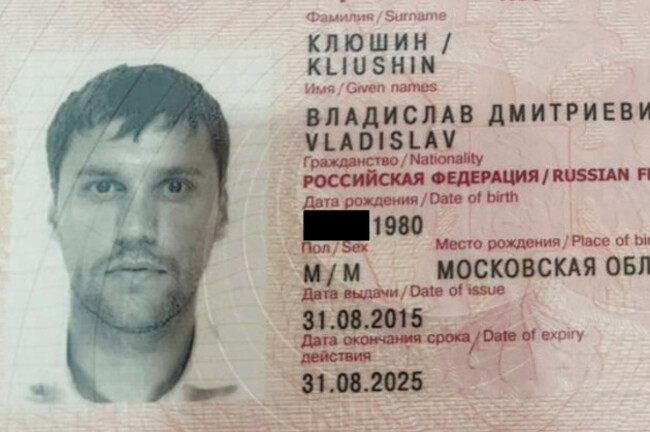
He was barely mentioned in news reports when he was released as part of a prisoner swap between Russia and the US last summer. But as it turns out, he was behind one of the biggest insider trading cases of all time – and his $93 million scheme was very valuable to the Kremlin.
(WIRED, approx 26 mins reading time)
The escalating conflict between the US and Russia has played out in all sorts of ways over the past decade. One American captive was swapped just two weeks ago; at least 10 more US citizens remain imprisoned in Russia. And now, there’s a Kremlin-friendly occupant of the Oval Office, one who loves to be seen as making deals. One is in global financial markets, with America and its allies walling more and more of Russian industry off from the international economy. There are always creative individuals who can find cracks in that wall, though, and Klyushin sure seems to have been one of them. You don’t have to squint too hard to see his scheme—which ultimately netted $93 million—as a way to bring capital into Russia, despite the global blockade. The contest has also been evident on the streets of Moscow, where a secretive Kremlin security force has grabbed American citizens, who are charged with bogus crimes, and then dangled them in trades for killers, spies, and associates of the Kremlin. It’s kidnapping, hostage taking, and it’s effectively all being done on President Vladimir Putin’s orders. Oftentimes, Americans are taken precisely for their value as assets to be later exchanged—to get back people like that assassin, or this financial crook, Klyushin. He wasn’t at the very top of Moscow’s trade list. But Klyushin was much closer, and more important to the Kremlin, than either side was willing to admit.
Andy, a goose who hatched without feet, became famous in the US when his owner gave him Nike runners to help him walk. 33 years ago, he was murdered and the culprit was never found. Owen Long investigates.
(Intelligencer, approx 21 mins reading time)
I recently stumbled upon a story about Andy and his shoes in an old newspaper article. Delighted, I Googled him and was disturbed to learn of his gruesome death. Weeks went by, and I couldn’t put the case out of my mind. The beginning — a footless goose inspires disabled people around the world — contrasted so sharply with the ending. What was the motivation? I decided to insert myself. After some sleuthing, I discovered that Gene Fleming’s granddaughter, Jessica Korgie, now 49, had spoken to reporters intermittently about Andy. I pestered her via email, offering to try to find the goose’s killer. Finally, this past October, she replied and explained that she had conducted her own halting investigation over the decades. To this day, she said, she desperately wanted to know what happened, but there was something holding her back from digging too deeply — an intense reluctance. It felt almost existential. She had leads but was afraid to follow them. Still, she said, I’d caught her at a good time. In a few weeks, on the 33rd anniversary of Andy’s murder, she would be performing a one-woman show about the goose’s life and death — Andy Interrupted — in which she would tell his story and present some of those leads. She was terrified to go onstage, she said, but the story was such a big part of her life that she felt obligated to tell it. She invited me to Nebraska to watch.
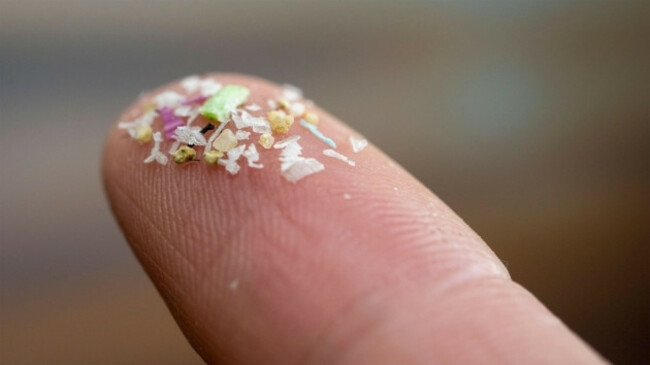
They’re everywhere, including in our blood. This is what they’re doing to our bodies.
(New York Magazine, approx 25 mins reading time)
To conduct the study, Campen’s lab obtained brain, liver, and kidney specimens from people who died in either 2016 or 2024. To isolate the plastic embedded in the samples, they applied a solution that chemically digested the tissue. “Have you seen Breaking Bad?” Campen asked me. “They used acid. We’re using the opposite of that. Just a really powerful base of potassium hydroxide.” Whatever remained was spun in a centrifuge to create a pellet, which could be chemically analyzed. Other methods to identify microplastics in environmental samples allow researchers to see particles larger than five micrometers. Campen’s method can detect and measure nanoplastics, which are smaller than one micrometer, or one-1,000th of a millimeter. The particles they saw in the brain samples were 200 nanometers — about the same size as two COVID-19 viruses side by side.
Gary Grimes writes about a bygone era of the internet and how an online community helped to shape him when he was a lonely teenager in rural Ireland.
(The Fence, approx 9 mins reading time)
It was on MSN, in ‘off-season’, that I became part of what can be best described as a forum clique. Composed of about another ten teenagers, mostly in the UK, we began speaking in a group chat every night for hours on end, often until four or five in the morning. At the core of the group was a bunch of mid-teen queer boys who had bonded in the forum’s dedicated threads for Britney Spears and Christina Aguilera, plus a couple of girls with a wicked sense of humour who were probably, in their real lives, spending much of their time defending the closeted boys in their respective school years. Among the gang were Shaun, an acid-tongued David Bowie stan and, to my memory, the first bisexual person I ever ‘met’; Hugo, a bitchy-to-point-of-trolling gay from Nottingham who we later uncovered was lying about his identity; and Hannah, a pretty ingénue from Brighton who bedazzled me on Skype by rapping all of the lyrics to Dizzee Rascal and Calvin Harris’s Dance Wiv Me. Having developed our own vernacular, we would often ruin discussion threads with our in-jokes or by viciously coming to each other’s defence in heated debates over which X Factor contestant ought to have gone home that week.
With the red carpet awaiting the stars tonight for the 97th Academy Awards, here’s an article from a couple of years ago that takes us inside the world of Oscars campaigning and what it takes to be nominated (hint: planning, PR stunts and plenty of cash).
(New York Times Magazine, approx mins reading time)
Oscar campaigns are often run by professional strategists, essentially a specialized breed of publicist. Their job begins as early as a year before the awards, sometimes before a film is even shot. They advise on which festival a film should premiere at, shape a campaign platform and hope that the film gains enough momentum to propel it into awards season. Sometimes several strategists work on a single film, and the war room of an Oscars campaign can grow to be as many as 10 or 20 people. All the stops along the campaign trail — screenings, events, other award shows — are an opportunity to workshop talking points and gauge the competition. And unlike the Golden Globes, which are voted on by 199 entertainment journalists, the Oscars electorate is a voting body of about 10,000 industry peers, which is nearly double what it was before the #OscarsSoWhite controversy that began in 2015.
Note: The Journal generally selects stories that are not paywalled, but some might not be accessible if you have exceeded your free article limit on the site in question.

To embed this post, copy the code below on your site












have your say