Sign in. It’s quick, free and it’s up to you.
An account is an optional way to support the work we do. Find out more.
Sign in. It’s quick, free and it’s up to you.
An account is an optional way to support the work we do. Find out more.
IT’S A DAY of rest, and you may be in the mood for a quiet corner and a comfy chair.
We’ve hand-picked the week’s best reads for you to savour.

Writer Laurie Penny gets on the ‘Milo tour bus’ for a number of months and gives an interesting and timely insight into the young provocateur. Milo Yiannopoulos, she says, is exploiting Americans’ sense of irony, and means nothing that comes out of his mouth.
(Pacific Standard, approx 28 mins reading time)
This is a story about truth and consequences. It’s a story about who gets to be young and dumb, and who gets held accountable. It’s also a story about how the new right exploits young men — how it preys not on their bodies, but on their emotions, on their hurts and hopes and anger and anxiety, their desperate need to be part of a big ugly boys’ own adventure.
Engineer Susan J Fowler worked at Uber for a year, and says she had some very disturbing experiences while there. In this blog post, she details exactly what happened. This post went viral over the past week – read it and you’ll see why.
(Susan J Fowler, approx 31 mins reading time)
I expected that I would report him to HR, they would handle the situation appropriately, and then life would go on – unfortunately, things played out quite a bit differently. When I reported the situation, I was told by both HR and upper management that even though this was clearly sexual harassment and he was propositioning me, it was this man’s first offense, and that they wouldn’t feel comfortable giving him anything other than a warning and a stern talking-to.
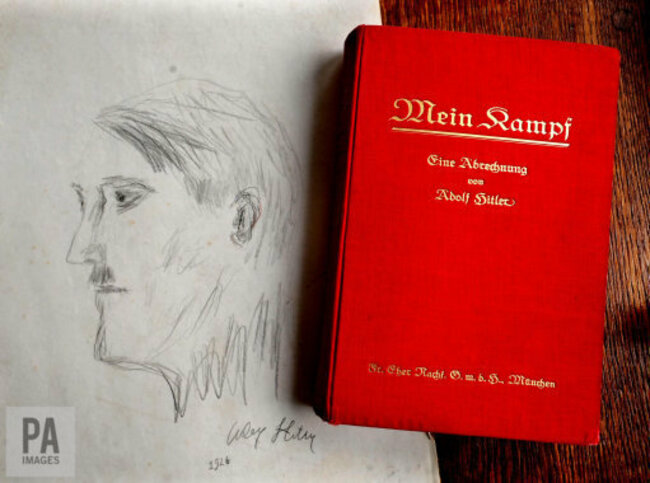
Kevin Wheatcroft has the world’s largest trove of Nazi memorabilia. But what drives a man to collect items that were part of such a terrible time in history?
(The Guardian, approx 29 mins reading time)
Sometimes the stories of search and recovery were far more interesting than the objects themselves. Near the door sat a trio of rusty wine racks. “They were Hitler’s,” he said, laying a proprietary hand upon the nearest one. “We pulled them out of the ruins of the Berghof [Hitler’s home in Berchtesgaden] in May 1989. The whole place was dynamited in ’52, but my friend Adrian and I climbed through the ruins of the garage and down through air vents to get in. You can still walk through all of the underground levels. We made our way by torchlight through laundry rooms, central heating service areas. Then a bowling alley with big signs for Coke all over it. Hitler loved to drink Coke. We brought back these wine racks.”
Meet the man behind the Stan Smith shoes, the nondescript white trainers that have sold millions upon millions of pairs since they were first released by Adidas in 1971. The story of how a shoe was named after this Grand Slam winner, before celebrity sport endorsements were even a major thing, is a really interesting one.
(NY Mag, approx 19 mins reading time)
With his Adidas contract, Smith became one of the first American tennis players to receive an endorsement deal. It was the very beginning of the modern brand-athlete pairings that would, a little over a decade later, lead to Michael Jordan’s very own Air Jordan line, and three decades after that, to LeBron James’s reported $1 billion lifetime endorsement deal with Nike. But when Smith was playing, none of that existed yet.
5. Martin Scorsese’s secret weapon

Behind the work of legendary director Martin Scorsese is the talented editor Thelma Schoonmaker, who has worked with him for decades. In this podcast, Alec Baldwin caught up with her to find out more about her career.
(Here’s the Thing, approx 43 mins listening time)
The two’s relationship is considered one of the most successful working marriages in movie history, earning Schoonmaker three Academy Awards and seven nominations. But filmmaking wasn’t always the plan.
Genius, KGB agent… there are many myths floating around about Putin. Here’s an examination of the major ones.
(The Guardian, approx 32 mins reading time)
Though I now live in New York, I was born in Russia and sometimes write about Russia. This means that people often share their opinions of Putin with me. I remember one evening in March 2006, when I was introduced to a well-known French photographer. Upon learning that I was Russian, she said, “Pou-tine?” The French pronunciation was emasculating to the Russian President, making him sound like those Canadian french fries with gravy on them. “Pou-tine,” said the photographer, “is a stone-cold killer.”
… AND A CLASSIC FROM THE ARCHIVES…

This 2016 article from The Atlantic, written by Anand Gopal, recently won a Polk Award. Gopal tells the story of one Sunni family in Iraq and all they have gone through.
(The Atlantic, approx 55 mins reading time)
Falah agonized. He’d uprooted his family, escaped isis, and paid thousands of dollars to get to Baghdad. He had friends stuck in refugee camps who were desperate to make it to the capital. But Abu Ammar’s conclusion was inescapable: When you can’t trust the authorities, anything can happen. It was nearly 1 o’clock in the morning when Falah told his wife to start packing. They would head north to Abu Ammar’s house at sunrise, telling no one about the visitor who’d shown up at their door. It was a decision he would come to regret for the rest of his life.

To embed this post, copy the code below on your site













have your say