Take part in our latest brand partnership survey

We need your help now

Support from readers like you keeps The Journal open.

You are visiting us because we have something you value. Independent, unbiased news that tells the truth. Advertising revenue goes some way to support our mission, but this year it has not been enough.

If you've seen value in our reporting, please contribute what you can, so we can continue to produce accurate and meaningful journalism. For everyone who needs it.

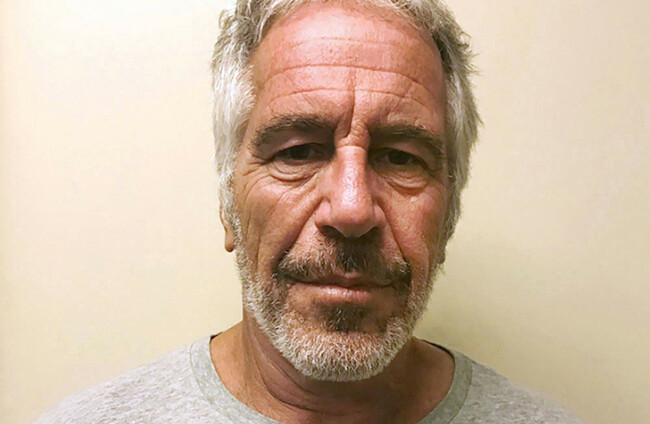
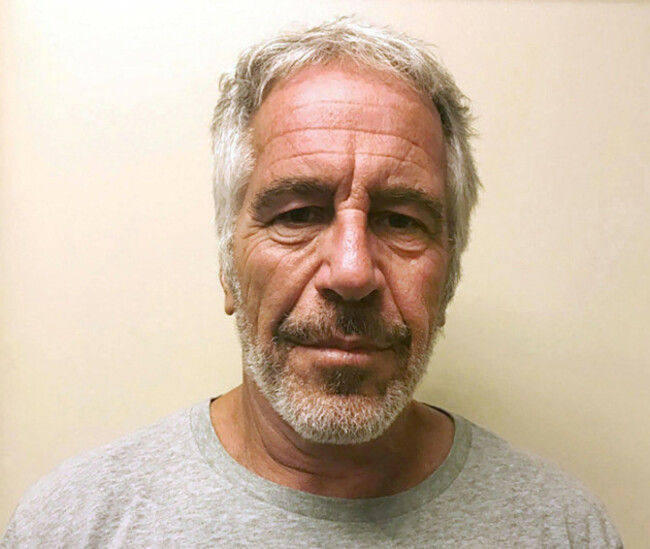
Jeffrey Epstein. Alamy Stock Photo

Sitdown Sunday: Inside Jeffrey Epstein and JP Morgan's mutually beneficial relationship

Settle down in a comfy chair with some of the week’s best longreads.

IT’S A DAY of rest, and you may be in the mood for a quiet corner and a comfy chair.

We’ve hand-picked some of the week’s best reads for you to savour.

1. Jeffrey Epstein’s bankers

jeffrey-epstein-photo-by-new-york-state-sex-offender-registrytnssipa-usa Jeffrey Epstein. Alamy Stock Photo Alamy Stock Photo

JP Morgan made millions from having the sex offender as a client. This investigation shows how he helped them make lucrative deals and gain other rich clients, and how the private bank ignored suspicious activity and continued to do business with them after he was convicted.

(The New York Times, approx 41 mins reading time)

Even before the investigation became public, warning lights should have been flashing inside JPMorgan. Epstein’s huge cash withdrawals continued — a total of more than $1.7 million in 2004 and 2005, according to records we reviewed — much of which was used to procure girls and young women. Some of the withdrawals took place at the bank branch in JPMorgan’s Park Avenue headquarters, where Epstein’s accountant regularly arrived to cash huge checks written from Epstein’s various accounts. At Epstein’s request, the private bank also agreed to open accounts for two young women without actually speaking to either of them. Instead, one of Epstein’s minions provided bare-bones information, and JPMorgan couldn’t confirm one woman’s Social Security number.

A banker was supposed to meet with the woman to verify her details but never did, according to a report prepared for the U.S. Virgin Islands, which later sued JPMorgan. (Evangelisti, the bank spokesman, said the accounts “were properly verified and documented.”) Decades of scandals — in which banks facilitated drug smuggling, human trafficking, money laundering, terrorism and even genocide — gave rise to requirements that lenders vet their customers, closely monitor their activities and flag suspicious transactions to the government. Among its many lapses with Epstein, JPMorgan often failed to alert federal watchdogs to transactions that the bank later acknowledged were suspicious. And by opening accounts for young women without meeting them, the bank was missing a well-known hallmark of human traffickers: that they control victims’ interactions with the outside world.

2. The last days of social media

James O’Sullivan’s fantastic essay about how influencers, algorithms and AI have killed what social media was supposed to be, and how its death could lead us to a better online space. 

(Noema, approx 20 mins reading time)

These are the last days of social media, not because we lack content, but because the attention economy has neared its outer limit — we have exhausted the capacity to care. There is more to watch, read, click and react to than ever before — an endless buffet of stimulation. But novelty has become indistinguishable from noise. Every scroll brings more, and each addition subtracts meaning. We are indeed drowning. In this saturation, even the most outrageous or emotive content struggles to provoke more than a blink. Outrage fatigues. Irony flattens. Virality cannibalizes itself. The feed no longer surprises but sedates, and in that sedation, something quietly breaks, and social media no longer feels like a place to be; it is a surface to skim.

3. Charlie Kirk was practicing politics the right way

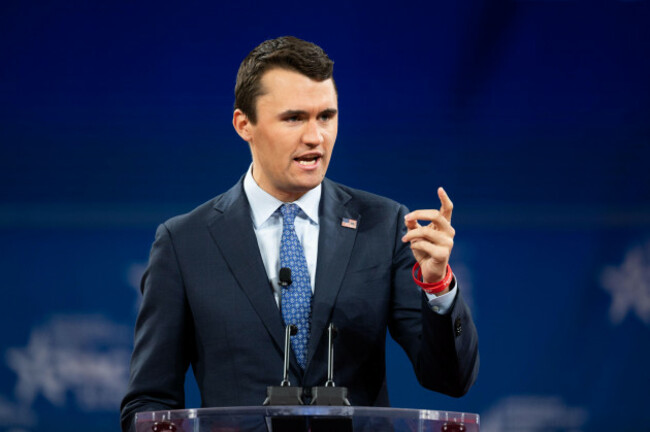
charlie-kirk-turning-point-usa-speaks-during-the-conservative-political-action-conference-cpac-in-oxon-hill Charlie Kirk. Alamy Stock Photo Alamy Stock Photo

The killing of the conservative commentator has dominated the headlines and further added to the divisiveness of US politics. Kirk himself and the views he expressed also divided opinion. Here, Ezra Klein praises what he did. 

(The New York Times, approx 5 mins reading time)

You can dislike much of what Kirk believed and the following statement is still true: Kirk was practicing politics in exactly the right way. He was showing up to campuses and talking with anyone who would talk to him. He was one of the era’s most effective practitioners of persuasion. When the left thought its hold on the hearts and minds of college students was nearly absolute, Kirk showed up again and again to break it. Slowly, then all at once, he did. College-age voters shifted sharply right in the 2024 election. That was not all Kirk’s doing, but he was central in laying the groundwork for it. I did not know Kirk, and I am not the right person to eulogize him. But I envied what he built. A taste for disagreement is a virtue in a democracy. Liberalism could use more of his moxie and fearlessness. In the inaugural episode of his podcast, Gov. Gavin Newsom of California hosted Kirk, admitting that his son was a huge fan. What a testament to Kirk’s project.

4. No, Charlie Kirk was not practicing politics the right way

In this rebuttal, David Korn disagrees with Klein’s op-ed and presents his own view – that Kirk’s impact on American politics was built on falsehoods and extremism. 

(Mother Jones, approx 5 mins reading time)

Kirk’s advocacy of vigorous debate ought not be separated from what he said while jousting in the public square. He hosted white nationalists on his podcast. He posted racist comments on his X account, including this remark: “If I see a Black pilot, I’m going to be like, ‘Boy, I hope he’s qualified.’” He endorsed the white “replacement” conspiracy theory. After the October 7 attack on Israel, he compared Black Lives Matter to Hamas. He called for preserving “white demographics in America.” He asserted that Islam was not compatible with Western culture. He derided women who supported Kamala Harris 2024 for wanting “careerism, consumerism, and loneliness.” Or, as he also put it, “Democratic women want to die alone without children.” When Paul Pelosi, the husband of Rep. Nancy Pelosi, was brutally attacked in 2022, Kirk spread a conspiracy theory about the crime and called for an “amazing patriot” to bail out the assailant. He routinely deployed extreme rhetoric to demonize his political foes.

5. ‘As far back as I can remember, I always wanted to be a gangster’

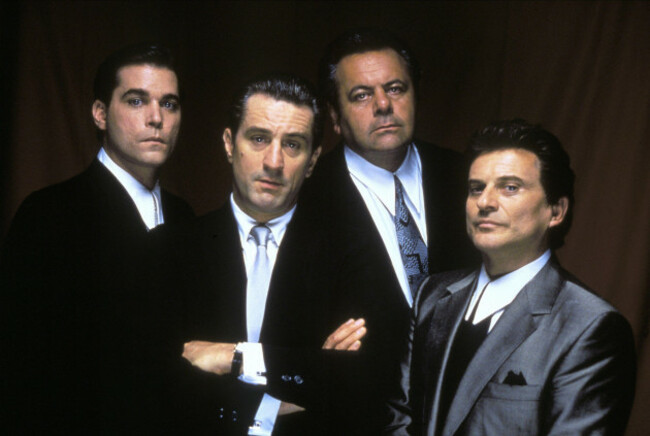
liottanirosorvinopesci-goodfellas-1990 Ray Liotta, Robert De Niro, Paul Sorvino and Joe Pesci in Goodfellas. Alamy Stock Photo Alamy Stock Photo

It’s been 35 years since Goodfellas was released. Myles Burke writes about how it reinvented the gangster movie. 

(BBC Culture, approx 11 mins reading time)

To ensure his performance was true to the way mobsters actually behaved, De Niro spoke regularly on the phone to Hill, who was still in hiding at the time. “I was talking to Henry Hill a lot. He used to call me from places, he would call me in my camper. I mean, I never knew where he was, and I never wanted to know, and I’d ask him about this, and I’d go over the script with him. It was very helpful.” But while Goodfellas presents the surface glamour of the Mafia life, it does not shy away from showing its savage and unpredictable violence. The film is, by turns, funny and horrifying. Midway through, DeVito is shown borrowing the large kitchen knife used in the notorious opening scene, from his mother (played in the film by Scorsese’s own mother Catherine) while she is cooking a meal for him. In its “Funny How?” scene – where the mood switches from humour to dread, to being funny again as DeVito appears to take exception to something Hill has said – the camerawork makes the viewer feel like an onlooker sitting at the table as it unfolds. That scene wasn’t in Pileggi’s book, Scorsese told the BBC’s Ali Plumb in 2019, but he had it written into the script after Pesci recounted an incident that happened to him as a young man while working as a waiter.

6. The sinking of a superyacht

Using official reports, GPS data and the account of the deckhand, Bradley Hope presents the inside story of the death of British tech tycoon Mike Lynch and the series of unlikely events that caused his yacht Bayesian to sink. 

(Wired, approx 27 mins reading time)

At 4:04 am the onboard CCTV caught the flying‑bridge awning shredding in an instant, obliterated by the force of the gale. Just moments later, as Captain Cutfield grabbed the helm to swing the bow into the wind, the downburst struck. A shaft of cold air dropped from 30,000 feet and hit the sea like an invisible fist. Wind leapt from 30 knots to more than 70 knots, a hurricane-force gust that struck the Bayesian with devastating power. The weather service’s review of satellite data would later suggest bursts over 87 knots, or nearly 100 miles per hour. The yacht began to tip hard to starboard. Within 15 seconds it capsized, generators cutting out as the side hit the water. It was 4:06. People, furniture, and glass hurled sideways as battery lights flickered on, and then off. Bacares, the Golunski family, and a steward slammed into a wall—now the floor—and were cut by shattering glass. Griffiths, thrown from the flying bridge into the sea, clawed back aboard. Records indicate that the alarm was never pulled; no one had time.

…AND A CLASSIC FROM THE ARCHIVES…

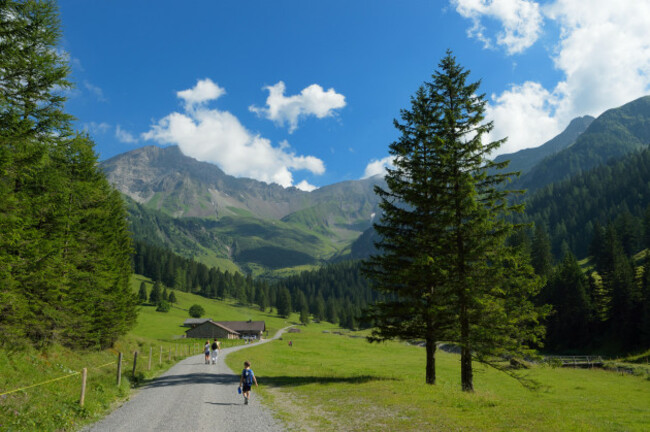
a-family-hiking-at-the-valuna-alp-and-valley-liechtenstein-li People hiking at the Valüna Alp and Valley, Liechtenstein. Alamy Stock Photo Alamy Stock Photo

Lose yourself in keen solo traveller Andrew Altschul’s account of his three-day hike across Liechtenstein.

(Afar, approx 13 mins reading time)

The rest of the morning was more of a pleasant ramble than a hike, the chilly weather propelling me past a 9th-century grain mill and a woodland shrine to 200 accused witches executed in the 17th century. Outside of the town of Triesen, I stopped for lunch in the wildflower-strewn saddleland of the Matilaberg nature preserve, where at any moment I expected Julie Andrews to come twirling over the nearest hilltop. I’d made good time so far, but I could feel the steep ascent looming; Triesenberg itself was no longer visible, shrouded in heavy clouds. The farther I got from the river, the more remote my surroundings seemed. An old man with hiking poles tottered past in the other direction and greeted me in German, the first human interaction I’d had since hopping off the bus from Vaduz that morning. The app suggested I had roughly a two-hour climb ahead of me—but then again, the app didn’t seem to know where I was anymore. The ascent began in earnest at the St. Mamertus Chapel, a small, austere church with frescoes dating to the 14th or 15th century. The real rain began about 10 minutes later.

Note: The Journal generally selects stories that are not paywalled, but some might not be accessible if you have exceeded your free article limit on the site in question.

Readers like you are keeping these stories free for everyone...
A mix of advertising and supporting contributions helps keep paywalls away from valuable information like this article. Over 5,000 readers like you have already stepped up and support us with a monthly payment or a once-off donation.

Close
JournalTv
News in 60 seconds